

Imported eggs under fire after salmonella outbreak
 © Adobe Stock
 UK egg producers are demanding tougher import controls after a major salmonella outbreak left more than 200 people unwell and one dead.
The UK Health Security Agency (UKHSA) has confirmed 207 cases of salmonella enteritidis linked to a single strain between August 2025 and 1 August 2026, with 206 reported this year.
See also: Shell Shocked report reveals growing threat of imported eggs
Cases have been recorded across all four UK nations, although the vast majority – 199 – were in England.
Of those where information was available, 38% were admitted to hospital, while two developed bloodstream infections.
Investigations are continuing, but UKHSA said egg consumption remains the strongest signal identified so far.
Food chain investigations found premises visited by some patients had been supplied with eggs from multiple sources, including importers.
However, authorities stressed there is at present no identified link to UK-produced eggs or poultry.
The outbreak is also genetically linked to one in 2025 associated with imported eggs, prompting renewed concerns among British producers.
Producers ‘angry’
British Free Range Egg Producers Association (Bfrepa) head of strategy Gary Ford said the situation had left farmers concerned about potential damage to consumer confidence and the domestic industry’s reputation.
“These are very worrying times for the UK egg sector,” he said.
“Producers are very concerned, very angry and feel let down by the British government.”
Mr Ford said producers had repeatedly warned ministers about trade policies allowing eggs produced to standards below those required domestically to enter the UK market.
Those imports risked undermining a reputation for food safety built by British producers over three decades, he added.
“We are all in this together and whatever the country of origin of the infected eggs, it risks impacting negatively on consumer confidence in eggs.”
Bfrepa will write to the prime minister outlining its concerns and calling for tighter import regulations.
Level playing field
British Egg Industry Council chief executive Nick Allen called for imported eggs to meet standards equivalent to those required of British producers.
“Food businesses and caterers should not have to compromise on food safety when sourcing eggs,” he said.
British Lion producers had invested heavily in vaccination, traceability and auditing, he added.
NFU Poultry Board chairman Will Raw called for adequate import checks and core production standards covering domestic and imported food.
“Food produced to standards that would be illegal in the UK is still being allowed into our market,” he said.
NFU Scotland poultry chairman Matthew Steel said UK producers faced costly food safety, welfare and production requirements, while imports could be produced differently.
He called for greater transparency over the origin of eggs used in food service.
‘Two-tier’ egg controls
Tim Gelf © Amy Hill
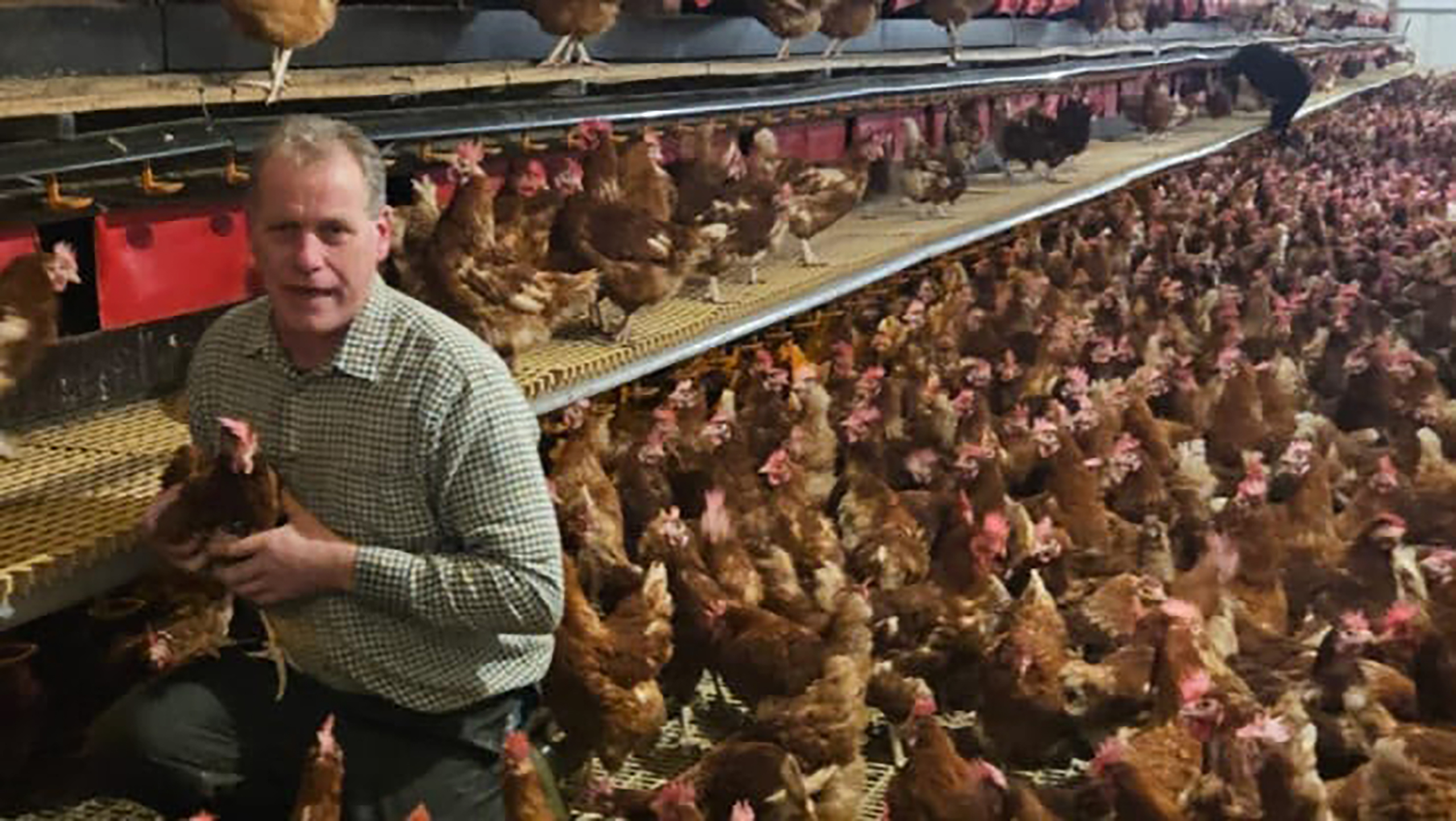
Dorset free-range egg producer Tim Gelf fears British farmers could be unfairly associated with the salmonella outbreak despite the safeguards governing domestic production.
Mr Gelf, who runs two 8,000-bird units, said British producers operated under stringent testing, vaccination and outbreak-control requirements.
“British eggs are safe and the protocols in place are second to none in the world,” he said.
“If I went down today with salmonella, my eggs would be immediately withdrawn from the market.”
Mr Gelf accused the Food Standards Agency (FSA) of operating a “two-tier system”, arguing imported eggs presenting a higher salmonella risk should face stronger controls.
“The FSA know that there’s salmonella in eggs coming from abroad. They’ve known for years, and they’ve done nothing about it,” he said.
He said the situation risked letting down both domestic producers and consumers and called on the government to strengthen British egg production to reduce reliance on imports.
Responding, the FSA said all egg imports undergo documentary checks, with some subject to physical checks. It is understood that the FSA can impose tighter controls where food safety breaches are identified.