

Grass management offers feed cost savings

Close attention to autumn grass management will help prepare fields for an early kick-start in the spring and could save £1 a head a day on winter feed costs, Jeremy Hunt reports
Beef producers keeping cattle at grass late into the autumn will be able to make the most of this year’s prolonged seasonal growth and should leave them outside for as long as the land will allow. Not only will it save on feed costs but it will ensure pastures have the best possible chance of early-re-growth in the spring.
That’s the advice of grassland consultant Charlie Morgan who says beef farmers should prioritise the use of autumn grass to avoid swards being left with a surplus of growth – a situation that can cause excessive winter kill and create a build-up of decaying material in the base of the sward.
“The challenge is being able to keep cattle out for as long as is feasibly possible and not leaving grass behind.
“I know of one unit that has reduced winter housing by six weeks by making more use of autumn grass. In this 100-cow suckler herd it has meant a saving of £1 a head a day – that’s a big saving. And when you can turn out earlier it’s making savings at both ends of the system,” says Charlie.
He suggests, when infrastructure is in place, that it’s worth considering using sheep to “bare-off” fields where cattle haven’t been able to use all the autumn grass.
“Fields earmarked for grazing with beef cattle or sucklers in the spring need to be taken down to a grass height of about 3cm in the autumn. Leaving too much grass behind has all sorts of adverse implications for spring turnout.
“The most widespread handicap to spring re-growth is caused by too much dead material left in the bottom of the sward.
“When the sward doesn’t go into the winter in the correct condition, there’ll be a loss of viable grasses. That leads to patches of bare ground and then the weeds move in. All this delays re-growth in the spring.
“When you can put autumn grass into a mouth – and clean-up the sward into the bargain – there’s also a financial gain to be had. But when that’s not possible those fields must be harrowed thoroughly in the spring to clear out the dead material,” says Mr Morgan.
And to help beef grazings get the best start in the spring it’s important to give them a two to three month “rest period” to allow new leaf growth to establish.
“When this combined approach can be put into practice it can mean beef cattle are turned out several weeks earlier and on to 6cm of grass – and it should be exceptionally high-quality grass too. But when the sward hasn’t had the correct treatment in autumn and winter it can delay turnout by a month.”
However, clover-rich swards require a different approach and mustn’t be over-grazed in the autumn.
CASE STUDY – Edward Dean, Kirkstones Farm, Brampton
Making sure there’s enough “spring bite” for newly calved suckler cows is a priority for Cumbria hill farmer Edward Dean and he’s convinced his new approach to autumn and winter grassland management will do the trick.
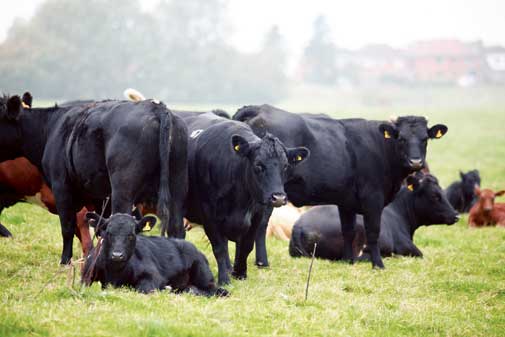
“Since we started asking more questions about how we’ve been managing our grass, it’s made us realise there’s a lot more we could do to improve the yield and quality of grazing – even on this type of beef and sheep farm,” says Mr Dean who runs 150 sucklers cows and 50 ewes at Kirkstones Farm, Brampton.
Driving forward the farm’s grass management has been the Grassright Group, which has been working with Mr Dean on the use of new seed mixtures, more effective fertiliser applications, weed control and grassland machinery for slitting and aeration.
“We start calving in mid-March and cows and calves have to go out straight away so we need grass as early as possible. Looking more closely at how we manage grass in the autumn and winter – as well re-seeding and tackling soil compaction by aeration – is making a difference.
“This is more about management and organisation rather than spending a lot of extra money,” says Mr Dean.
Baring off fields in winter by grazing with sheep until January is critical. “Winter kill and leaving too much growth in the bottom of the sward does nothing to help us get the bite we need for cows at turnout. In the past we haven’t appreciated enough how autumn and winter management affects spring re-growth.”