

Grass mixes for outdoor pigs: what are the options?
 © Sara Gregson
 Improved soil health, lower risk of run-off and a less dusty environment are among the benefits of running outdoor pigs on grass, rather than bare soil.
Grazing keeps pigs occupied, relieving any constipation and making them fitter. This leads to easier farrowing and improved post-partum recovery.
See also: Benefits of grass leys for outdoor pig units
It also makes them spread their dung over a wider area, preventing nutrient hotspots. And they eat less straw, saving time and energy on bedding up.
But will the grass persist until the pigs move onto new ground in the arable rotation?
Farmers Weekly asks two neighbouring pig farmers on the Norfolk-Suffolk border how successful their efforts have been.
Chris Fogden
Chris Fogden runs 1,200 Topigs Norsvin TN70 sows on light sandy land on the Euston Estate, near Thetford.
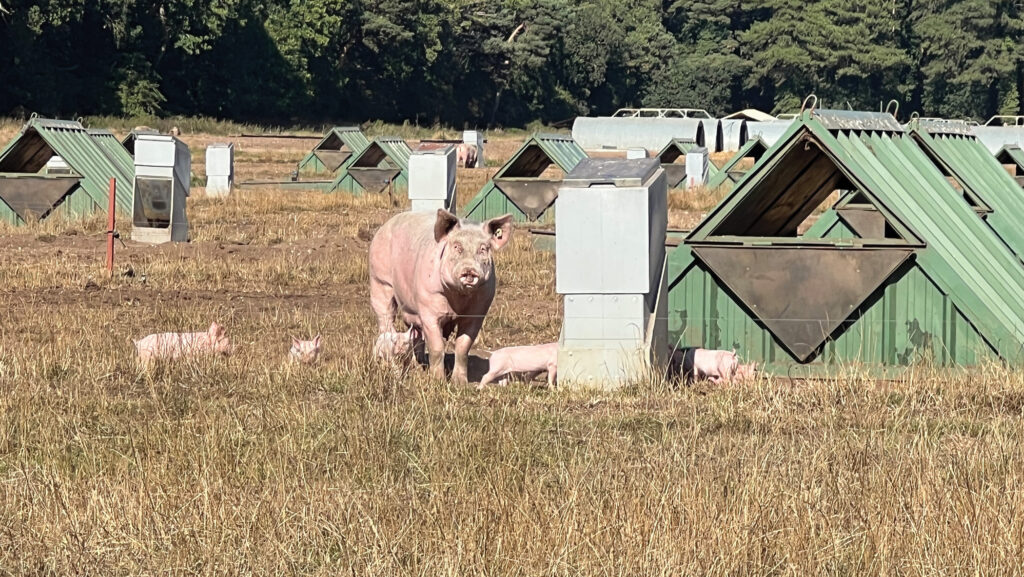
The dry sows live in large circular or radial paddocks, with handling systems at the centre, while the farrowing sows have individual paddocks with a farrowing shed and access to a feeder, water trough and wallow.
“Grass looks better and is cooler for the sows than brown mud or dust,” he says.
“It also holds rainwater better, so there is less run-off, and the roots help bind and protect the soil.
“Our pigs are part of an intensive arable rotation, which can be damaging to the ground. Pigs on grass are generally seen as a healing point.”
Chris has been farming pigs for nearly 40 years, using grass on and off over that time, but more so in the past decade.
In 2023, he set up as a bed-and-breakfast enterprise, with the first gilts from the Ian Mosey livestock business in North Yorkshire arriving that spring.
After weaning at five weeks of age, the piglets move on to rearing and finishing farms elsewhere.
“We didn’t have much time to establish the grass before the sows arrived, as the field had just come out of sugar beet.
“We drilled a fast-growing annual westerwolds ryegrass with a Horsch Pronto disc drill in one pass. It grew like hell and lasted very well for a year.
“It was less of a success in year two, apart from the areas where it had self-seeded. The sows moved off it last autumn,” he explains.
Resilient mix
In the new pig fields, which followed early-lifted carrots, Chris used a specialist pig seed mixture designed to withstand heavy trampling and rooting.
It contains a high percentage of creeping red fescue, which has a low growth habit and dense root structure, along with some intermediate and late perennial ryegrass varieties.
The mix was sown in August at a rate of 35kg/ha. It established well before the sows were moved onto them the following winter, at a stocking rate of 25 sows/ha.
The grass in the farrowing paddocks grew well at the start of the year and has stood up as well as could be expected in the drought.
While there are definite bare patches, there are signs that the remaining grass will regrow once the rains come.
A two-week rest period after weaning also gives the grass chance to regrow. Chris obtains permission from the RSPCA to ring the sows to prevent excessive rooting.
Richard Wright
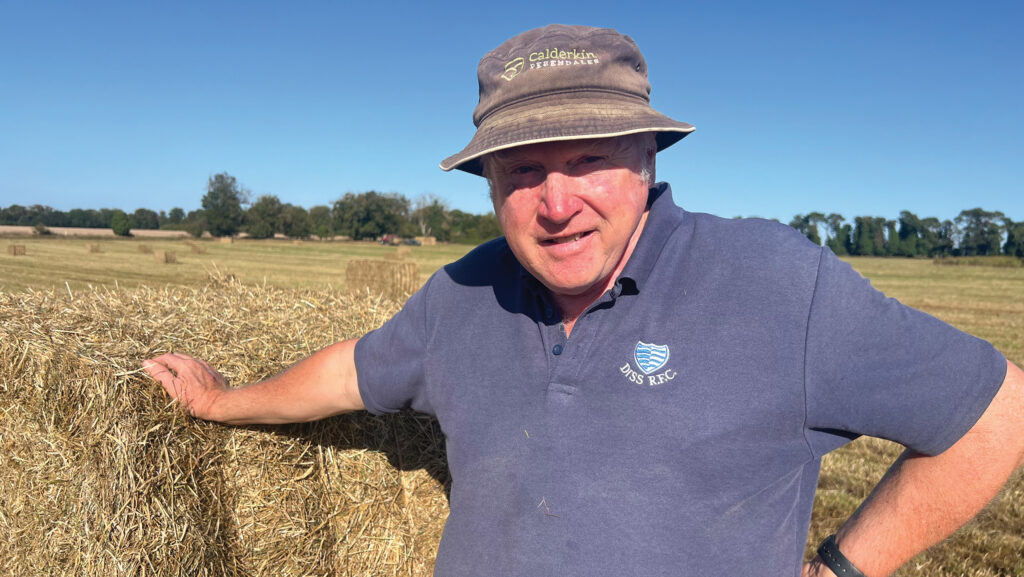
Richard Wright farms on the Shadwell Estate next door to Chris.
His father was one of the first to add outdoor pigs to the arable rotation in the UK, in the 1970s. His aim was to add organic matter to improve soil health.
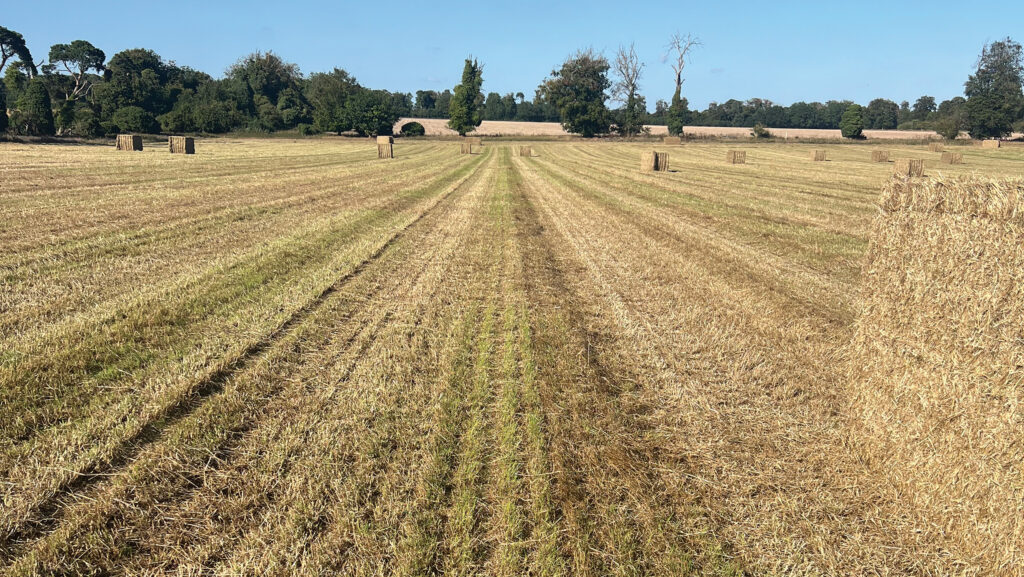
The farm now grows herbage seed, with sows going on after the grass seed harvest, the timing of which is dependent on the heading date of the variety of grass sown.
“We have 5,000 sows on a bed-and-breakfast contract, also with [Ian] Mosey, and these will go onto as much grass as we have,” says Richard.
Richard Wright © Sara Gregson
“If there isn’t enough, we will put some on barley stubble – but we prefer the grass.”
The herbage seed is harvested with a stripper header on the combine. The stalks are then mowed and baled and the hay removed.
The area is fenced, the huts, shades and water infrastructure installed, and the pigs arrive as soon as this is ready in the autumn.
Root structure
© Sara Gregson
Herbage seed is a high-input crop with a full programme of fungicide, herbicide and growth regulators, as well as a high fertiliser regime. It is sown after ploughing and a full set of autumn cultivations.
This means the grass is well established and the roots are anchored into the ground by the time the pigs settle in.
“The pigs stay in the six-year rotation for two years, with the grass seed, barley and sugar beet or carrots. They do a great job of rejuvenating the soil and are a crucial element of the business,” says Richard.
Advice on seed mixes
Sowing and grazing grass with pigs needs careful management to support the pressure that will be exerted on it.
Unlike cattle, pigs graze from the ground up, rooting, chewing and consuming plants as they find them, explains Sam Lane, director of seeds and technical at Cotswold Seeds.
“This means mixtures need to be quick growing, but also they must be resilient.”
Short-term leys
One- to two-year leys will mainly comprise Italian ryegrass and westerwolds for fast cover.
They may also contain leafy brassicas and turnips to provide diversity in the diet and encourage foraging behaviour, which improves pig welfare. A legume may also be added to boost dietary protein levels.
“This is specifically a mix for short-term forage and cover that will be grazed, taken full advantage of and then terminated. The vetch is high in protein and the ryegrasses are aggressive growers,” says Sam.
“As for all grassland reseeds, drilling a mixture like this needs a fine, firm seedbed and the field needs rolling after to ensure good seed to soil contact.”
As long as there is enough rain, germination can be very quick and on the lightest land, pigs could be on it in eight to 10 weeks.
“Bear in mind that mixtures with fodder crops in them will need drilling by mid-September.”
Longer-term seed mixes
For longer-term mixtures, leys including late-heading, ground-covering perennial ryegrass varieties, creeping red fescue and white clover should be considered.
Adding herbs can also have benefits, for example, plantain or chicory quickly develop deep roots that are good for soil structure and improved rainfall infiltration.
Chicory and legumes like bird’s-foot trefoil are mineral-rich and can improve gut health and act as a natural dewormer.
“Managing the grazing pressure will be critical if the sward is to last. Resting or ‘flipping’ paddocks can help mixtures recover for several weeks between grazings,” Sam advises.
Pros and cons of grass in outdoor pig systems
Pros
- Good for soil structure
- Increased soil organic matter
- Holds rainwater/reduces run-off/less mud
- Even distribution of dung
- Cooler lying for sows
- Keeps sows occupied
- Fibre is good for digestion/less constipation
- Fitter/healthier sows
- Less straw eaten/needed for bedding
Cons
- Sows graze from the ground up and can trash soil
- Resilient mixtures required for longer term
- Needs careful management
- Flipping/resting paddocks can extend life but takes extra land