

7 ways to protect grass growth from dry weather extremes
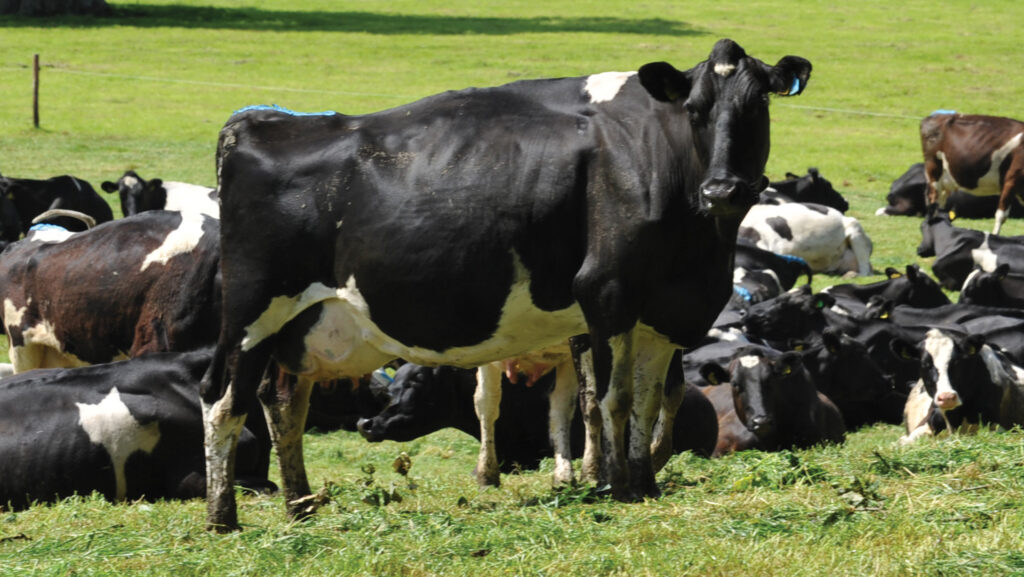 © Debbie James
 The UK had the warmest and sunniest spring on record in 2025. Twelve months on, after a winter of extreme rainfall in some regions, this year’s growing season is following a similar trajectory.
See also: How to prevent heat stress in grazing cows
Soil moisture and high daily temperatures are beginning to impact on daily grass growth.
Given the risk of a sustained dry period, independent grassland specialist Chris Duller advises farms to take prompt action to manage the situation – although he admits second-guessing when a dry spell will come can be tricky.
“There are limits to what can be done in the short term when the weather forecast for the next few weeks shows high temperatures, but learning to adapt and to make changes quicker will definitely improve the situation,” he says.
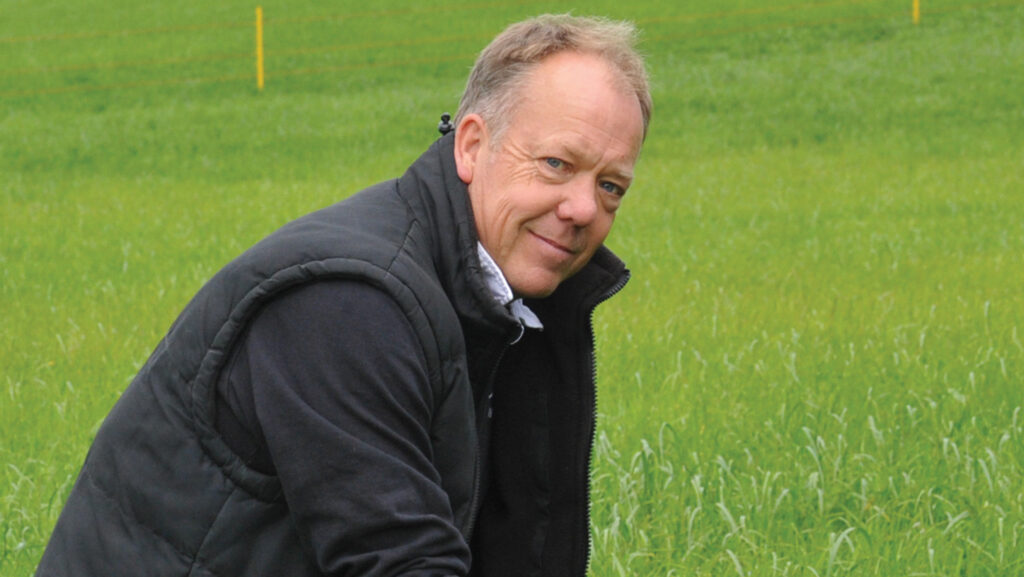
Chris Duller © Debbie James
Grass growers best placed to react are those who measure grass, he reckons. “They will know exactly how bad the problem with grass availability is.”
Technologies, such as a soil moisture probe running off a weather station, are helpful and their cost is relatively low, he adds.
Here, Chris suggests ways of protecting pasture and feed stocks to shore a system up against weather extremes.
1. Do a forage budget – know what you need
There are big advantages to having a forage budget, yet few farmers do one, Chris finds. Those who do will be one step ahead of a potential pinch point.
Forage budgeting involves assessing on-farm feed and forage availability against livestock demand.
It can be useful when grazing is in short supply, he says, either giving peace of mind that supply will match expected demand, or identifying shortfalls in supply early, allowing for early intervention.
2. Measure grass
Data is king and none more so than information gathered from measuring grass. Measuring dry matter (DM) a hectare gives an extra 10 days of decision-making compared with “being in the dark” on grass availability, says Chris.
“That data will show very clearly the grass growth situation on the grass cover graph.”
Fields and paddocks should ideally be walked and measured weekly during the grazing period. If this time commitment is off-putting, he says he would rather see farmers measure less often than not at all.
3. Avoid grazing pasture too tight
Some green leaf must be preserved during a dry spell, says Chris. “Keep some cover: avoid targets of 1,400-1,500kg DM/ha, as these will delay regrowth by up to six days compared with a residual of 1,600kg DM/ha, since the grass will take longer to recover.”
In addition, soils are more prone to drying out when there is little cover. During dry and hot conditions, he suggests farmers should not get too concerned if their paddocks look “a bit scruffy”.
With a longer residual, there will be some loss of quality. This is because some grasses will be getting to the heading stage, since the residual is the average cover for that ley.
“We should try to avoid losing too much quality, but coming out at 1,600kg DM/ha is a good compromise, If there is no rain in the forecast, it is better to leave a little bit of grass behind,” he advises.
“Some of the more extreme grazing farmers might struggle with that mentality, but it is worth sacrificing a bit of quality to keep grass in front of you.”
4. Pre-mow to reduce wastage and control residual height
Pre-mowing paddocks freshens up swards and gives grass height uniformity. Many grazing farmers opt to do this after the fifth or sixth rotation in a season when there are no weather challenges, but Chris says that in a dry spell there are advantages to pre-mowing earlier.
“Most farmers will be pre-mowing at some stage to press the re-set button. If it comes a little bit early, then it will get quality into the next rotation, as long as the mower is set at a cutting height to leave a decent cover – don’t scalp it.”
He advises a cutting height of 5cm, no lower.
5. Allow some flexibility in the silage system
Incurring the cost of making silage, only to feed it six weeks later when cutting has left a grazing deficit, makes no practical or financial sense, says Chris.
Some farmers are rigid in their approach to silage dates and the fields they have earmarked for the job. As the UK experiences more frequent weather extremes, that mentality must change, he stresses.
“Be prepared to bring extra fields into the grazing round. That grass might be strong and the wastage higher, but it is better to make decisions early rather than end up ensiling the grass and feeding it out a few weeks later.”
He suggests employing staggered cutting when conditions are very dry, rather than taking, say, 60ha (148 acres) in one cut, which exposes each of those fields to the same stage of low production in a drought.
“Be a bit more flexible with dates, whether in shutting off fields to build cover for silage or in the cutting dates, because you will have that extra bit of grass coming through in stages.”
For farmers who are keen to take as much as they can in one harvest, he recommends applying the staggered cutting mindset to a small acreage and being agile with decision making.
“Take 20 acres [8ha] out as bales and take them tomorrow if you know there are another two weeks of dry weather ahead, even when ideally you would leave it another two weeks before cutting.
“By cutting early, that grass can be [back] in the grazing round much quicker.”
Chris admits there will be a trade-off: some silage yield will be lost and there is the hassle and higher cost of harvesting a small amount.
However, it will give reassurance that those 8ha (20 acres) will provide sufficient grazing to get stock though a drought that may extend for several weeks.
6. Consider de-stocking
A beef farm that might normally sell its stock as forward stores could instead market them as weanlings to create some slack in the system.
Chris points to Australia where one of the first measures farmers take during a drought it to sell animals.
“It could be an opportunity to let go of your voluntary culls, animals you know you shouldn’t really be carrying,” he says.
“There is little point in keeping barren cows another six or eight weeks to fatten when there is pressure on grass and feed. Get them gone and have that extra wiggle room.”
7. Split stock into smaller groups
In dairying, measures to alleviate grazing pressure include splitting milkers according to yield, drying autumn calvers off early, or perhaps reducing milking frequency to once daily.
Split-block calving offers a more permanent solution, Chris believes. “Having an autumn and spring split gives a bit more resilience, because in a summer drought the autumn calvers can be on tight grazing.
“When you have the entire herd on the same yield profile, the same grass demand, it is difficult to find a group of animals that won’t be impacted by reducing their feed availability.”