

Five ways to get more from grass on suboptimal soils
 © Bill Harper
 Weather patterns have a big influence on farm profitability, not least on holdings with less-than-perfect soils.
New challenges have been added to the management of fields with heavy or poorly drained soils as the climate becomes more extreme.
Although soil texture is a limiting factor, there are basics that farmers often overlook, and employing different strategies can improve productivity.
See also: Benefits of sward lifting for profit and environment
1. Unblock drains and clean ditches
Independent grassland specialist Chris Duller says a lack of maintenance means many farms he visits have blocked ditches and field drains. While it can be tricky to check if drains are running when the weather is dry, there will be opportunities as soils get wetter.
If blocked, hiring a jetter with a high-powered water jet is a quick way to clear drains. “A lot of drains were put in in the late 1960s and early 1970s when there were grant schemes, and they have basically clogged up,” says Chris.
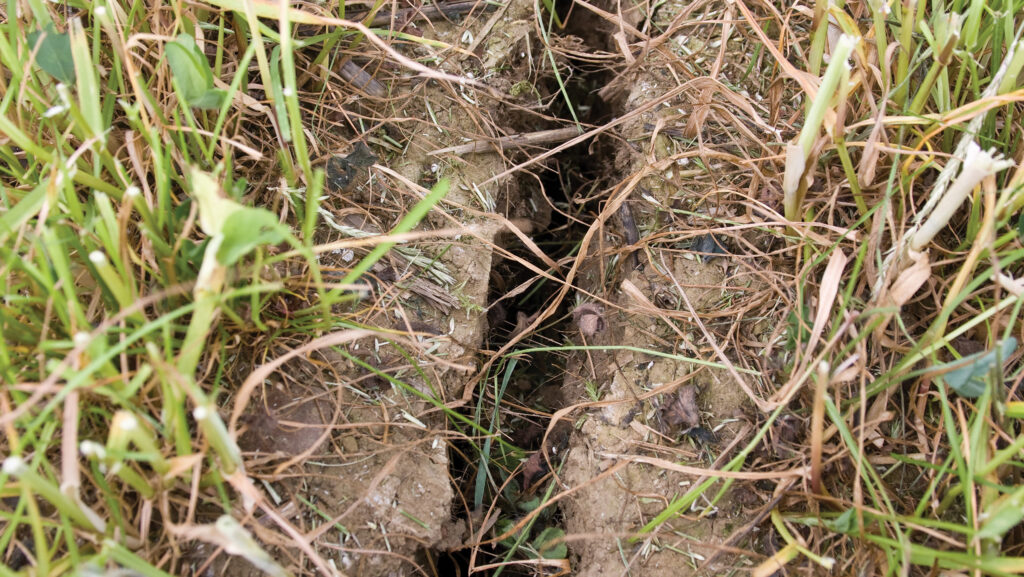
“After a very dry summer, big vertical cracks open up in these heavy fields that go right down to the drain, and rain washes the silty particles from the surface down those – what we call bypass flow.”
Another risk is pollution, as slurry will migrate through those cracks. “People think the risk of pollution from spreading slurry is worse in winter, but the biggest risk is when the summer has been very dry,” Chris reckons.
In an ideal world, farmers would have a drainage map to identify where drains are, but many don’t. A good starting point, therefore, is to clean ditches – this should expose drain outlets.
A holly tree was traditionally planted at the end of a drain to pinpoint its location year round, which could hold a clue on some farms.
© Tim Scrivener
2. Improve field access
Multiple access points to a field will limit soil damage and the consequential compaction. Many existing field gateways were established hundreds of years ago and despite them being in the wrong place for current systems, they haven’t been moved.
Some fields have no gateway at all, which means farm machinery must be driven through another field to access it for cultivation and harvesting.
Creating extra gateways is a quick and easy job on farms with electric fence lines. “It takes less than half an hour to put a bungee up. Little things like that can make a huge difference, because the more gateways there are, the greater the flexibility and the less damage caused,” says Chris.
“Wet gateways are also a pollution risk because they are commonly next to a road, which means all that material from the stock and the soil gets washed down the road when it is raining, often into a watercourse.”
He advises checking siting of water troughs and suggests the ideal location is in the middle of a field, not by a gateway or under a hedge where animals shelter from the weather. “When a field that is known to be wet is grazed, if the trough is in a sensible place the stock will make as little as mess as possible.”
© Tim Scrivener
3. Adjust timing and intensity of grazing
Soil type and texture are the biggest limiting factors in how fields are used and are important indicators of how they behave.
Fields with impermeable subsoil hold water – moisture moves through very slowly, moving back up when it hits that layer. Other fields have a fine, silty surface and when it rains, those clay and silt particles swell, almost sealing the top.
Water builds up on the soil and is slow to move down, making fields greasy and sticky, says Chris.
“There can be standing water on the surface, but four inches underneath that it is as dry as a bone. That can be purely down to soil texture, not compaction, but it’s important to dig and have a look at what is causing those wetter soils.”
This should dictate how fields are grazed. In those with a sticky topsoil, Chris recommends avoiding big covers of grass, as that means grazing greater number of stock and for longer.
“I would rather see a field like that grazed twice at 2,400kg dry matter [DM]/ha instead of 3,000kg DM/ha-plus,” he says.
If wet fields are to be grazed in the final rotation, this should be done as early as possible. “Farmers shouldn’t be grazing their wettest fields on 1 November, but rather in the first or second week in October,” says Chris.
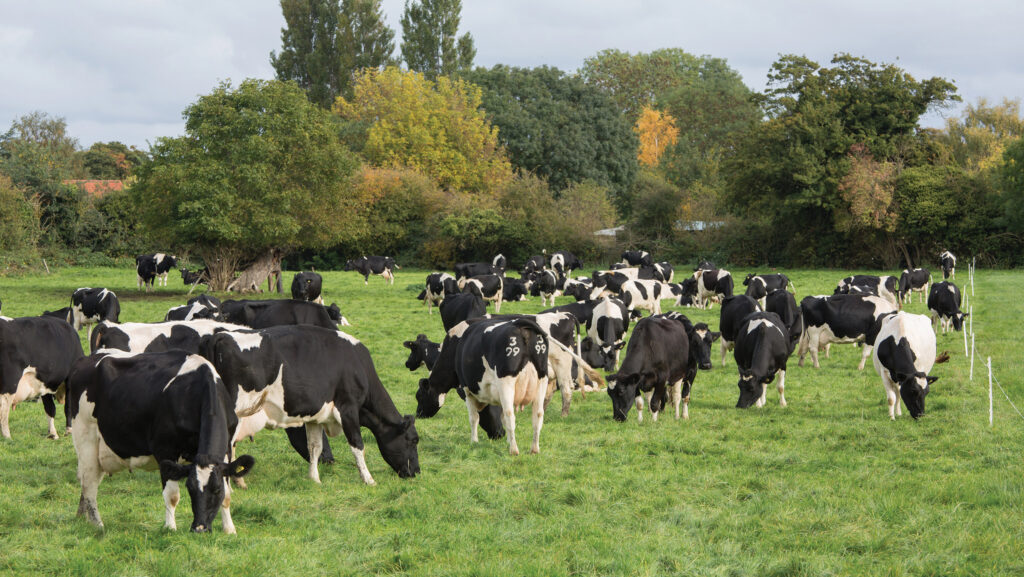
It is not an animal’s first footprint that damages soil, but when land is repeatedly trodden on. He advises back-fencing to prevent access to previously grazed areas, even letting stock graze a wet corner for a few hours before fencing that section off.
Hitting grazing residuals of 1,500kg DM/ha shouldn’t be a priority in wetter fields. “Come out at 1,650kg DM/ha, because the damage done in taking that last little bit down to a textbook residual height is just not worth it,” says Chris.
He also recommends on-off grazing to avoid soil damage. On dairy farms, this could mean turning out cows after milking to graze until midday before returning them to the collecting yard and conserved feed.
“They will eat 6-8kg DM of grass during that time. If they are left in wet fields until 4pm, they will only graze another 2-3kg and will make a big mess,” he points out.
4. Check soil fertility
Regular liming helps soil to aggregate, preventing it from collapsing and limiting porosity. Maintaining pH is therefore a wise investment for managing fields with wetter soils.
Excessive phosphate and potassium indices should be avoided, especially on dairy and poultry farms where slurry is spread.
While that slurry creates a very fertile soil in the top layer, grass roots, especially ryegrass, won’t reach much further down, as that top layer is where the “goodies” are.
“A big layer of root mass at the top will act like a big sponge, making the surface wet and greasy,” says Chris.
5. Time mechanical intervention carefully
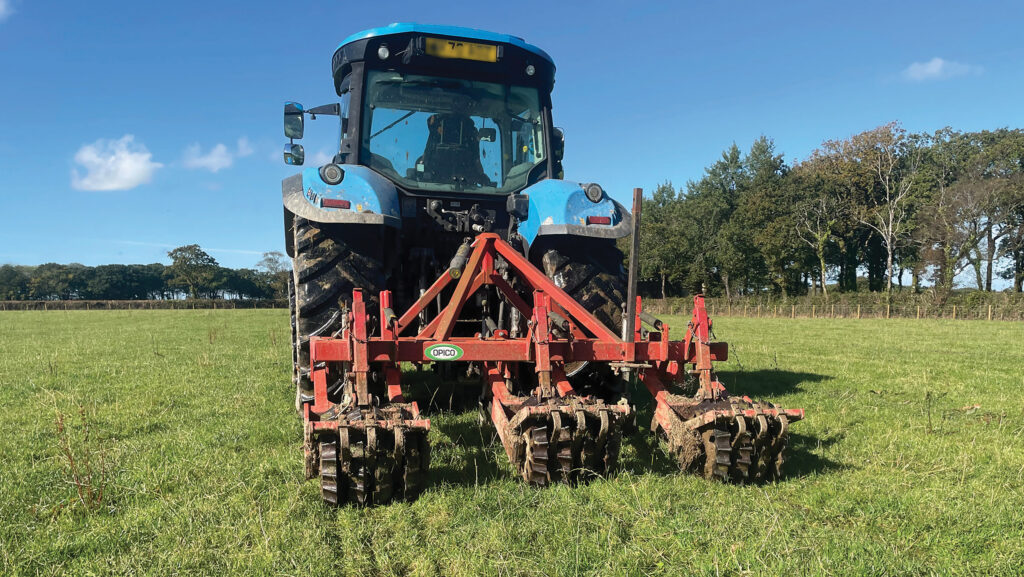
In fields that are wet on the surface but dry underneath, the culprit can be a layer of compaction. The autumn provides a good window of opportunity to use a sward lifter to break that pan, after a field has been grazed or a cut of silage taken.
“The soil needs to be dry enough to crack where the leg is running through, and to prevent wheel slippage,” Chris advises, adding that the depth of any compaction layer should always be checked before starting work.
This is often at about 15-20cm, so it is not necessary to run the machine too deep.
“Don’t assume the compaction is the same across the whole field either – in many cases it can be limited to just headlands and areas that get a lot of traffic,” he says.
Mole ploughing is not advisable when conditions are still dry, because moisture is needed to seal the channel that the plough creates to move water away from the surface. Rather, this is an intervention to add to the long-term to-do list.