

Grassland focus on upland farm lays foundation for expansion
 © Ruth Rees
 The return of the fourth generation to Cwmbrynich Farm has given the Havard family renewed confidence in the future of livestock farming in the uplands.
See also: Top tips on tailoring herbal leys to upland farms
Brothers Gethin, Huw and Howell Havard run a beef and sheep enterprise near Senybridge, Brecon, where they manage 135 suckler cows and 2,000 ewes across 486ha (1,200 acres) of uplands.
The arrival of Huw’s son, Dafydd, back on the farm has re-energised the business, bringing new ideas.
The Havards have bucked trends, increasing suckler numbers by 30% over the past four years as they have taken on more habitat land.
While grazing management and breeds continue to evolve, the business remains firmly rooted in cattle and sheep enterprises that complement one another and thrive in the challenging upland landscape.
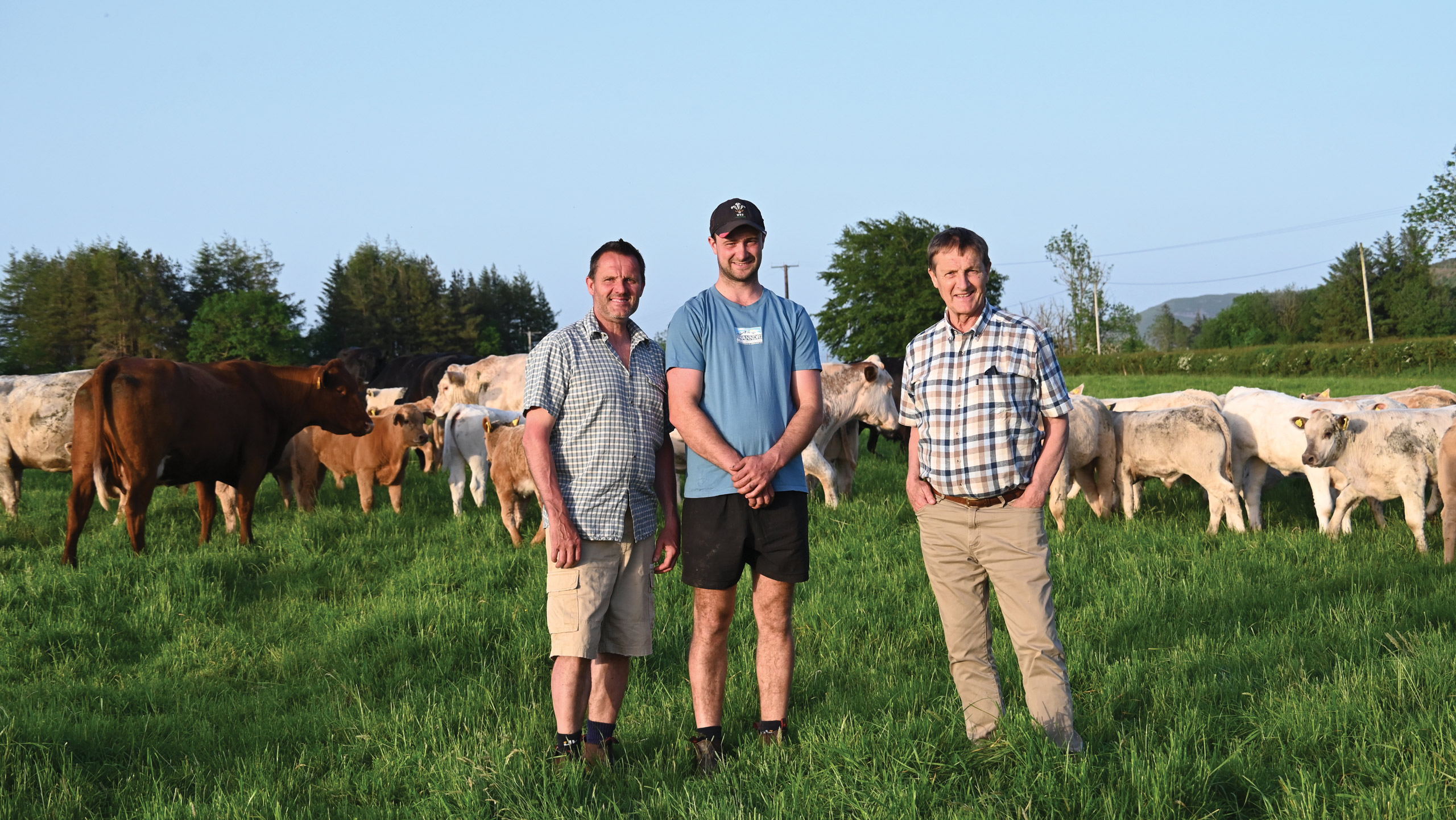
Gethin, Huw and Howell Havard © Ruth Rees
Growing the suckler herd
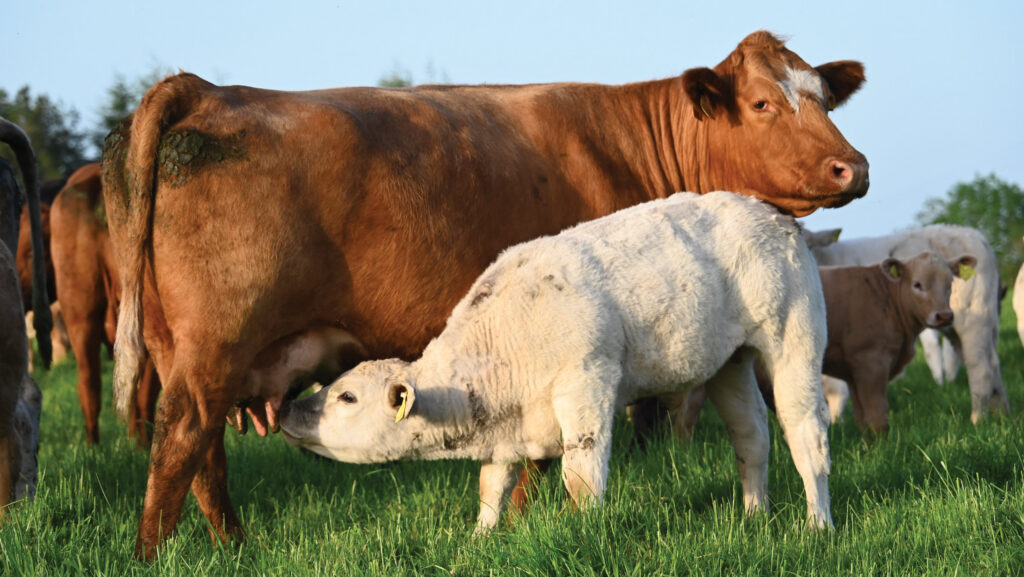
Central to the business is the suckler herd, which is playing an increasingly important role in managing the farm’s habitat.
The predominantly spring-calving suckler herd comprises Limousin, British Blue and Salers genetics, with replacements bought from local markets, either with calves at foot or as bulling heifers to calve at two years.
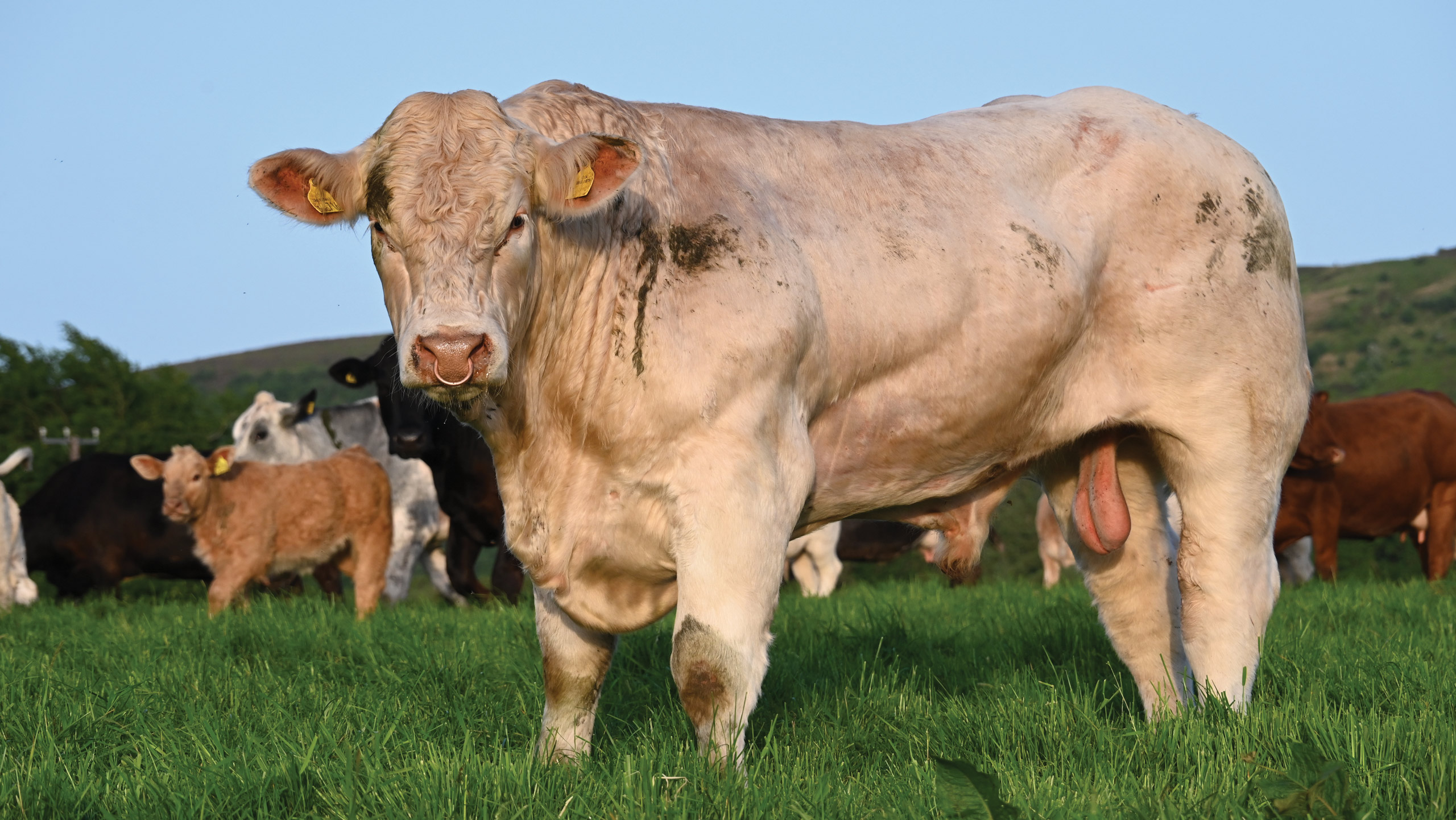
Cows and heifers are served to a Charolais bull, a breed the Havards value for its versatility. Bulls were originally sourced from Stirling Bull Sales, but additional cross-border TB restrictions mean the Havards now buy from the Welshpool Livestock Market.
Last year, they purchased a bull from the Sportsman herd, chosen for its good calving ease figures and easy-fleshing credentials.
“The Charolais is a different breed from what it was 20 years ago. Heifers go to the bull at 15 months and calve without any issues,” says Gethin. “You can cross the Charolais with any breed of cow, and you end up with a uniform bunch of calves to sell.”
Heifers calve indoors at the end of February, with cows following at the beginning of March. Cows receive no concentrate, just grass and silage.
Calves are fed ad-lib creep at grass from July until October when they are weaned and sold aged eight to nine months, either at local suckled calf sales or privately. Steers average 370kg and heifers 330kg.
© Ruth Rees
Farm facts: Cwmbrynich Farm, Senybridge, Brecon
- Farms 486ha (364ha owned)
- 135 suckler cows
- All grass plus 4ha swedes for ewes
- Runs 2,000 ewes
- Sustainable Farming Scheme agreement
Embracing technology to manage hill ground
As they have taken on more ground, the family have begun exploring new technology to improve grassland management. They have recently started using Monil virtual fencing collars on cows.
Paddocks are mapped on an app, and the collar emits an audio cue followed by an electrical pulse if the animal wanders outside the designated area. This trains the animals to turn around when they hear the audio cue.
Gethin believes the collars will be most beneficial on the vast moorland habitat they manage as tenants of Natural Resource Wales, but they are exploring other uses.
Currently, calves without collars are being allowed to graze ahead of cows on in-bye ground to ensure they receive the best-quality grass.
On the moorland habitat, grazing by sheep is prevented. Instead, the area is grazed by cattle from June until October, and by 25 ponies year-round.
“The collars are working well, but they rely on a good signal, and my concern is that when we start grazing the hills, they might not be as effective – we will have to find out,” he says.
Running a stratified sheep flock
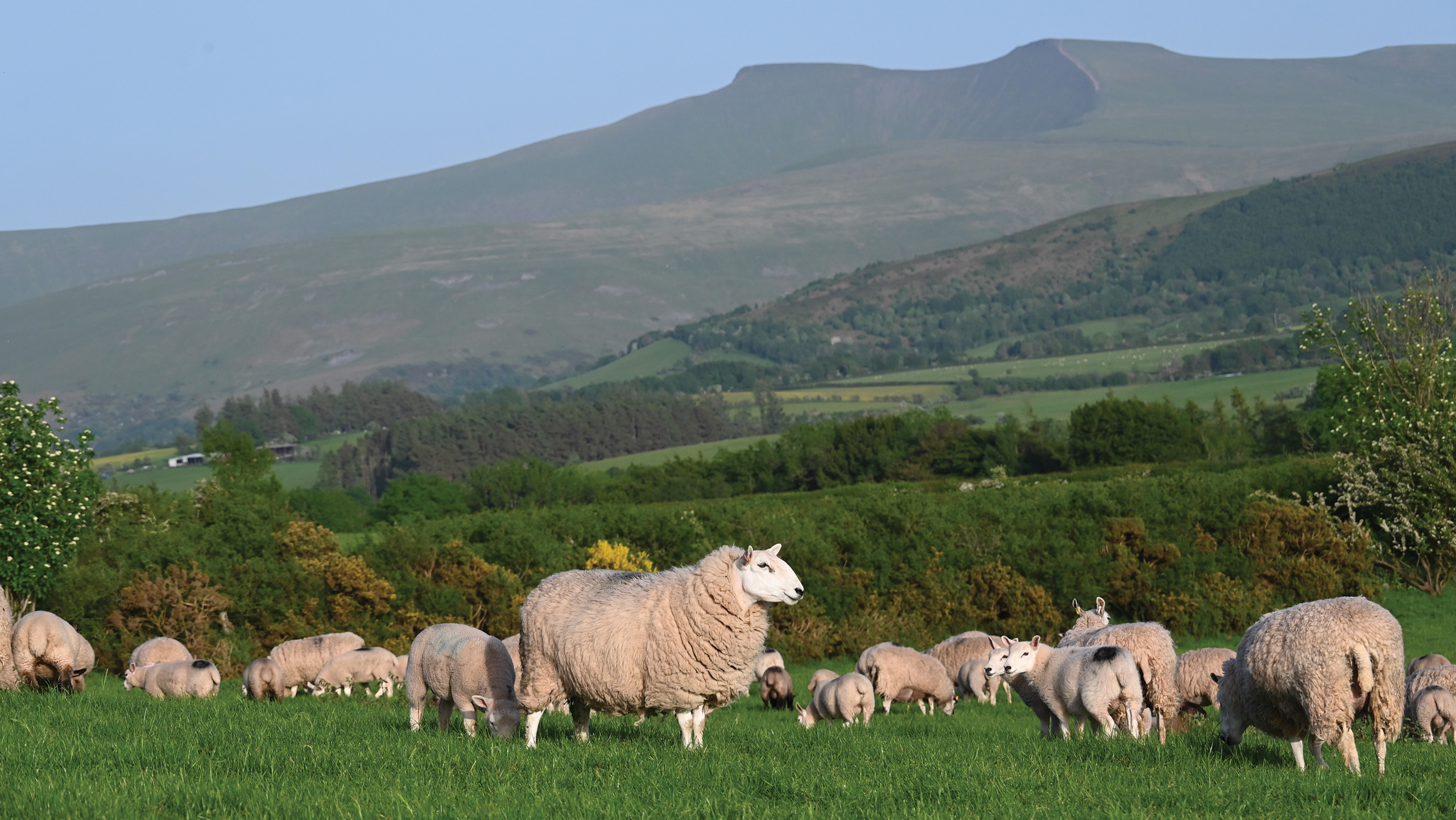
Alongside the suckler herd, the Havards run 2,000 ewes. This includes a nucleus flock of 650 Brecknock Hill Cheviots. These graze on the Great Forrest of Brecknock, where the family has grazing rights.
The Cheviots are largely kept pure, with some older ewes bred to Bluefaced Leicester to produce replacements for the lowland flock. About 200 of the best ewe lambs are kept for replacements, alongside 10-12 tup lambs.
The lowland flock comprises 1,400 crossbred ewes. White-faced ewes are mated to Aberblack or New Zealand Suffolk rams.
Meanwhile, Texels are used on black-faced ewes to produce ewe lambs, which are then sold for breeding.
© Ruth Rees
Dafydd also inherited his grandfather’s small pedigree flock of Suffolks, which Gethin says he has “saved from the brink of extinction”. “Dafydd has done a marvellous job.
They are a different breed altogether from what my father struggled with for 70 years. They are thriftier and much easier to flesh.”
Remaining lambs not retained or sold for breeding are sold to Kepak at 21kg deadweight, hitting R- and U-grades, with a few sold as stores.
The lowland flock lambs indoors from February, and the hill flock lambs outdoors from the last week of March, though they plan to re-evaluate this.
“We will have to scrutinise indoor lambing because labour is becoming a huge issue. We may move to easier care stock with less human intervention,” says Gethin.
Investing in grass from the soil up
Productive young grass leys are the foundation stone for finishing stock, says Gethin.
They reseeded 24ha (59 acres) last autumn in preparation for the event. Dafydd has been keen to incorporate herbal leys in grazing swards and red clover in cutting leys.
Soils are tested regularly to ensure the correct pH, and farmyard manure is applied to boost organic matter. “It can be a nuisance in terms of storage, but the benefits outweigh the disadvantages,” says Gethin.
The cattle and sheep enterprises are ideal for the upland farm, with cows grazing parts of the farm that the sheep cannot.
“Our forefathers tried and tested this over centuries, and it worked for them, and it’s still working for us.”
While Gethin says they will likely tweak genetics in the future to improve efficiency, the enterprises will remain unchanged.
“We may introduce more native blood into our cows so they can survive on poor forage and maintain condition,” he adds.
Looking ahead – policy and the next generation
Looking beyond the farm gate, Gethin is cautiously optimistic about the future of Welsh agriculture following recent commitments from the cabinet minister for rural resilience and sustainability, Llŷr Gruffydd.
The minister attended the event and promised to scrutinise red tape and simplify the Sustainable Farming Scheme, which the Havards entered in May.
“I’m heartened by what Llŷr has said, and I’m hopeful he will enact what he promised.
“We’ve waited 25 years to have an address of this nature, one that speaks our language, understands our way of life, and recognises how important farmers are to the rural community.
“Politicians need to appreciate what farmers do, not just on the land, but for our community. Our contribution towards GDP is low, but when you look at the whole picture, it’s immeasurable.”
Hopeful that Plaid could turn the tide for farmers, Gethin believes the future is bright for the next generation of young farmers.
“When you consider climate change and population growth, food production must be in a good place, and we are going to need the best young farmers to drive the industry forward and embrace science.”