

How clover leys helped lift profit after loss of rented land
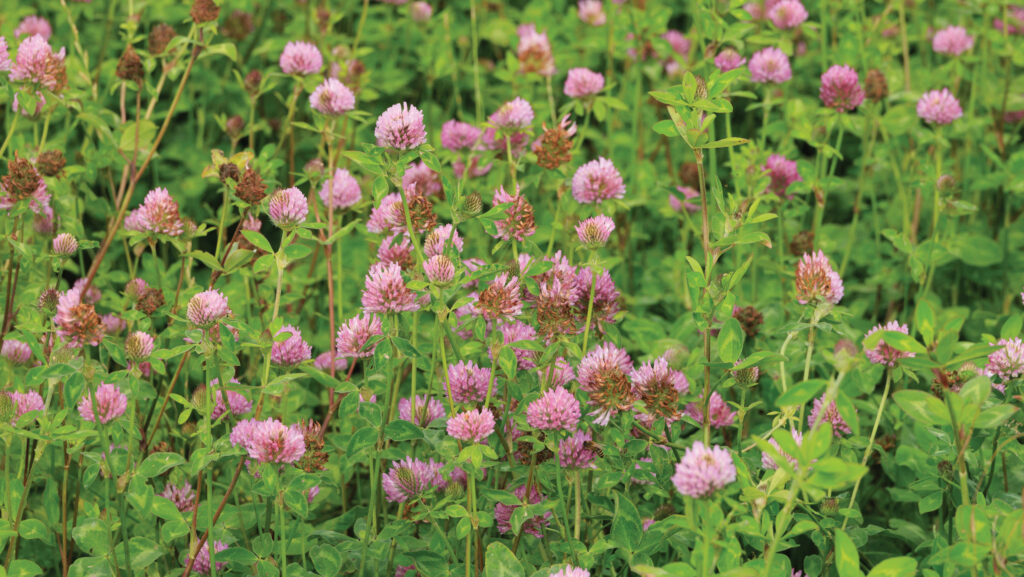 Red clover © Tim Scrivener
 The sudden loss a large block of rented land was a big setback for the Roberts family.
But by increasing output from their remaining acreage and reducing inputs, they have ultimately made their business more profitable.
Father and son David and Mathew Roberts farm Ty Draw, part of the Golden Grove estate near Holywell, and also rent other land, all subject to different agreements.
See also: Red clover allows sustainable intensification on beef farm
Farm facts
Ty Draw, Holywell, Flintshire
- 283ha rented land
- 350 dairy-beef cattle finished annually, with numbers set to increase
- 1,400 Texel-cross and Suffolk ewes
- Clover-rich leys
- 16ha winter barley and 5ha spring barley grown for beef enterprise
- 8ha forage maize
- Beef supplied to Sainsbury’s Gamechanger (moving from Morrison’s Elite beef scheme)
- Finished lambs sold mainly to Pilgrim’s UK, plus St Asaph market
In 2009, they unexpectedly lost a big block from the 243ha (600 acres) farmed at that time.
This was rented on a short-term agreement and included a large shed where ewes were housed for lambing.
It was a big blow, but it forced them to use the remaining land more efficiently.
They introduced a programme of soil testing, liming and reseeding, monitoring fertiliser use, and growing red clover, fodder beet and barley to make the cattle enterprise self-sufficient in feed.
The cost controls and sustainability practices they adopted are still evident across the business.
And, as other farmers on the estate have retired and more land has become available, David and Mathew have been able to increase their acreage to 283ha (700 acres) rented on five-year farm business tenancy agreements. These give them more security and mean they are better able to plan.
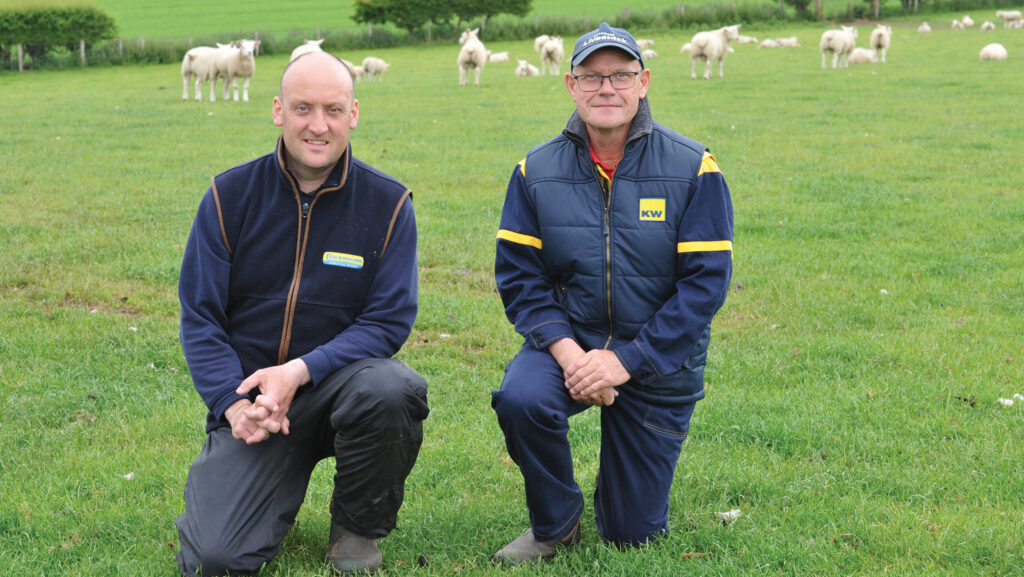
Mathew (left) and David Roberts © Debbie James
Feed costs controlled with red clover
All feed apart from concentrates for ewes post-lambing and lamb creep meal is grown on-farm, including 40ha (99 acres) of high-protein red clover to graze or conserve as silage.
Three seed mixtures are grown: a five- to six-year cut-and-graze mix with 3.7kg/ha of persistent red clover; a six-year, long-term mix with white clover and 1.7 kg/ha of red clover, for harvesting and grazing; and a two- to three-year cutting ley with hybrid and perennial ryegrass and 7.4kg/ha of red clover.
“Red clover has changed the way we farm – it gives us control of feed costs,” says Mathew.
First cut typically analyses with metabolisable energy of 12MJ/kg dry matter (DM) and 15-20% crude protein.
“Red clover makes a fantastic silage, but it can be too pokey for the younger stock,” he points out. “We make haylage or a lower-energy silage to dampen it down so it is easier for them to digest.”
This is produced from older leys and mixed in a tub feeder with the rest of the feed that goes into the total mixed ration, including fodder beet.
Further savings by growing root crops
Until this year, fodder beet has been grown for harvesting and grazing.
“It’s a fantastic feed and has massively reduced our feed costs but, for grazing sheep, it just doesn’t work for us,” he acknowledges.
With wet winters and big Texel ewes, it was too hard to see them on the bare soil, even though they looked well on it.
This year, 5ha (12 acres) will be planted, down from 7ha (17 acres).
“We would rather sacrifice a grass field, lift the beets and feed them on the field, and they will have the dry grass to nibble on,” says Matthew
He added that 4ha (10 acres) of swedes will be direct-drilled on a new block of land as winter grazing for sheep. The old turf layer should keep the land dry, he says.
Swedes will be rotated around four fields that will afterwards be reseeded with a two- to three-year hybrid grass mix to produce three cuts of silage.
Maize is being grown for the first time at Ty Draw this year.
“We have struggled to get great crops of grass [in recent dry summers] – growing maize gives us certainty that we will have forage as winter feed for cattle,” says Mathew.
Less reliance on ewe concentrates
Concentrates had been fed to pregnant ewes once they were housed.
Now, their ration comprises 4.5kg red clover/grass silage, 2.5kg fodder beet and 0.1kg rumen-protected rapeseed expeller.
Concentrates are fed only after lambing when ewes are in individual pens.
“They also get a little bit with fodder beet when they are turned out, until the grass starts coming through and the weather improves,” says Mathew.
Bought-in fertiliser use more than halved
To get the best from the land, there is a regular programme of soil testing, targeting P and K indices at a minimum of 2 and a pH of 6.
Reseeding and liming has cut fertiliser use substantially. In the spring, 100kg/ha is applied, down from 250kg/ha, while autumn application is 100kg/ha, rather than 185kg/ha.
“We are using our manure better too, putting it on the right fields at the right time,” he says.
Dairy-beef scheme in place of market stores
Previously, continental breeds were bought as forward stores, sourced from livestock marts in September and October to finish in January.
But making a profit was a struggle when the beef price was low, Mathew recalls, and being part of a dairy-beef scheme offers greater security.
Aberdeen Angus-cross cattle arrive at three and four months old, weighing an average of 140kg, and graze through the summer.
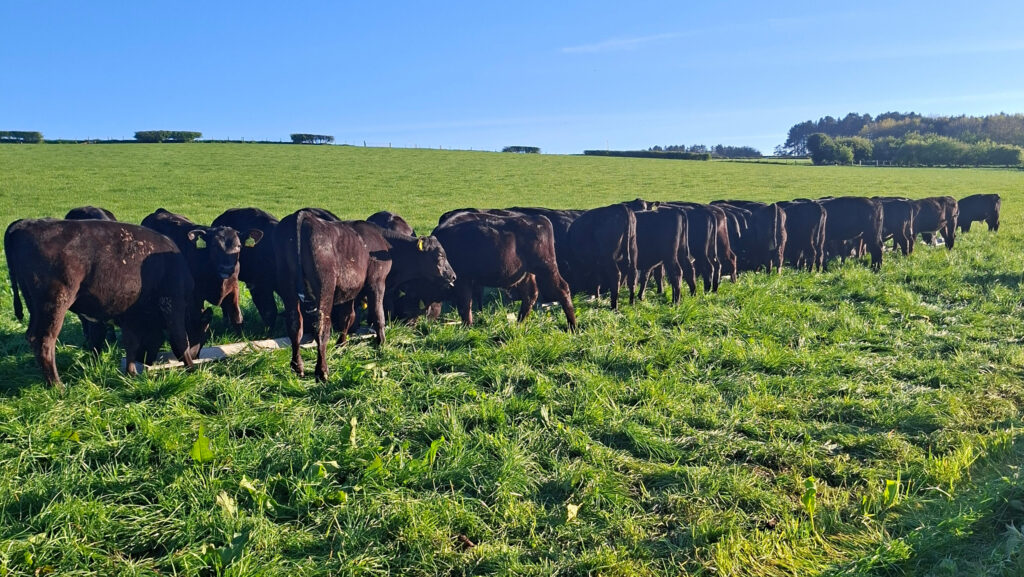
© Mathew Roberts
They are housed in September in a shed built to replace the building lost with the rented block of land.
They finish at 17-18 months – and growth targets must be met because the shed doubles as lambing accommodation, says Mathew.
Focus on finishing lambs early
Lamb is produced from 1,400 Texel-cross ewes, tupped with Texels and Beltex-cross rams.
Suffolk yearling ewes were introduced in 2021 after a bout of mastitis in the Texel-crosses and now make up 25% of the flock.
A downside is their feed requirement, but as Mathew points out: “They channel that feed into producing milk and a good-sized lamb, while a Texel will eat, put it on her back and have lambs of varying sizes.”
The first lambs are marketed at eight to 10 weeks old, producing a 21kg carcass at E or U grades, and are all sold by the end of August at an average liveweight of 44kg. Creep feeding speeds up finishing times.
“We can wean ewes early to give them a good rest before tupping,” says Mathew.
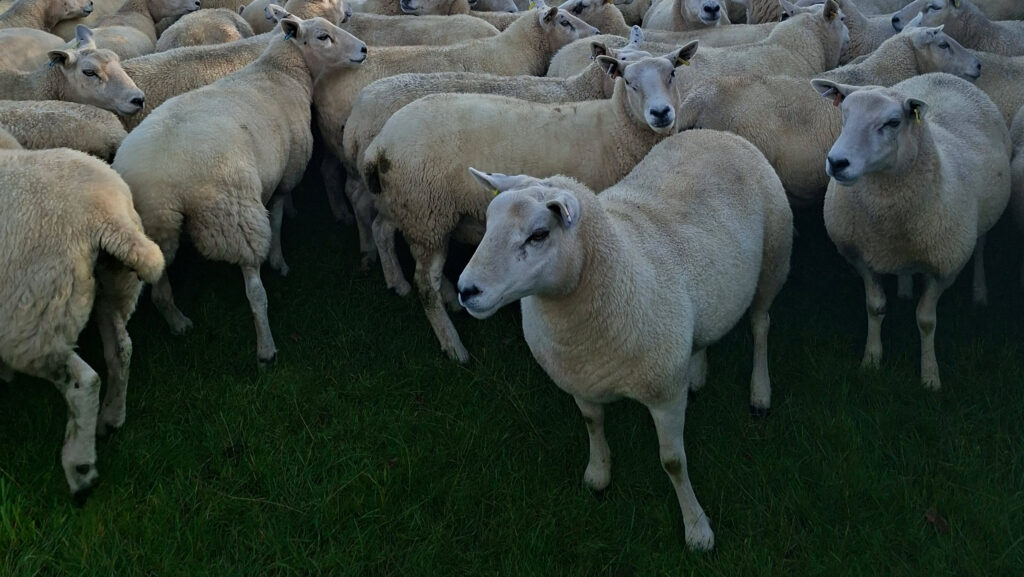
© Mathew Roberts
“It also means fields can be cut for silage and we produce a better crop for the winter.”
Early finishing also creates an opportunity for additional income: up to 1,500 store lambs are purchased in September to finish on red clover.
Business case for new opportunities
For Mathew, the changes introduced since 2009 have shone a light on how every acre must pay for itself.
“It is OK to take on more land when you are offered it, but it has to pay.
“You have to cover the rent and a bit more and have a plan of how you will make it work.”