

How solar water pumps can extend areas suitable for grazing
 © Tim Scrivener
 Lack of water supply can restrict how livestock farms make use of off-lying fields and rented land – but solar energy can offer a solution.
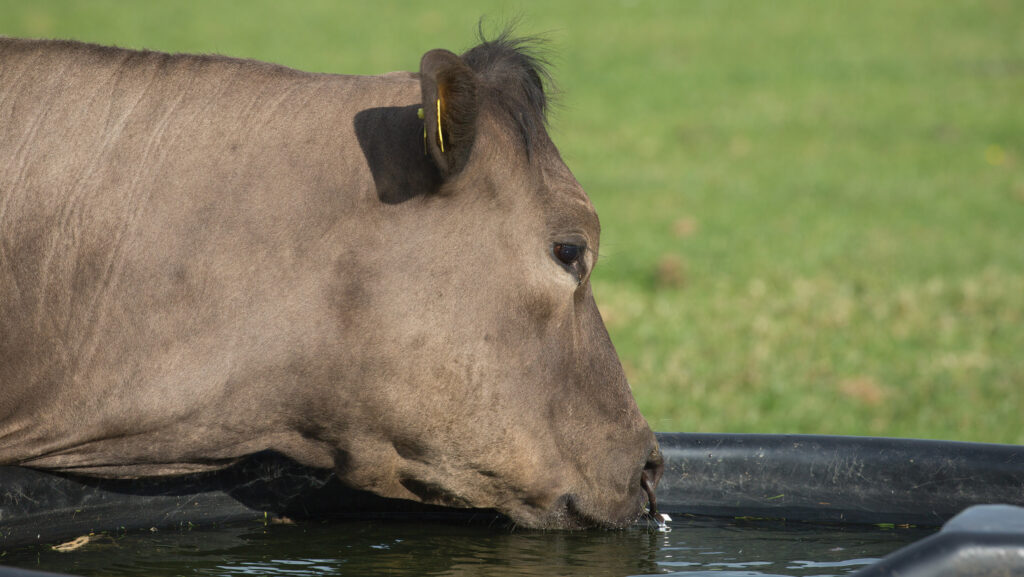
Solar watering systems give cattle and sheep access to water even in remote locations and during periods of heavy usage.
They are designed to transfer water from a natural source such as a well or pond, or a tank, to where it is needed by livestock.
See also: Advice on managing mobile water troughs for sheep flocks
Solar panels capture sunlight to convert into electricity. The electricity flows to a smart controller, which then feeds it to a pump.
Such systems are more commonplace in Ireland, where farms are typically fragmented, but they are increasingly being used by UK farmers.
We visited two to find out about the benefits they are seeing on farm.
Mount Pleasant Farm, Blandford Forum, Dorset
Mike Miller © Mike Miller
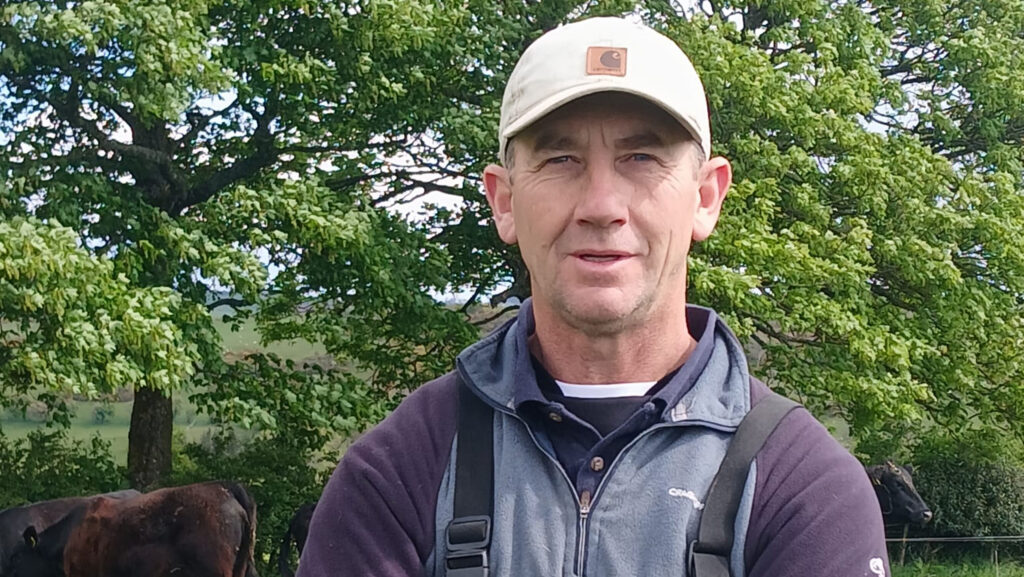
Beef and sheep farmer Mike Miller installed two solar-powered well pump systems when he secured land on a farm business tenancy six years ago.
The blocks of land are remote from his main holding, Mount Pleasant Farm, near Blandford Forum.
Although the 36ha (90 acres) has a mains water supply, the pressure is low.
This meant when cattle were at grass, supply would struggle to keep up with demand, and restrict water availability to the occupants of a dwelling drawing off the same line.
Resolving the water supply issue was an immediate priority.
Farm facts
Mount Pleasant Farm, Blandford Forum, Dorset
- 129ha farmed
- 140 three-week-old dairy beef calves purchased and reared annually
- Cattle sold as stores from 13 months
- 400 Belclare Romney-cross ewes
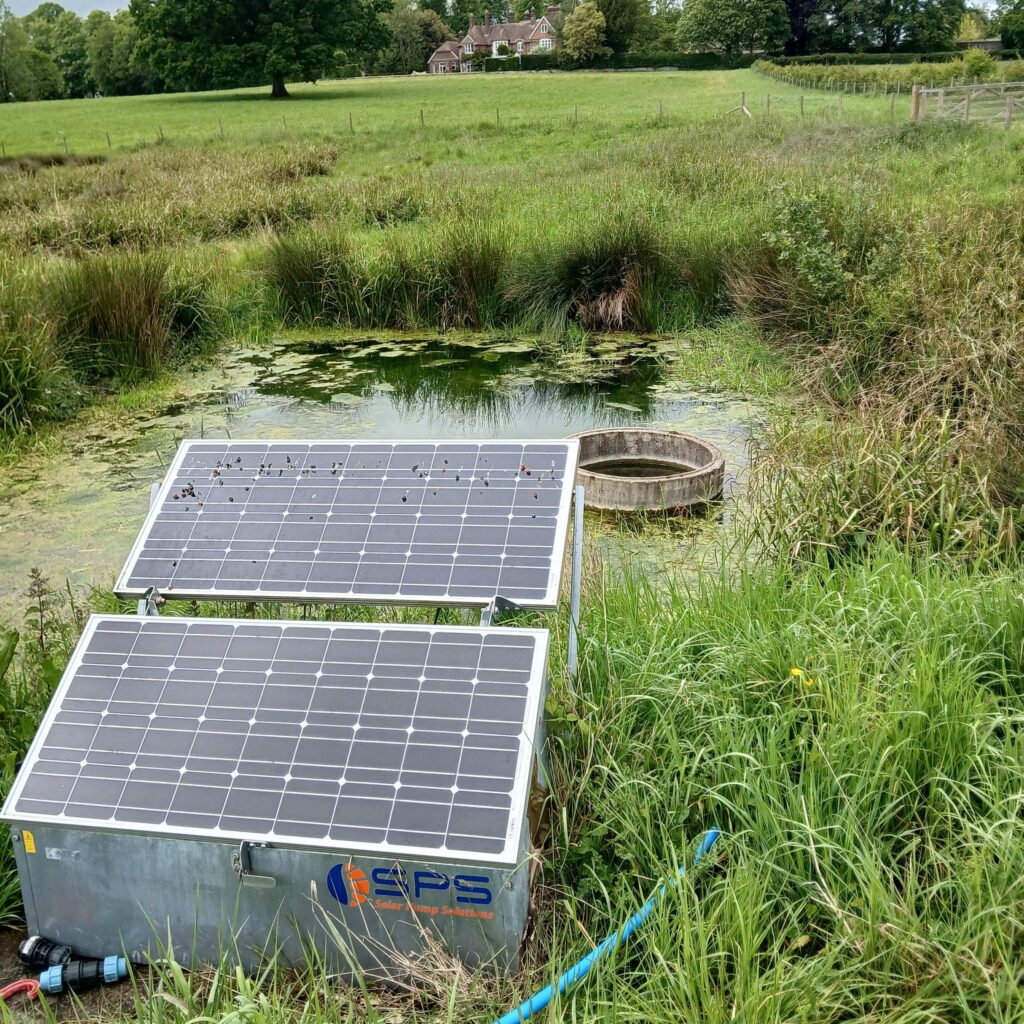
The land has multiple groundwater springs, so Mike created a spring water-fed pond in combination with an ingenious way to store and filter the water.
The system comprises a concrete ring with a layer of gravel in the base to filter sediment as the water is drawn up from the ground.
“It basically creates a clean well of water within the pond and, because the water is always flowing and moving, it keeps it as clean as a whistle,” he explains.
“These systems can sometimes struggle with filters getting clogged up, but with this setup we don’t get any issues.”
Solar pump saves on mains water costs
© Mike Miller
With no electricity supply to the land, the final piece of the jigsaw was finding a means of pumping water to the drinking troughs.
A solar pumping system offered that solution, removing the need to use the mains water supply, with its associated cost and the risk of leaks pushing up costs further.
The system gives Mike greater flexibility in how he uses the land, as it means he can use 100 litre portable water troughs.
“We can’t use drag troughs on a mains supply because of the potential risk of contaminated water feeding back into the system, as they don’t have an air break.”
He advises others considering similar solutions to prime the pumping system well before use to remove air bubbles.
“It is quite common to have air in the system, and when that happens the pump will never perform quite to its maximum,” he explains.
Is there enough sunlight to charge the battery?
Despite inevitable scepticism about how dependable equipment that relies on sunlight can be in the UK, reliability has never been an issue, Mike adds.
“I have never had a flat battery, although I have never used it in the winter. But there is definitely enough sunlight at other times of the year to keep a 12-volt battery charged up because the system has quite a big solar array.”
He has replaced the pumps once in six years but believes that is likely due to the added pressure of large numbers of cattle in paddocks, drinking from the troughs.
“It is critical that the troughs never run dry, so I plan to keep a couple of pumps as spares in the event of a breakdown.”
Flow rates are good, helped by daily moves and smaller paddock sizes. “Over the years, we have learned that if you have a massive field and the cattle all drink at once, the pump will struggle.
“But if there are 80 cattle on 0.5ha [1.2 acres] for one day, and they don’t have far to walk to the trough, they will just drink when they want rather than all at the same time,” says Mike.
Immediate return on investment
The payback from the investment was immediate from money saved on mains water costs and full utilisation of the land, he calculates.
“We paid for the solar kit, but we got a capital grant from a Countryside Stewardship scheme to bury 3km of pipes to fix to hydrants across the 90 acres [36ha],” Mike explains.
Highfield Farm, Slaithwaite, West Yorkshire
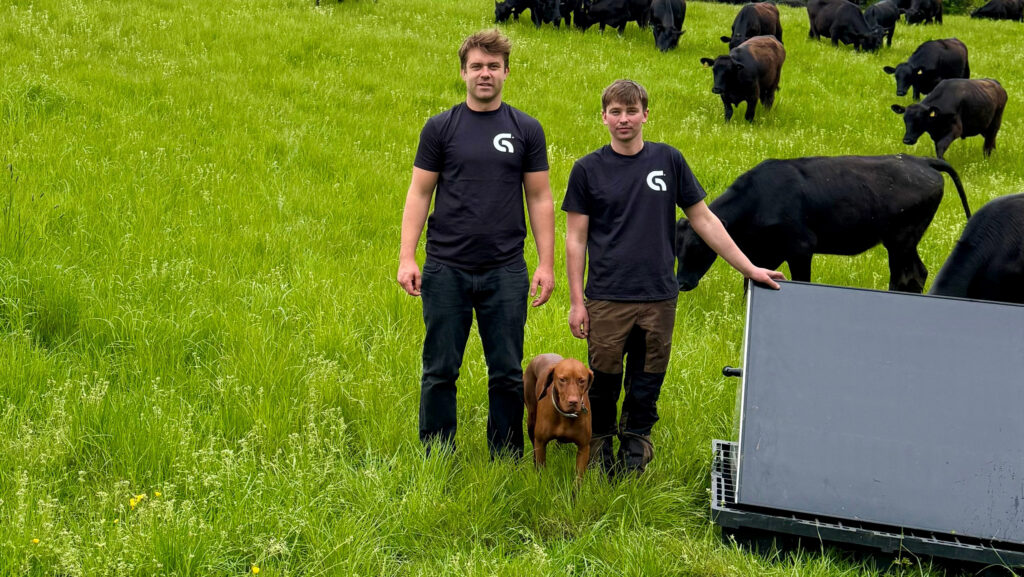
Harry and Giles Garside © Harry Garside
Solar-powered pumping systems have solved two water supply challenges on a West Yorkshire beef farm.
One block of land farmed by Harry Garside at Highfield Farm, near Huddersfield, has a mains water supply, but the pressure and flow rates are low.
It struggles to keep up with the water needs of grazing cattle, so Harry installed a solar pump in 2025 to boost supply.
At £2,300 ex-VAT, Harry says it offered the cheapest and most flexible solution and has enabled him to graze more cattle in these fields.
“I couldn’t think of another way of solving this problem, apart from getting the water from somewhere else and redoing all the pipework, perhaps replacing the 25mm pipe with 32mm, but that would have been far more expensive.”
The custom-built system was supplied by Aberdeenshire-based Ardo Water Solutions.
It was so successful that Harry bought a second to solve another water supply challenge: several blocks of rented land with no water supply. He now uses a solar pumping system to draw from ponds and reservoirs.
Farm facts
Highfield Farm, Slaithwaite, West Yorkshire
- 486ha farmed
- 60 Stabiliser sucklers, with progeny finished on farm
- 400 dairy beef calves purchased annually at two weeks old to finish at 24 months
- Beef supplied to Grassroots Farming and the Garside family’s Rumpus Burger restaurants
No need for water bowsers
“It has cut out all that water bowser nonsense – life is too short to cart water around in a bowser.
We would have been less inclined to graze as many cattle on these blocks before, but now we can graze more cattle for longer periods of time,” he says, adding that both systems were 40% funded through Defra’s Farming Equipment and Technology Fund.
Another benefit is that the pumps can be easily moved – Harry moves them between blocks according to where cattle are grazing. And performance has been faultless, he says.
“You can sometimes buy bits of kit with moving parts that have to be kept outdoors, which don’t last two minutes, but these have been very reliable.
“The solar panels point south, and we have never had any trouble with them in the spring, summer and autumn. But in the winter they did struggle, so that is something to bear in mind when outwintering.”