

5 steps to tackling digital dermatitis in dairy cows
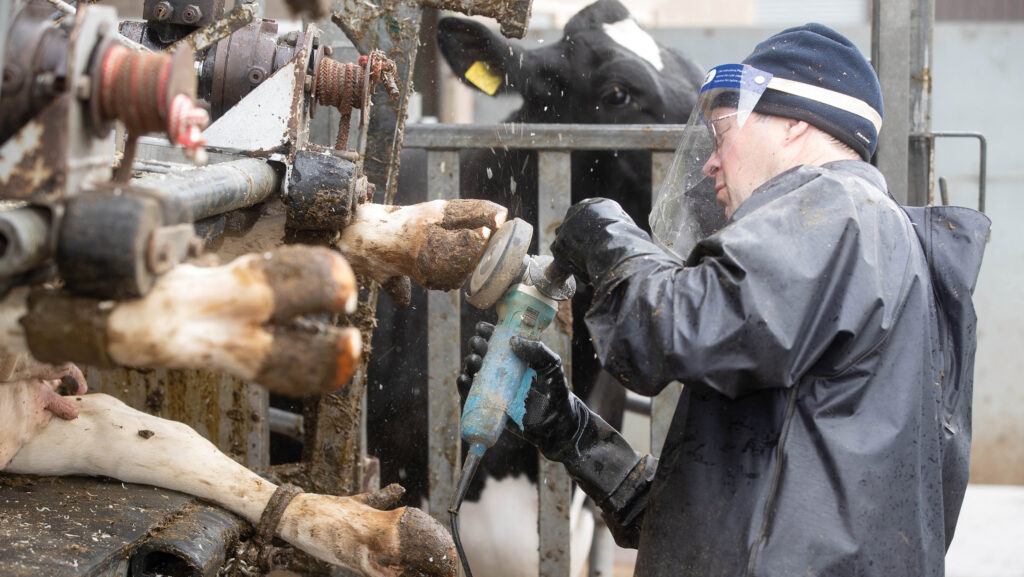 © Tim Scrivener
 Lameness prevalence in UK herds remains stubbornly high, at about 30% – a figure that has changed little for decades.
“Thirty years ago, our industry average [incidence] for lameness was 30%, and we are still there,” says hoof-trimmer Jamie Sullivan from Rippleview Hoof Care in Manitoba, Canada.
He says that the picture is similar across North America.
“Would you accept your production, herd health and fertility as they were 30 years ago? But as an industry, we still accept 30% lameness.”
See also: Expert advice on controlling digital dermatitis
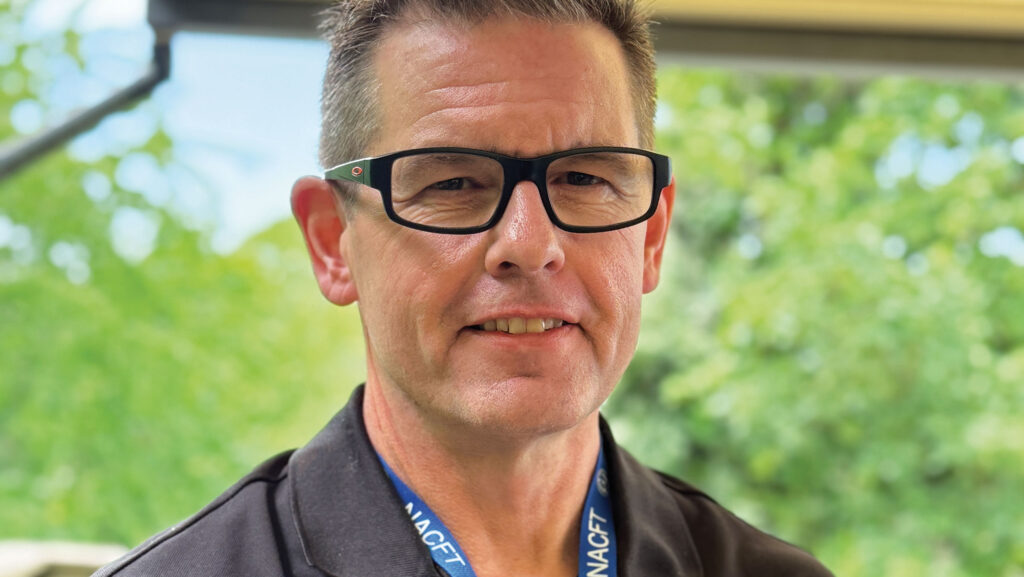
Jamie Sullivan © Rhian Price
Digital dermatitis (DD) is one of the leading causes of lameness.
Here, Jamie shares five ways to get on top of the condition.
1. Intervene early
Research from the University of Wisconsin found heifers with active digital dermatitis lesions before calving are 50% more likely to develop the disease again in the first lactation, compared with 13% in unaffected animals.
“Keeping digital dermatitis out of your heifers is important,” he says.
Foot-bathing frequency will depend on herd disease prevalence, so it is best to consult the farm vet or foot care professional.
2. Use proven products in foot-baths
“The number one question I get asked is what I should use in my foot-bath,” says Jamie, who has been a hoof care professional for more than three decades.
He is an advocate of copper sulphate because of its proven efficacy on farms he works with.
“Formalin works too, but at no more than 3%, and if you’re using formalin for employee safety, I think it should be used in an automatic foot-bath.”
He cautions against using unproven products.
“I get tired of new products. I tell companies to drop off a six-month supply free of charge, and if it works, the farmer will pay for it.
“If it doesn’t, they won’t. None of my clients have found a salesperson who’s willing to take that risk.”
3. Get the foot-bath setup right
Poorly managed foot-baths are often the cause of an “epidemic of digital dermatitis”. “If you have a lot of recurring lesions, you know something is going wrong,” says Jamie.
Foot-baths should be prepared at the correct concentrations – a classic sign the foot-bath is too strong, or foot-bathing is being carried out too frequently, is “hairy” M4 (dormant) DD lesions.
The foot-bath must be at a pH of 3.5-5.5 to kill the treponema bacteria that cause DD.
It should measure 3m in length to achieve at least two dunks of the rear feet.
It should also include a 25cm entry step to encourage cows to step into the solution, without any ledges that could be stepped on to avoid contact.
About 75% of Jamie’s clients now milk through robots, and he strongly discourages producers from using foot-baths on robot exits.
“If we have chronic cases and that animal goes through the robot nine or 10 times, that lesion is being overtreated,” he says.
He adds that the that foot-baths also become highly contaminated from heavy traffic.
Instead, he advises placing them at crossovers or in sort lanes.
He says one client has a foot-bath at a cross-over alley where cows can naturally walk through the bath to reach the feed fence.
While one member of staff dispenses fresh feed, the beds are cleaned by another person.
4. Improve foot-trimming technique
Creating a large model within the claw helps expose bacteria to oxygen in the interdigital space and improves product penetration.
“When I started doing a larger model on clients’ farms, we improved digital dermatitis without changing anything else,” says Jamie.
“If your trimmer doesn’t pull out a knife before they let down the cow’s foot, you’re getting ripped off.”
He also advises against overtrimming the heel, which can limit airflow.
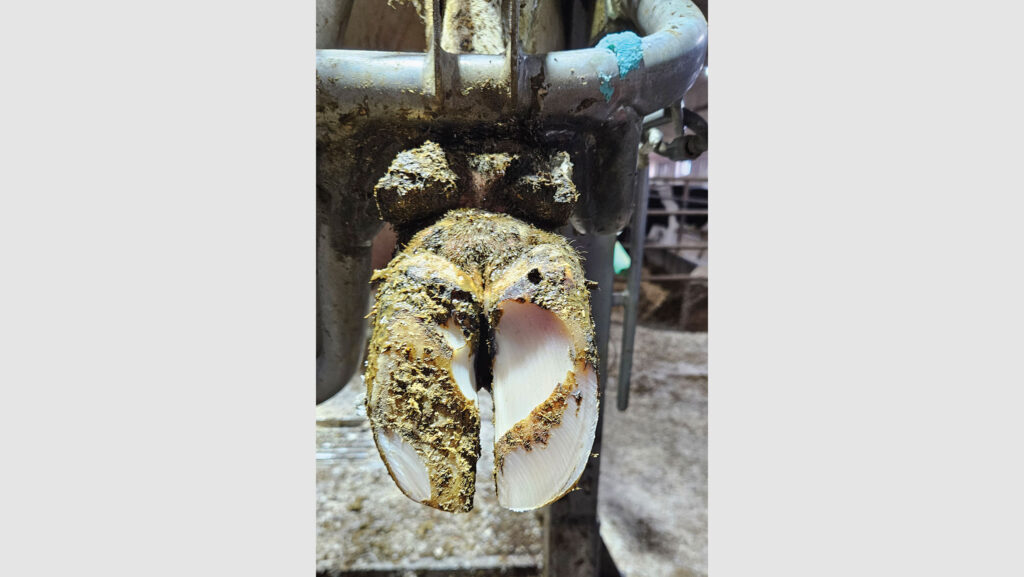
Larger model © Jamie Sullivan
5. Blitz active lesions
The foot-bath should be used to control digital dermatitis, but “blitz treatments” must be used to treat lesions.
This should involve washing the lesion, gently drying it, and applying licensed topical antibiotics daily until scabbing occurs.
More advice on digital dermatitis
Find more advice on breaking the cycle of digital dermatitis (opens as PDF) on online.
Jamie Sullivan was speaking at the recent National Association of Cattle Hoof Trimmers conference.