

How flock tested six wormer groups to inform drench strategy
A Glamorgan lamb producer has revised his worming protocols after a project investigating anthelmintics resistance established which species could survive a range of treatments in his flock.
Dai John runs 500 Lleyn-cross ewes with his father, Gareth, and uncle, Philip, and was among 48 farmers participating in the Farming Connect pan-Wales Welsh Anthelmintic Resistance Status (Wars) project.
See also: How to use and go beyond worm egg counts in sheep
Farm Facts
Manselfold, Gower peninsula
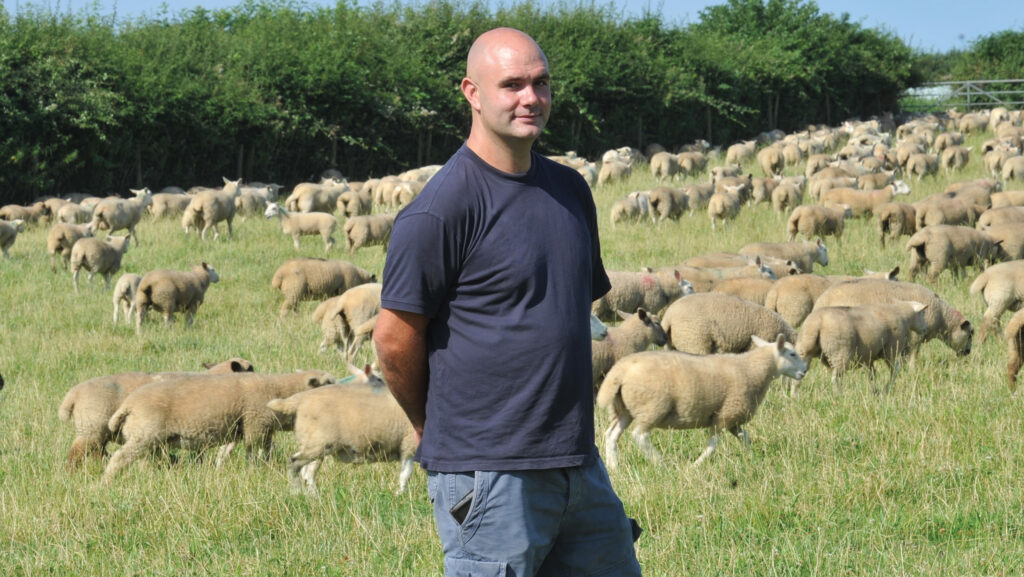
Dai John © Debbie James
- 61ha farmed
- 500 Lleyn-cross ewes indoor lambing from mid-March
- Ewes graze common land at Cefn Bryn after weaning in early July and lambs graze herbal leys
- Swedes grown for human consumption, with fields grazed post-harvest
- 4ha barley and 3ha fodder beet grown
- 1t soya/year total purchased feed
- 42kg average finishing liveweight (20kg deadweight)
Funded under the Farming Connect Our Farms Network, the project was initiated to give a clearer picture of the efficacy of the anthelmintics commonly used on sheep farms in Wales.
At Manselfold, Llanrhidian, on the Gower peninsula, the Johns had historically wormed lambs routinely, but were concerned that parasites were becoming resistant to different drench groups.
Previous wormer use
As a lamb supplier to Dunbia on its Taste the Difference scheme, they joined the project to determine the outcomes of the Sustainable Control of Parasites in Sheep (Scops) protocols they had put in place 10 years previously.
At that time, they were supported through the Farming Connect Advisory Service to test resistance to the anthelmintics they were then using. They had acted on the advice, reducing use of levamisole and ending use of ivermectin, switching instead to moxidectin.
Through the Wars project, they then carried out Techion UK faecal egg count reduction tests (FECRTs) on six different wormer groups. This test, carried out using the company’s DrenchSmart service, shows where there is suspected lack of efficacy to wormer groups.
As a first step, faecal egg counts (FEC) were carried out to ensure lambs met the required worm burden threshold. At Manselfold, those samples, taken in October 2025, before lambs were drenched, showed a worm burden of 1,861 eggs per gram (epg).
Effectiveness of different anthelmintics
The efficacy of six anthelmintics was then tested on the flock: benzimidazoles, levamisole, ivermectin, moxidectin, monepantel, and derquantel/abamectin.
Faecal samples were taken from the lambs drenched with levamisole seven days after they were treated and 14 days post-treatment from lambs treated with the other wormers.
This showed that moxidectin, monepantel and derquantel/abamectin were completely effective. Ivermectin had an efficacy of 95%, levamisole, 91%, and benzimidazoles, 80%.
In a further test, molecular technology was used to examine different worm species, as well as how effective the wormers had been at destroying pathogenic, mildly pathogenic and non-pathogenetic strongyles.
The results showed a mixed picture. For example, in the pathogenic species, there was 37epg of Haemonchus contortus (Barber’s pole worm) pre-treatment, which reduced to 7epg after treatment with benzimidazoles. And there was zero presence of the worm in the lambs treated with levamisole.
The egg count for Teladorsagia circumcincta (small brown stomach worm) was 965epg pre-treatment. This fell to 63epg after treatment with benzimidazoles and 20epg in the levamisole group.
Eurion Thomas of Technion UK says speciation testing is useful because wormers can have different levels of effectiveness against each worm species, and a basic FEC can’t distinguish between different strongyle species.
“Identifying which species are present before and after treatment is important, since treatment failure might only affect a particular strongyle species,” he points out.
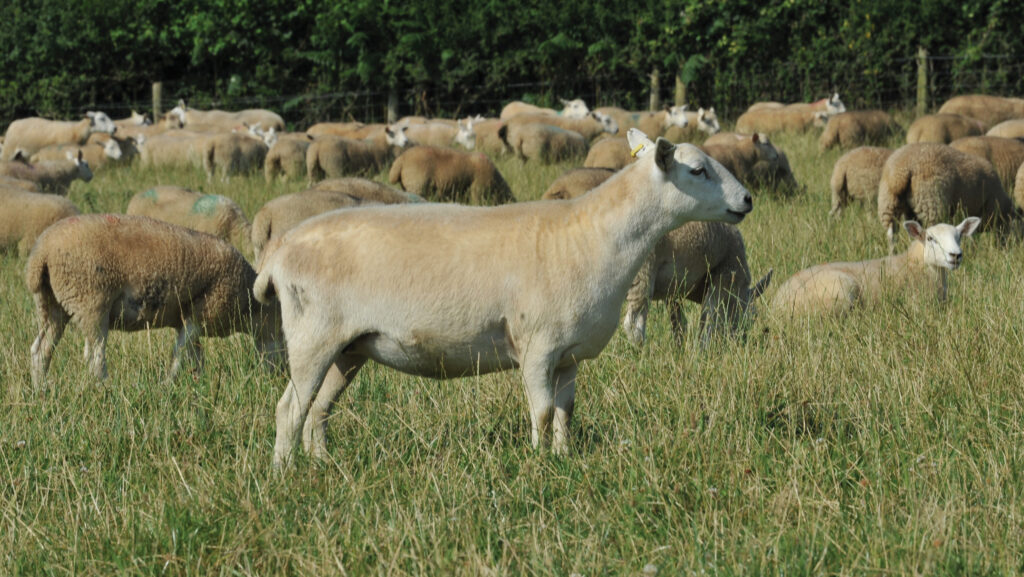
© Dai John
Ongoing treatments
By understanding which wormers were entirely effective, the Johns hope they can maintain that level of effectiveness by not overusing them.
Eurion recommends always carrying out a FEC test after dosing to establish efficacy, as the position can change.
Wormer resistance is a likely cause of reduced treatment efficacy, he suggests, although it can be down to other factors such as how wormers are administered and an animal’s health status. He says the results at Manselfold show that all the wormers could still be used to treat against nematodirus.
Wormer effectiveness against strongyles can vary through the season, so treatments may perform differently at different times of year, he points out.
“The time of year the FECRT is carried out is important because the worm species present in the sheep can change throughout the year.
Treatment failure to one wormer may only be a problem in one species.”
Evidence-based decisions
For Dai, the project has been a “game-changer”.“We are now better informed, so we can protect the wormers that work for us and use these strategically, and at the right time of the year, when we know they will actually have an effect.”
The advice the farm received 10 years ago on how to reduce resistance levels had demonstrated the effectiveness of this approach, he adds.
For businesses registered with Farming Connect, specialist veterinary advice is available to help assess the effectiveness of anthelmintics on their farms, with funded, one-to-one veterinary support and development officers to guide farmers through the application process.
For the Dunbia Group, the Wars project demonstrated the value of collaboration between farmers, industry and technical specialists, says its agriculture manager, Leisia Tudor.
“It has been invaluable in helping our producers make evidence-based decisions that improve animal health and productivity,” she says.
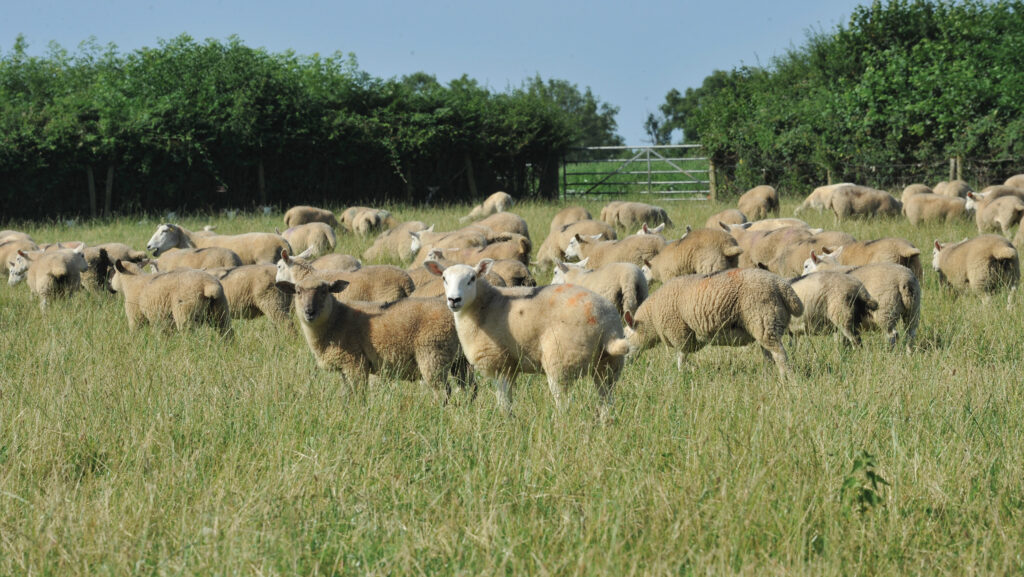
© Debbie James
Strategic choice of wormer at Manselfold
Based on the test results at Manselfold, Kate Hovers, an independent vet working with Techion UK, recommends strategic use of benzimidazoles for the John’s lambs.
As these are effective against nematodirus, but less so against other worms, she suggests they use them to treat for this parasite not only as the first drench, but also with caution at other times.
“This is because there was a percentage of non-pathogenic worms left ,so when you take them out, the effectiveness at this one testing was better than 80%,” she explains.
She adds that decisions should be informed by the Sustainable Control of Parasites in Sheep and Hybu Cig Cymru local risk forecasts.
Kate advises that lambs should then be drenched as necessary with levamisole, ivermectin and moxidectin according to growth rates, egg counts and how the animals look. Drench testing should be done annually in consultation with the farm vet.
Monepantel or derquantel/abamectin can be used as an annual break drench when lambs need treating in late summer, she says.
This will help maintain optimum growth rates by removing worms left behind by earlier treatments. It will also slow the development of resistance to older wormer groups.
Worming decisions for ewes
If ewes are in good condition and only carrying single lambs, they may not need worming, Kate adds, recommending FEC testing before the lambing period.
“If there is a thinner group of ewes around lambing time, sample these and worm if the egg count is high, but [first] seek advice from the farm vet.”
Haemonchus worms can affect adult sheep as well as lambs, typically producing a very high egg count. Although the eggs look the same as other strongyle-type worms, a staining test can be carried out at a laboratory to specifically look for haemonchus.