

How multi-pronged health focus raised flock performance
 © Farming Connect
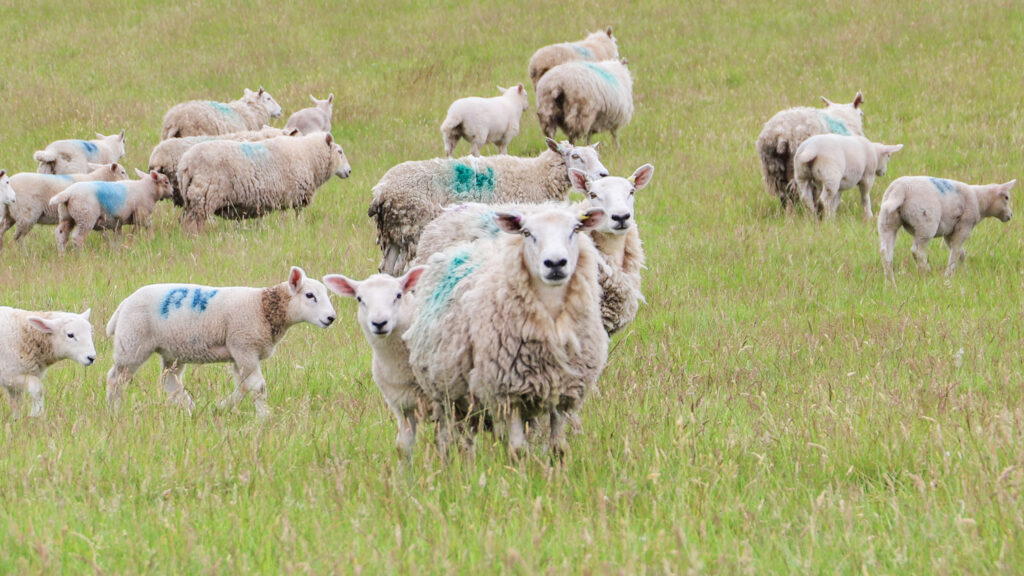
 Lower-than-average scanning and rearing percentages on a Denbighshire sheep farm persuaded a father and daughter team to seek help for a solution.
As they discovered, it is rare to get a quick, one-fix solution for improving flock productivity and health. Rather, gains are made incrementally by tackling multiple issues in tandem.
See also: How a flock health plan can help improve performance
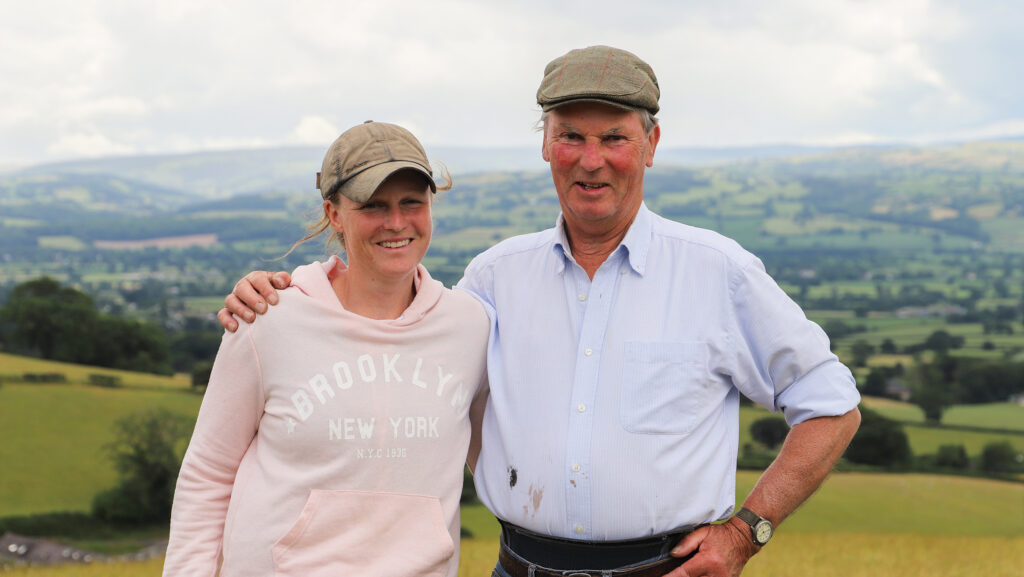
Peter Williams and Sarah Hammond, who run Glyn Arthur Farms, near Llandyrnog, worked with the Farming Connect Our Farms network and vet Dr Joe Angell, of Wern Vets, to explore possible underlying causes for poor flock performance.
In 2023, 8% of ewes failed to get in lamb, scanning percentage averaged 103%, and too many good lambs were being lost in May and June.
Joe recommended a multi-faceted approach to resolving the key performance issues.
Body condition scoring of ewes
The first step was to body condition score (BCS) at key points in the production cycle and target nutrition accordingly. This has increased BCS at weaning from 2 to 2.5 and from 2.5 to 3 at tupping.
“Nutrition underpins everything,” says Joe. “If grass is not meeting the animal’s needs, it won’t gain condition. But once we know BCS, thinner animals can be given priority grazing, or it might point to an underlying cause such as a parasite burden or lameness, and these can then be addressed.”
Joe supported Sarah to build her confidence to BCS. Her aim now is to keep ewe condition as constant as possible throughout the year.
Dry summers, resulting in limited grass availability, have added to the challenge, so the decision was taken to run a more flexible stocking rate. Ewe numbers were reduced from 650 in 2023 to 540 at tupping in 2025 to increase feed self-sufficiency.
Sited in an area of outstanding natural beauty, the use of artificial fertiliser and additional inputs on the farm is limited, with 90% designated as habitat.
Soil nutrient status is low, but the best use is made of what can be grown, with grazing managed according to BCS. “The plan is to try to fit our system to the food we have and make the numbers match feed availability, rather than carrying ewe numbers just for numbers’ sake,” Sarah explains.
In 2026, scanning had increased from 103% to 112%.
Sarah Hammond and Peter Williams © Farming Connect
Farm facts: Glyn Arthur Farms, near Llandyrnog, Denbighshire
- 160ha upland hill farm, including 17ha woodland
- Set-stocking, transitioning to rotational and adaptive multi-paddock grazing
- 180 ewe lamb replacements
- Lambs sold as stores through Ruthin livestock market
Vaccination of yearlings
After test results indicated exposure to infection, a programme to vaccinate yearlings for toxoplasmosis was introduced. The ewe barren rate now stands at 5%, within the target range for the flock.
Changes to parasite controls
In the ewes, parasite control was focused primarily on liver fluke, which was identified after unexpected cases of bottle-jaw. Peter and Sarah never expected fluke to present a health challenge because the land at Glyn Arthur Farms has very few wet areas.
However, changing weather patterns mean the parasite is now colonising areas previously considered low risk. Faecal and blood samples identified infection, and the flock was treated accordingly.
Improvements have been made to worm control protocols in lambs by using faecal egg counts and targeted selective treatments. This marks a shift away from blanket-treating all lambs.
Action to address trace element deficiencies
Liver, blood, grass and soil sampling confirmed copper, selenium, cobalt and iodine deficiencies in the sheep and the land. Liver biopsies carried out on live animals can yield useful long-term information about trace element status, says Joe.
The flock was dosed before tupping with a multi-element bolus and a long-acting iodine injection to support ewe fertility and lamb development at this stage of production.
Follow-up tests showed that a single dose annually was insufficient, so both bolus and injection are now given twice a year. (The farm’s previous environmental scheme requirements prevented feeding of concentrates, a source of minerals which on some farms can potentially reduce dosage requirements to once a year.)
Timing of treatments to tackle lamb mortality
The timing of clostridial vaccination was brought forward to counter sudden lamb deaths, because losses were occurring before vaccination.
“Losses definitely reduce once lambs have received the full clostridial vaccination course by July,” says Sarah. Deaths between weaning and sale are now less than 2%.
Mortality and cases of joint ill were linked in some cases to tick infestation – there were signs of ticks attaching themselves to lambs within a couple of days of birth.
The farm experienced the least May and June losses when a pour-on treatment was given in the first week of life, but timing can be a challenge with an outdoor lambing system.
“We were a bit later using the pour-on this year. But compared with the years when we haven’t used it, the cases of joint ill and lambs going off their legs due to spinal abscesses has been much reduced,” Sarah reports.
“Lamb losses in May and June are still higher than we’d like them to be, but observations and post-mortems attribute the anaplasma bacteria from tick bites as the most likely cause.”
This makes lambs more susceptible to tick pyaemia and respiratory and clostridial diseases, because it compromises their immune system. There is no maternal immunity of anaplasma transferred to lambs via ewe colostrum.
A project Glyn Arthur Farms carried out with Liverpool University in 2024 showed that 63% of the four-month-old lambs tested were positive for Anaplasma phagocytophilum and 97% of the 16-month-old yearlings.
The average tick burden on the yearlings was 25, with ticks at the larvae, nymph and adult stages detected.
Flock health plan
A flock health plan is an important record of what has or hasn’t been done and can be used to work out what is working well and what isn’t. It also acts as a reminder of what needs doing and when, says Joe. “It means treatments don’t get missed along the way.”
Of the 18 rams tested in 2024, three were infertile and one was subfertile. All bought-in rams are now fertility tested before they are introduced to the ewes.
Ongoing progress
The annual nature of the sheep cycle means there is often only one chance to deal with an issue that arises during the year. A problem might need figuring out in one year to prevent it from occurring in the next, so it can take a year or two before the situation improves substantially.
Although farmers hope for immediate results, the project has shown Peter and Sarah that it does take time.
“We are really pleased with the lambs we have this year, so hopefully it shows potential and that things are settling down and moving in the right direction,” says Sarah.
“The results have highlighted issues we hadn’t considered, giving us the confidence to make informed decisions about the best way to keep our farm moving forward.”