

How to reduce routine fluke treatments
 © Tim Scrivener
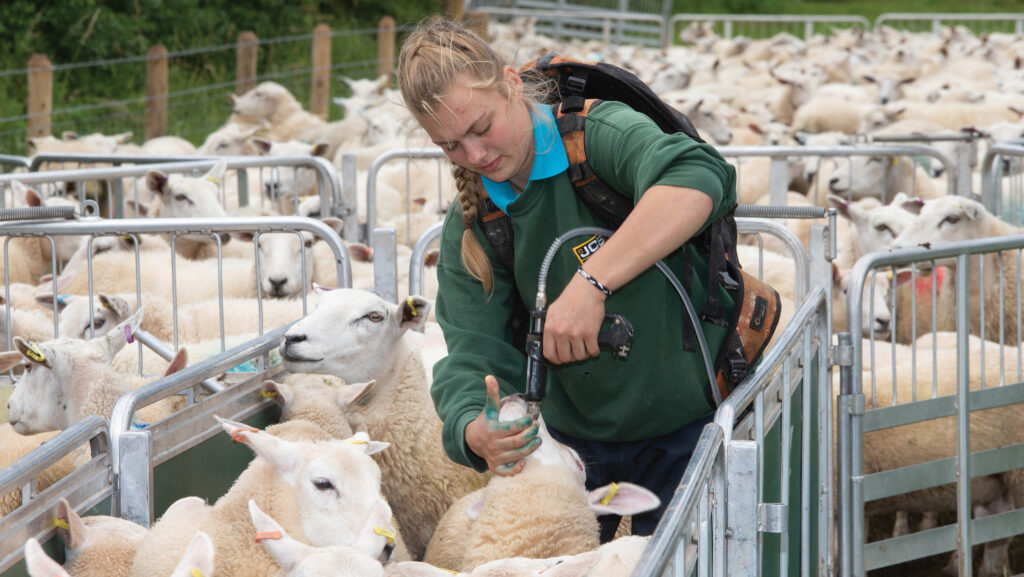
A 2,000-ewe farming enterprise has the confidence to not routinely treat breeding stock with a flukicide this autumn after adopting a new approach to monitoring and controlling infestation risk.
See also: What role do sentinel lambs play in liver fluke control?
Coed Coch Farm at Abergele, Conwy, which operates as a joint farming venture, last year used on-farm blood testing plus risk assessment for fluke infection to inform its treatment strategy.
It resulted in lambs not being routinely treated when breeding stock were drenched before tupping last autumn. This autumn, no animals will be treated before tupping unless faecal egg counts (FECs) indicate infection.
Dafydd Owen, who has a 10% stake in the business alongside landowner Harry Fetherstonhaugh and share farmer Rhys Williams, says testing and risk assessment had given him the confidence to hold off.
“Nothing will get a flukicide pre-tupping, we will use FECs to monitor as the season progresses,” he says.
“In retrospect, I could probably have held off drenching the ewes as well as the lambs last autumn too. But I was slightly nervous about doing that around tupping time because of the consequences of getting it wrong, and what that would have meant for getting them into lamb. This year, I have that confidence.”
Farm facts: Coed Coch Farm, Abergele, Conwy
- 2,000 Romney ewes
- Lambs outdoors for four weeks from 1 April
- Introduced 180 dairy-beef cattle on the Gamechanger programme, from October 2025 to August 2026
- Numbers have increased this year to 280, arriving in November
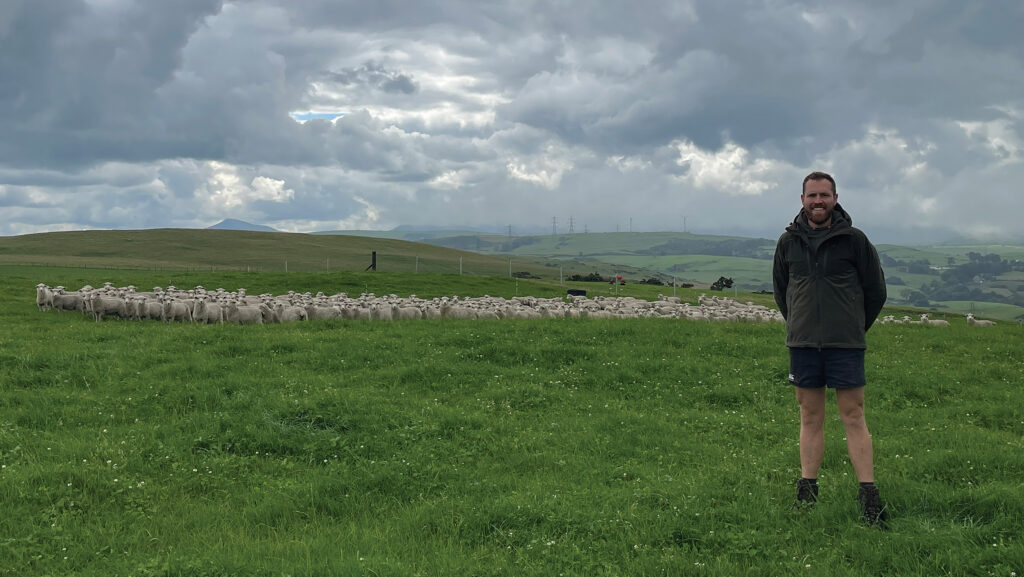
Dafydd Owen © Dafydd Owen
Majority unsure of fluke risk
Dafydd, who secured the opportunity to farm at Coed Coch through Farming Connect’s Start to Farm programme, says that confidence comes from participating in a Farming Connect liver fluke control project (alongside 14 other Welsh farms) led by vet Phillipa Page of Flock Health.
In a survey carried out before the start of the project, 86% of farmers reported that they were unsure of the fluke risk on their farm.
Some 80% of farmers said they would have treated for fluke every autumn/winter and 33% would always have administered a pre-tupping flukicide.

© Adobe Stock
Farmers in the study were first encouraged to reassess the fluke risk areas on their farms, then to use a liver fluke rapid antibody test on a sentinel group of 10 home-bred ewe lambs or stores.
The test was to be used before any treatments and the results discussed with Phillipa to determine whether to treat stock or retest.
It led to 60% of the farmers not administering first treatments for fluke until late December or January, when the tests showed either inconclusive or positive results. The remaining 40% did not give a first treatment for fluke between winter 2025 and January 2026.
Liver fluke infection can cause mortality and losses in production, and this is why many farms choose to routinely use a flukicide as part of flock health management from early autumn.
This is even though the risk of infection changes from year to year. The liver fluke life cycle depends on the presence of the mud snail to act as an intermediate host. It needs wet and warm summer weather conditions to create moisture, and mud for liver fluke to multiply and infect pasture.
© Tim Scrivener
Identifying high-risk areas
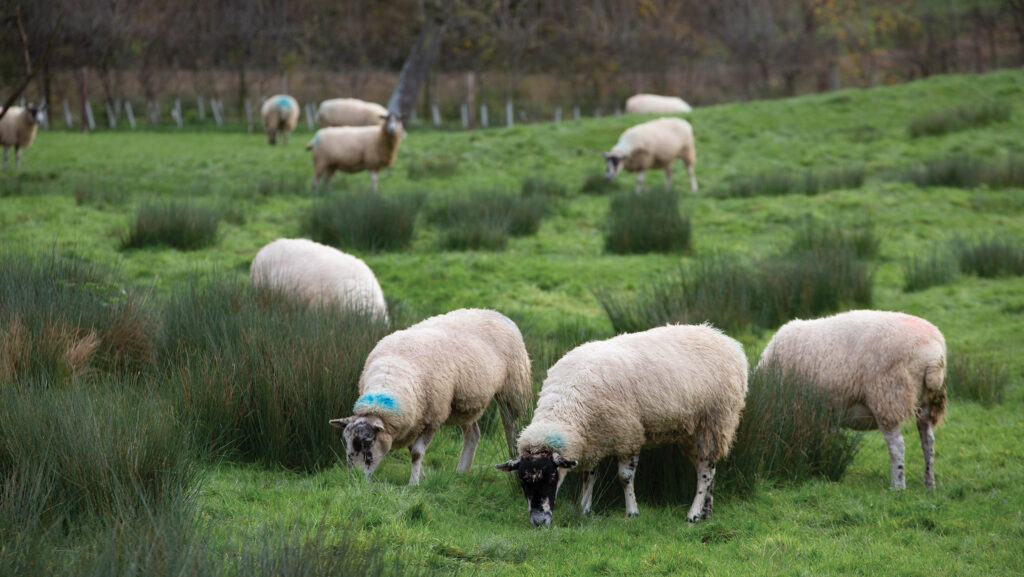
The project farmers created farm maps flagging up those high-risk areas, which include land with clay soils, soils that are wet all year round, and where the mud snail is known to be present.
Although Coed Coch is a relatively dry farm, Dafydd says it has pockets of boggy land and wetter ditches. This attracts sheep (during drier periods, in particular) because these areas have the moisture to grow more grass.
“The map shows our high-, medium- and low-risk areas and although we haven’t fenced off any of those areas, we are managing them differently, keeping the sheep away at certain times of the year,” he explains.
He says the project confirmed to him the importance of testing whatever the weather conditions. “There is always a danger in not drenching just because it has been a dry summer. But in that year the fluke situation could actually be worse than in a wet year if the boggier areas did not dry off completely because animals will have been drawn to them.”
The lateral flow test was developed to be used by farmers on-farm to rapidly assess the fluke risk and the need for treatment, to reduce unnecessary treatments, and to improve treatment timings and accuracy.
The manufacturer stopped making the test earlier this year because it is thought that farmers regarded the cost as prohibitive compared to the price of a drench.
However, Philippa says the project highlighted the value in blood testing, even though it will now involve sending samples to a laboratory and a time lag before results are known.
She recommends that farmers question if they need to treat and, if they believe they do, whether they are treating at the correct time and with the most suitable product.
“Discuss with your vet how to control fluke, specific to your farm as part of your flock health plan, as this will help avoid production losses, evaluate risk and target treatment,” Phillipa advises.
“Attend any training events with reference to liver fluke and other parasites to improve knowledge of how it applies to your farm, as each farm has different risks.”
Blood testing for status
This year, Coed Coch Farm’s ewe lambs will be off-wintered on tack and may be laboratory blood tested before departure to determine whether they have been exposed to fluke and require drenching before they leave.
“We would then do another blood test or FEC when they return,” says Dafydd. “Last year they tested negative with the lateral flow test before they left. When they came back, we started to get some positive results, which meant that maybe there was fluke on that farm, so we treated in January.”
The flock of Romney ewes lambs outdoors for four weeks from 1 April and the first pick of lambs are sold to ABP Foods at weaning.
Instead of retaining the remainder to sell as stores, these are now sold to an arable farmer in Lincolnshire. This means they can leave the farm sooner and enable the focus to be on the ewes from October onwards.
“We can now allocate all the grass to the ewes at tupping, which means we can keep them here rather than off-wintering; they can have an all-grass winter,” says Dafydd.
The farm has adopted regenerative farming practices to increase resilience and reduce costs by using as few inputs as possible.
“Having cattle on the farm gives us more muck, which means we use less fertiliser, and by rotational grazing, we will hopefully improve the pastures too.”