

Advice for dealing with bluetongue as cases spread rapidly
 © Oli Lees
 North Devon-based Torch Farm and Equine Vets were called out to their first suspected case of bluetongue (BTV) on 7 July. In less than a month (up to 3 August), the practice has investigated 250 suspected cases.
See also: Sheep farmers urged to vaccinate as bluetongue spreads
Vet Jenny Schmidt believes almost all of these will be confirmed positive, although they are still awaiting confirmation from the Animal and Plant Health Agency (Apha).
Cases may be more widespread than official figures suggest because of a 10- to 14-day lag between clinical signs and laboratory confirmation. This is expected to get worse as the case load increases.
What to look out for
Clinical signs are more severe in sheep than cattle, although it varies from farm to farm, says Jenny. Early signs to look out for include a change in behaviour, shortened flight distance and poor rumen fill. These occur before drooling from the mouth and swelling of the muzzle, she adds.
One client has seen half of a 500-ewe flock infected, while another has lost 15 older ewes from a flock of 300. “It’s taking a terrible toll on farmers who are trying their best to nurse the animals, hopeful they will recover, and then [some] find them dead the next day,” says Jenny.
While Devon is battling new cases daily, Emma Crust, of Glenthorne Farm Vets in Staffordshire, is focused on preventing the disease as much as possible. Her practice hasn’t diagnosed a case this year, but having witnessed clinical cases last summer, she is urging farmers not to delay vaccination.
Vaccination and control
The Sustainable Control of Parasites in Sheep (Scops) and Control of Worms Sustainably (Cows) groups are warning livestock farmers that dips, insecticides and repellents will not prevent bluetongue virus (BTV).
These products are not licensed for this purpose and there is no evidence that they can kill culicoides midges quickly enough to prevent infection or sustain protection against onward transmission, they stress.
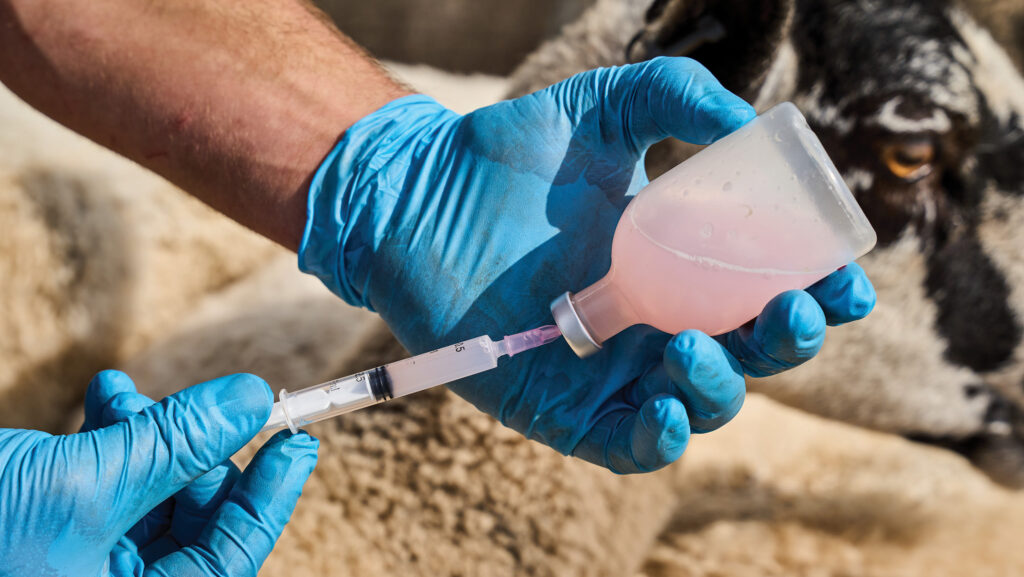
Instead, vets say vaccination is the only proven way of protecting stock. Sheep require a single dose, while cattle need two doses three weeks apart. Full immunity develops about three weeks after the final dose, although Jenny says farmers who have already vaccinated are reporting a reduction in symptoms in sick animals after just two weeks.
The vaccine is safe for use in pregnant animals and those already with the virus because it is not live, she points out.
However, the stress of handling presents the biggest risk to animals in the early stages of pregnancy.
“The first three to four weeks of pregnancy are delicate because the embryo is implanting in the uterus. Farmers need to speak to their vet to weigh up the risk of handling animals against them getting bluetongue and aborting or birthing deformed foetuses.”
She adds that handling facilities and docility are key considerations.
If in doubt, report cases
Some farmers may hesitate to report suspected cases if they are worried about the repercussions, but Emma stresses this is vital to understand the true prevalence and geographical spread.
“People hear ‘notifiable disease’ and think foot-and-mouth, but bluetongue is very different. It is spread by midges, not directly between animals, so there are no restrictions if your animals test positive to BTV-3, aside from the fact you can’t sell animals with clinical symptoms. If in doubt, speak to your vet.”
© Tim Scrivener
Vaccination best strategy to protect stock
Emma first suspected BTV last summer after witnessing calves at a client’s dairy developing cloudy blue eyes at a few days old.
“I’d never seen corneal oedema quite like it before, but I had read that bluetongue could cause blindness in calves, so I spoke to Apha,” she says.
Positive test results in dams and their calves confirmed in-utero BTV infection. Although calves recovered, the outbreak cost the dairy an estimated £30,000-£40,000 in reduced fertility and lost milk.
Against those losses, Emma says the vaccine, at about £2.50/dose, represents good value, especially given the current high calf and finished lamb prices.
Emma believes one potential barrier to vaccination is Apha’s requirement to record the individual ear tags of vaccinated animals.
Cattle data can be uploaded more easily using the Cattle Tracing System software, but for flocks without management software, it can be a cumbersome process.
“For Apha to monitor where the disease is, they need to know what animals have been vaccinated, because if the antibody is found, you cannot distinguish between wild infection or vaccine response,” she explains.
She adds some farmers may be reluctant to vaccinate because the BTV-8 outbreak that occurred in 2007-08 did not appear to spread far. However, this outbreak is spreading much more rapidly, with more severe consequences.
Jenny adds the midge risk could last until October or later if mild temperatures persist. With this in mind, and with plentiful vaccine stocks in supply, both vets are urging farmers to order supplies soon.
“It’s a devastating disease when it hits, and vaccination is the only effective protection,” says Emma.
Bluetongue virus Q&A
What should I do if I suspect bluetongue virus (BTV)?
If BTV is suspected, farmers should contact their vet. The vet will notify the Animal and Plant Health Agency (Apha), which will then cover the cost of testing up to three animals if BTV has not already been diagnosed on that farm.
Which strain should I vaccinate against?
The most prevalent strain is BTV-3, but BTV-8 and BTV-12 were identified in the south of England last year. Currently, there are no multi-variant vaccines available, but there are vaccines for BTV-3 and BTV-8. Farmers should speak with their vet and discuss the situation on a case-by-case basis.
Could the vaccine affect fertility?
There is no evidence this is the case. Yet BTV infection can have a huge effect on fertility, which is particularly devastating in seasonal calving herds or around tupping time.
If BTV has been circulating in the herd/flock, will animals be immune or should I still vaccinate?
It is impossible to tell how many have been bitten by an infected midge and how many are naïve, as not all infected animals show clinical signs. Serological testing is quite expensive. Vaccination is the only way to protect your animals.
If BTV is circulating in my herd/flock already, could I spread the virus when vaccinating?
Yes, it could spread via the needle. In an ideal world, you would change the needle for each animal, but this is challenging when vaccinating large numbers. Instead, farmers should change the needle more frequently, and certainly if any blood is present on the needle.
How can I treat stock infected with the virus?
Because it is a virus, antibiotics are not effective, but they may be required to treat secondary bacterial infections.
Instead, provide supportive treatment such as pain relief and fluids. Some animals may require euthanasia, depending on the severity of their symptoms.
I need to buy replacement females/a bull. How can I prevent importing the disease?
Vaccinate stock at home and buy animals that have already been vaccinated.
There is no risk of direct animal-to-animal spread, but if you purchase infected stock, they could infect the midges on your farm, which, in turn, can spread the disease to other animals. Quarantine, while still important, won’t prevent BTV spreading.
Are there any movement restrictions in place?
Currently, England and Wales are in one restriction zone, allowing free movement of animals within both countries.
Scotland remains outside the restricted zone, so sheep moving north require pre-movement blood tests, even if vaccinated. However, cattle vaccinated with Bultavo-3 do not require pre-movement tests.
Sheep and unvaccinated cattle must have tested negative for BTV no more than seven calendar days prior to moving to Scotland.
Source Emma Crust, Glenthorne Farm Vets