

Bluetongue: What farmers need to know as cases climb
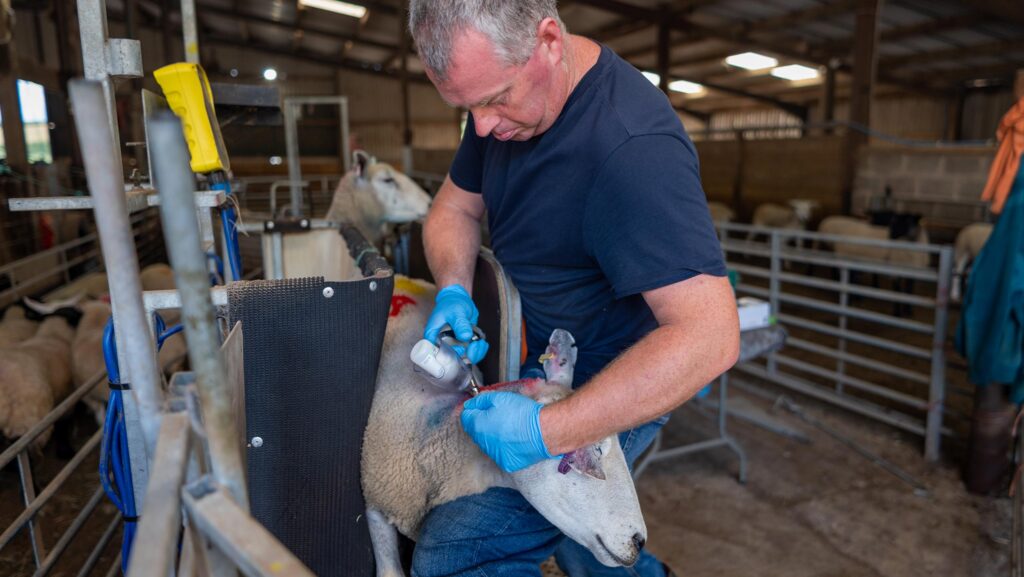 © Jim Wileman
 Bluetongue cases are continuing to spread from the initial north Devon hotspot, with vets reporting a sharp increase in calls from concerned farmers.
Tom Clarke, clinical director at Synergy Farm Health, says the practice has been receiving more than 100 extra calls a day.
“As of last Friday, there were 395 BTV-3 cases confirmed, but at least 1,200 reported cases awaiting testing.”
See also: Advice for dealing with bluetongue as cases spread rapidly
He urges farmers to keep reporting suspected cases to track the spread of the disease.
‘Vaccination remains primary defence strategy’
The most common question vets are being asked is whether it is too late to vaccinate.
Tom says vaccination remains the primary defence against the virus because midges transmit it, leading to “patchy and sporadic” infection in herds and flocks.
He admits vaccine supply has been under enormous pressure in the past three weeks but says supplies are being imported weekly and vets are working through the backlog of orders.
Impact on cattle fertility
Clinical signs are less severe in cattle, but Synergy vet Nim Panesar warns infection could have long-term effects on fertility.
This virus can cross the placenta, potentially causing embryonic death and foetal brain damage.
Infection in early gestation (80-125 days) poses the greatest risk and lead to calves being born with abnormal behaviour such as stargazing, head pressing, and weakness, making them unable to stand and with a poor suckling reflex.
While this has not been observed so far this season, many cases were reported last spring in suckler herds in eastern England.
Farmers may also see increased returns to service and delayed conception.
“In unvaccinated herds, this may be the first inkling the herd is infected,” Nim says.
Bull fertility remains another concern. Fever, associated with infection, can affect sperm production.
The virus can also be retained in the testes and infect cows during mating.
With sperm production taking about eight weeks, infection during the breeding season could have serious consequences.
Spring-calving herds should consider early pregnancy scanning to identify empty cows, allowing bulls to be reintroduced or artificial insemination to be used.
Nim advises farmers to vaccinate bulls and says no major fertility problems have been linked to vaccination at bull studs.
Meanwhile, natural infection can cause prolonged fertility issues.
Sheep continue to experience the most severe symptoms, says Synergy Vets team sheep lead Nicky Ogden.
She says the high flock incidence is making it challenging to treat sick animals and advises using sick pens or small paddocks.
Although prognosis is difficult to predict, animals vaccinated before clinical signs show tend to have better outcomes.
Euthanasia should be considered if sheep cannot eat because of tongue paralysis, are suffering from severe respiratory distress or remain recumbent without improvement after 24 hours.
Survivors can suffer prolonged problems including septic arthritis, poor body condition, and kidney damage.
Alongside vaccination and feeding to boost immunity, Nicky advises continuing faecal egg counts to ensure worms aren’t contributing to poor health.
With tupping approaching, farmers should raddle rams to identify ewes returning to service so mating can be extended or replacement rams used, if necessary, she adds.
Most common clinical signs
Cattle
- Crusting around the muzzle
- Lameness, especially in the hind limbs
- Fever (>39.3C)
Sheep
- Swelling of the muzzle and jaw
- Painful ulcers inside mouth
- Crusting of nose
- Drooling
- Eye oedema
- Blue tongue caused by swelling of the mouth/restricted blood flow
- Raised temperature
- Joint stiffness
Lessons from the Netherlands
Dutch vet specialist Margit Groenevelt says BTV-3 spread across the Netherlands within eight weeks when it emerged “out of the blue” in 2023.
Mortality exceeded 75% in affected sheep, compared with 1-2% in cattle.
Dairy farms experienced reduced milk yield and fertility, while poor feed intakes increased fresh cow disease.
A vaccine was not available until 2024, and she says it took a severe mental and financial toll on farmers. “We had to sit and watch and felt helpless,” she reflects.
Farmers initially tried insect repellents to dampen spread, but these proved ineffective. Vaccination subsequently reduced clinical signs and mortality to 15-20%.
The Netherlands has now had no clinical disease for two years, which Margit attributes partly to widespread vaccination plus high levels of natural immunity from previous exposure (natural immunity is lifelong).
“We started vaccinating with cattle, and I think this was one of the reasons we didn’t see it.
“Although cattle have fewer clinical signs, they have a larger body surface for midges to bite and more blood, so they circulate more virus. One cow can infect a lot more midges than sheep.”
She believes the experience underlines the importance of early vaccination.
Based on this year’s outbreak, Synergy vet Nim Panesar advises farmers to fully vaccinate cattle by early May 2027 – ahead of midge season – although she adds keeping an eye on the weather forecast will be crucial.
Top tips from Margit Groenevelt
- House animals if possible. Mechanical ventilation (high air speed) prevents midges from flying
- Vaccinate as early as possible to reduce infection in the midge population
- Optimise general health and nutrition
- Consider euthanasia to prevent prolonged suffering
- Provide supportive therapy
Treatment advice
There is no direct treatment for the virus, and the focus should be placed on nursing care:
- House sick animals to provide shelter from the heat
- Provide clean, readily available, fresh water and feed, so animals don’t have to walk far
- Fluids are essential and can be administered using a 50-60ml syringe, pump or IV for severe cases. Electrolytes or propylene glycol can be added to water to provide energy
- Mouth lesions are painful – provide a buffet of soft feed such as soaked forage or soaked sugar beet mash and willow
- Regularly lift recumbent animals to avoid sores developing
- Provide soft, non-slip bedding
- Administer anti-inflammatories to reduce vascular damage and temperatures alongside pain relief. These must be used off-licence for sheep
- The virus replicates in blood cells, which can affect blood flow to the kidneys and can be exacerbated by overzealous use of anti-inflammatories. Use the normal dose on day one, then half thereafter and ensure animals are well hydrated
- Steroids are a good anti-inflammatory option for early stages but should be avoided in pregnant animals because they can induce abortion. Seek advice from your vet
- In cattle, use broad-spectrum amoxicillin or tetracycline to prevent secondary infections such as septicaemia caused by bacteria leaking into the gut
- Administer penicillin or oxytetracycline to sheep
- B1 vitamins can prevent secondary digestive issues in sheep and cattle
Tom Clarke, Nim Panesar, Nicky Ogden and Margit Groenevelt were speaking on a Synergy Farm Health webinar (17 August).