

Fertility checks urged amid bluetongue infection fallout
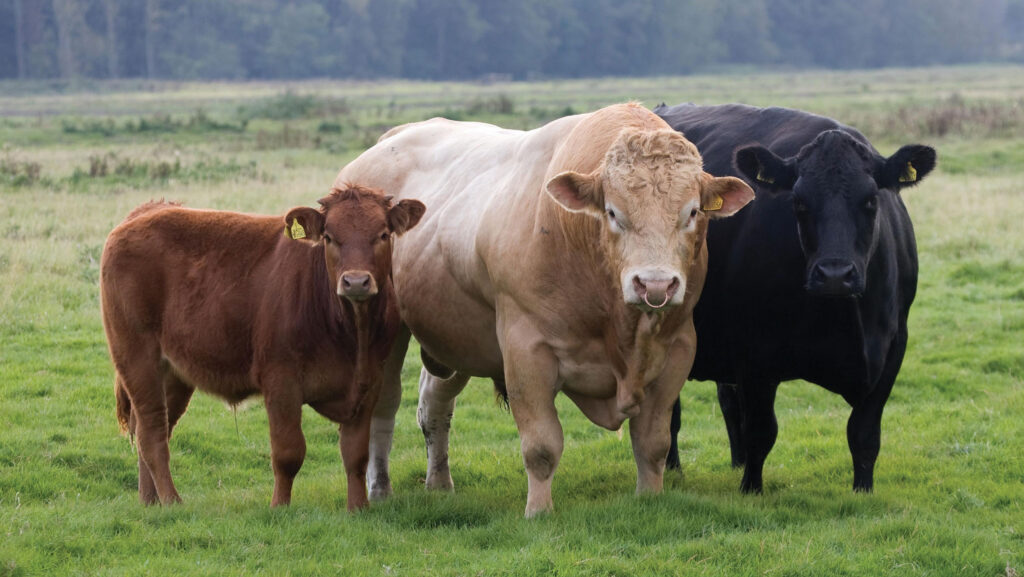 Bull fertility testing will be essential after a summer of bluetongue © Tim Scrivener
Farmers are advised to scan all cows this autumn to establish what’s in-calf and which animals are empty following bluetongue infection this summer.
There is a potentially “scary” spring calving ahead because vets think the disease was under-reported in cattle, when the severest clinical symptoms were seen in sheep.
See also: How bluetongue vaccination decisions affected two flocks
Many herds will be dealing with the consequences of bluetongue virus (BTV) appearing throughout winter as fertility problems.
There is a strong possibility of dummy calves being born next year, depending on the stage of gestation that cows were infected.
Clinical signs of bluetongue in cattle can be vague and variable, says vet Rebecca Cavill of Devon-based Torch Farm Vets.
She has seen some animals improving after 24 hours, whereas others remained sick five to 10 days after treatment. Swollen eyes, sore teats, lameness, ulcers on gums, and milk drop have been observed on farms.
“In growing cattle, where farmers regularly weigh, we’ve seen evidence of daily liveweight gains dropping by 1kg – a 30kg difference in growth rate over one month,” she adds.
Timing of infection
In the months ahead, Rebecca expects to see different signs according to when cows were affected: abortions, still births and dummy calves, on both beef and dairy farms.
During recent pregnancy diagnosis (PD) visits, when she noted embryo loss, cows were “bulling strongly” and returning to service at 35-49 days. Further investigation confirmed there had been a pregnancy.
“But we are also seeing a lot of empty cows. Scanning suckler herds, between one-third and half are empty,” she says, adding that reabsorption of pregnancy could also be caused by the hot summer or lack of forage.
Transmission via semen
As well as PD’ing to determine which cows are in-calf and how far in-calf they are, Rebecca advises fertility testing stock bulls.
Infected bulls can have the virus circulating in their blood for 60 days and shed it in their semen for two to three weeks or more, which classifies bluetongue as a sexually transmitted infection.
It also directly (though temporarily) damages sperm production, leading to transient or long-term infertility. This is why it’s particularly important to test bulls intended for use on empty cows.
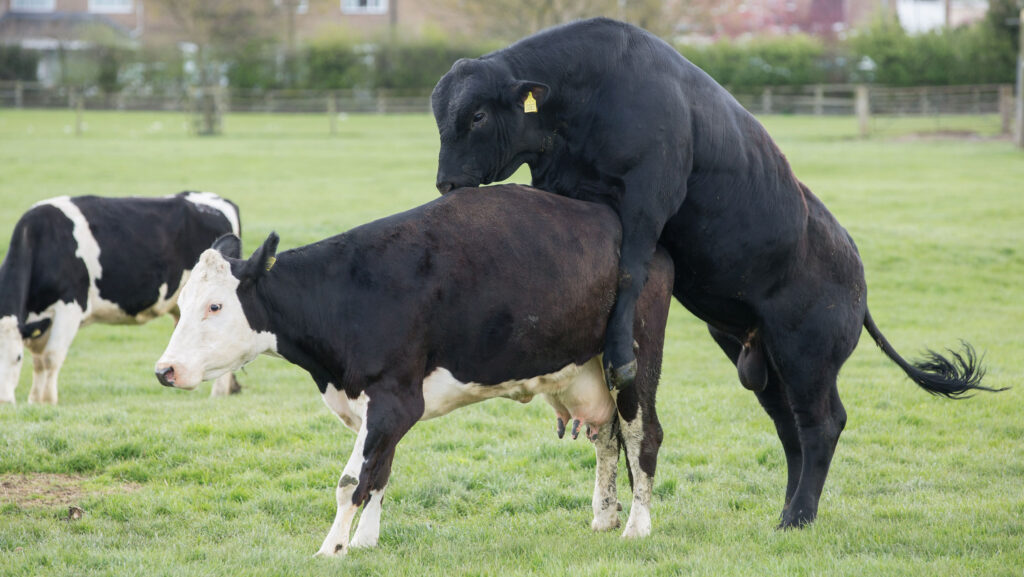
Scanning all cows will determine pregnancies and empty rates © Tim Scrivener
“Spring block-calving herds could be carrying a lot of dummy calves, and we won’t know until cows calve,” she points out.
When a cow is infected with BTV at 80-125 days in pregnancy, the virus affects the calf’s brain development and results in 25-35% of them born as dummy calves.
“These calves are usually extremely weak; they may be blind and unable to suck. They stumble, can have seizures, and are generally unresponsive. “Most affected calves die or must be euthanised within 24-72 hours of birth,” she adds.
Vaccination to protect fertility
The good news is that vaccinated herds suffered fewer losses and problems this summer and with subsequent fertility.
Rebecca says there is evidence of maternal antibodies passing on to calves via colostrum.
Calves themselves don’t need to be vaccinated until 2.5 months of age, she adds. The clear message is: “Remain vigilant and discuss vaccination with your vet,” she says.
Advice on flock fertility checks and ewe productivity
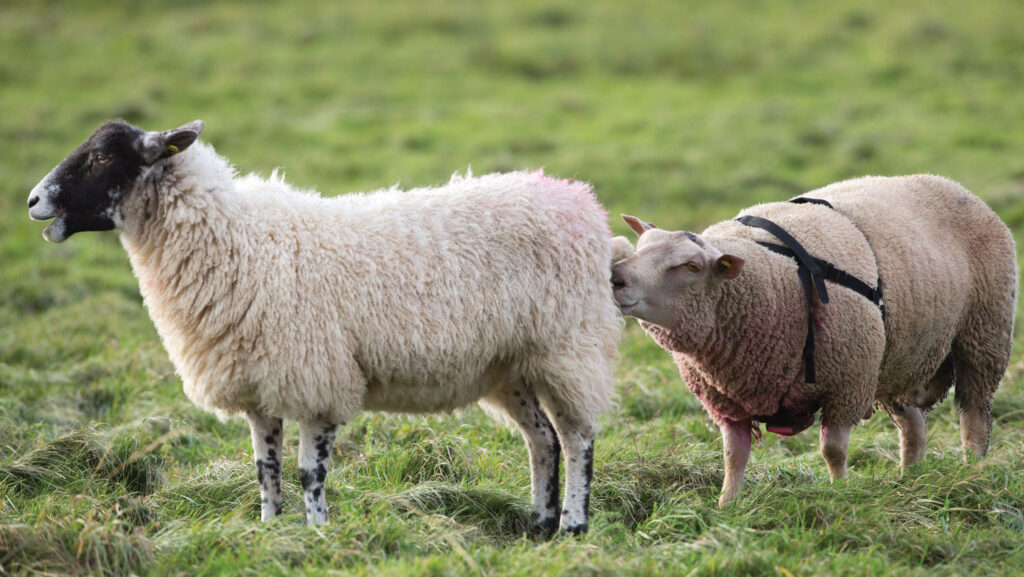
Bluetongue causes severe but temporary semen problems © Tim Scrivener
Test tup fertility and be flexible with mating plans, says vet Jonathan Hobbs from North Park Veterinary Group in Devon. This could mean leaving tups in for longer or lambing later.
There is no long-term impact of BTV in females – the virus doesn’t hide in follicles or ovaries.
Ram semen quality, however, is “severely but temporarily” affected. Jonathan says that typically, fertility testing rams reveals 9-13% are sub fertile, but this year that figure is in excess of 50% because of BTV infection.
“Before May [BTV] vaccinations, we saw normal fertility, so vaccination [itself] didn’t impact ram fertility,” he stresses.
At his practice, only two sheep farmers routinely test their tups each year, with a further 18 on an ad hoc/problem basis.
This year, so far, vets have fertility checked 309 rams, of which only 45% passed; 22% Jonathan classed as “use with caution” and 33% were failed.
“In the last few weeks 75% passed, compared with 75% failing six to eight weeks ago,” he says.
Delayed return to fertility
Data from other European countries reveals that although most rams fully recover from BTV, it still takes 100-150 days for normal sperm production to resume.
He warns, therefore, that rams infected during July and August will struggle to be fully fertile for use in early spring-lambing flocks; hill farmers lambing in April and May are in a better position.
As well as fertility testing, Jonathan advises checking tup body condition score (aim for 3.5 to 4 at the start of mating) to make sure tups are fit, because this year he has seen lower scores owing to the heatwaves and a lack of forage.
A big concern is that early lambing flocks in Dorset have begun reporting dummy lambs.
He cautions that it can’t be proven to be BTV – the cause could be Border disease, or something else.
And there are already fewer ewes on farms because of mortality levels, which means by default there will be fewer, healthy live lambs next year.
Focus on ewe health
First, this means focusing on maximising the potential of those ewes left in the flock to get a good lambing.
This includes analysing forage, condition scoring ewes and making sure diets meet ewe energy requirements, supplementing if necessary.
Then, Jonathan is clear that as soon as they hit the ground, any lambs must be well looked after and protected to keep them alive.
From navel dipping and good-quality colostrum feeds and minerals, to managing worm burdens, growth rates and pasture, he says that all stock on farm should be vaccinated for BTV.
“We’ve seen fewer sick animals in vaccinated herds and flocks. There was strong evidence of protection to lambs via colostrum from vaccinated ewes – vaccines state they give one month’s cover for lambs.
“Speak to your vet about the risk, but vaccinate all stock next year. Do it pre-lambing: it covers you till June, and vaccinating before turnout is easier as you are giving maximum antibody protection when cover from this year’s vaccines [given in July and August] begins to wane.”
Bluetongue incidence update
Notifiable disease
- Up to 21 October: 2,890 recorded cases in England; 54 in Scotland; 492 cases in Wales, and none in Northern Ireland
- Hotspots (with more than 15 cases): Devon, Cornwall, Somerset and Lancashire
- 73% of cases reported in sheep; 27% cattle, although midges preferentially bite cattle
- Winter surveillance kicks off in November and Defra will be contacting cattle farmers along the south coast of England
- Active vector season continues with many infected midges on farms, so new cases will appear for a while
- Risk of transmission reduces as temperatures fall
- Frost and cold weather reduce flying activity and kill off midge populations
Source: Gordon Hickman, joint head of exotic disease control, Defra
Rebecca Cavill, Jonathan Hobbs and Gordon Hickman were speaking at an AHDB webinar “Bluetongue virus update: fertility impact is almost here”