

Bovine TB strategy must progress quicker, Defra told
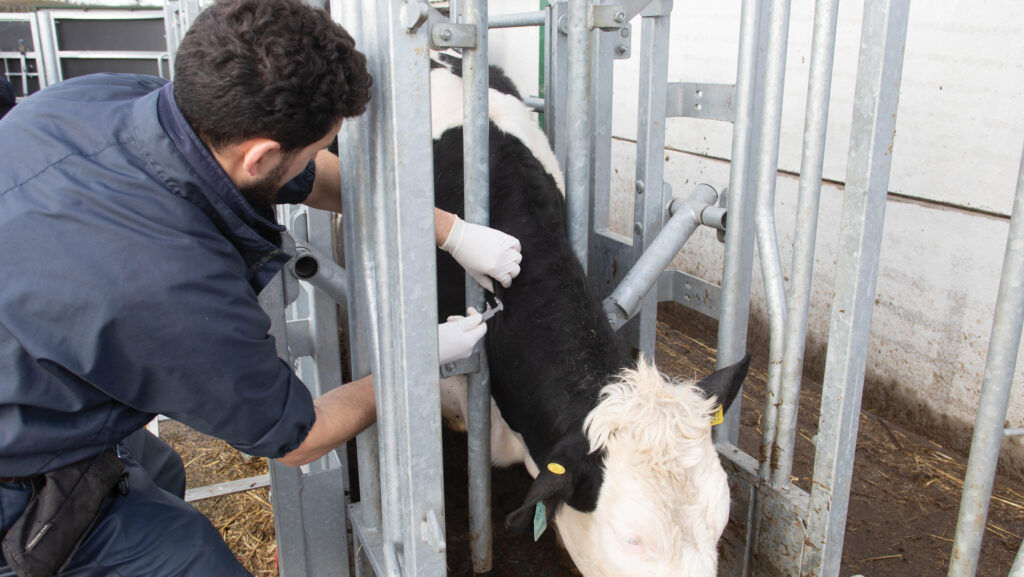 © Tim Scrivener
 Industry leaders are raising concerns about the lack of concrete progress on Defra’s refreshed bovine TB strategy for England.
Former farm minister Daniel Zeichner told an NFU reception in London in July 2024 that eradicating bovine TB would be his top priority.
However, industry figures say progress since then has been slow, with little evidence of major TB policy decisions being fast-tracked.
See also: Bovine TB: 2038 eradication goal achievable with bold action
Farmers Weekly understands that supplementary badger culls have now ended in 20 of the 21 zones, with only one licence remaining in Cumbria’s Low Risk Area, subject to annual review.
Meanwhile, the livestock industry is still waiting for confirmation of the launch date for the £18m Badger Vaccinator Field Force programme, including who will deliver it.
As previously reported, Defra is understood to have planned an early‑year announcement of the programme’s contract details, but no official statement has been made yet.
Study awaited
The refreshed Godfray Review, published last September, specifically mentioned the need for more agile publication of scientific studies that could support the goal of officially TB-free status for England by 2038.
For example, Farmers Weekly understands that a new study on a potential bulk milk test for TB is in the pipeline, awaiting publication.
Industry sources have described the test as “very exciting” but need clarification from Defra where this fits in with the wider strategy refresh.
It is likely that this study will demonstrate a significant level of undisclosed infection in dairy herds.
The refreshed Godfray Review notes that it is possible to use the Enferplex test to detect TB antibodies in bulk milk.
Sarah Tomlinson, lead veterinary science expert at the AHDB, said: “The industry is at a crossroads for bovine TB control.
“We are desperately waiting to see what the next phase of control looks like within the new strategy refresh.
“Every day that passes, we are losing the benefits of previous control measures.
“Farmers and vets just want to crack on with tackling this devastating disease that has massive impacts on animal and human health and welfare.”
Dick Sibley, a vet in farm practice based in Devon, the TB epicentre of the UK, said: “There is a growing frustration and impatience regarding the lack of progress with TB control.
“We have the tools and the solutions to deal with this disease in a coherent and robust way.
“We just need to be allowed to use them.”
Policy floundering
NFU president Tom Bradshaw said: “The current TB eradication strategy has seen significant reductions in herd breakdowns over recent years, but the policy is now floundering.
“With the government ending wildlife control by the end of this Parliament and the estimation that cattle vaccinations and associated effective testing won’t be available until at least 2030, there are gaping holes in the current policy that put the progress made so far at risk.
“There needs to be much greater urgency, attention and investment given to TB eradication.
“We still believe a comprehensive approach is the best way to eradicate this terrible disease.”
However, Defra says work is “progressing at pace” on its new bovine TB strategy for England, which it hopes to present this spring.
A spokesman said: “Bovine TB remains one of the most difficult and persistent animal health challenges, causing devastation for farmers and rural communities.
“While measures aimed at wildlife can be important tools for disease control, cattle testing and surveillance is, and always has been, the foundation of our bovine TB strategy.
“And we are strengthening those cattle measures even further.”
Vets blocked from using alternative TB tests
Restrictions on bovine TB testing are preventing vets from tackling infection effectively, despite persistently high incidence in Devon, according to farm vet Dick Sibley.
Official figures show 450 bovine TB new herd incidents were recorded in Devon last year through routine skin testing.
Only 150 of these involved reactors with visible TB lesions, so were classified as Officially-TB free (Withdrawn).
The remaining 300 were designated OTF (Suspended), as none of the reactors had lesions with positive cultures or PCR tests.
However, Mr Sibley said there is little doubt most OTF(S) herds are infected, with a significant proportion representing repeat breakdowns.
These herds urgently need improved testing and management, he insisted.
Although additional diagnostic tests are available, it is a criminal offence to test cattle for TB without written Defra permission.
Such permission is not granted for animals in OTF or OTF(S) herds, even where there is no cost to the department.
In one case, a TB-free dairy herd was refused permission to use Enferplex and IDEXX Elisa tests on a purchased beef bull during quarantine.
“We have the tools,” Mr Sibley said. “Defra just needs to let us use them.”