

Residual TB infection puts cleared herds at risk
 © Tim Scrivener
 Governments across Great Britain have been grappling with bovine TB for decades, yet many farmers continue to experience repeated breakdowns and prolonged disruption.
Questions over skin test interpretation, wildlife management and the treatment of infected herds remain contentious for farmers and vets.
See also: Analysis: Can England’s updated TB strategy deliver by 2038?
Less widely understood is that a herd can pass statutory TB testing and regain officially TB-free status while still harbouring infection capable of causing a future breakdown.
That problem of “residual infection” is increasingly influencing how scientists and vets think about TB eradication, particularly in larger and repeatedly affected herds.
Infection left behind
Speaking at the recent AberTB conference in Aberystwyth, Professor James Wood from Cambridge University said: “It’s been recognised that the standard skin test, in particular, even with severe interpretation, will not find every infected animal.”
The challenge increases with herd size because the chance of missing infection in individual animals is multiplied across more cattle.
Gamma interferon (blood) testing can identify additional infected animals, but greater sensitivity can also result in substantially more cattle being identified and removed, potentially affecting herd viability and milk contracts.
Even then, complete clearance cannot be guaranteed.
Bovine TB in numbers
- Across England, TB herd incidence fell to 6.4 in the year to June 2026, down 1.4, with herd prevalence at 3.4%.
- Scotland retained very low incidence and prevalence under its officially TB-free status.
- In Wales, herd incidence fell 1.3 to 5.7, while prevalence dropped 1.4 points to 4.3%.
- TB-related cattle slaughterings fell 4% in England to 20,244 and 23% in Wales to 10,090, following exceptionally high Welsh losses in 2024.
“There are probably animals that are in a herd that may be cleared, that still maintain the infection and may be the source of infection 12 months or so later,” Prof Wood said.
That highlights an important distinction in TB terminology.
“‘Officially TB free’ means that you pass all the tests, but there’s a clear scientific recognition that residual infection will occur in some,” Prof Wood said.
Wales’ chief veterinary officer Dr Richard Irvine said residual infection remained important even after a herd achieved OTF status.
“No test is perfect, so that’s why we have a suite of approaches, a suite of controls,” he told Farmers Weekly.
Other problems
However, simply replacing statutory testing with a more sensitive test would create other problems.
Derbyshire farm vet and TB Advisory Service technical director Sarah Tomlinson said greater sensitivity generally came at the expense of specificity.
“We’ve got to remember that if your test is more sensitive, it’s less specific. So we’re less confident that those animals are infected,” she said. “You get more false positives.”
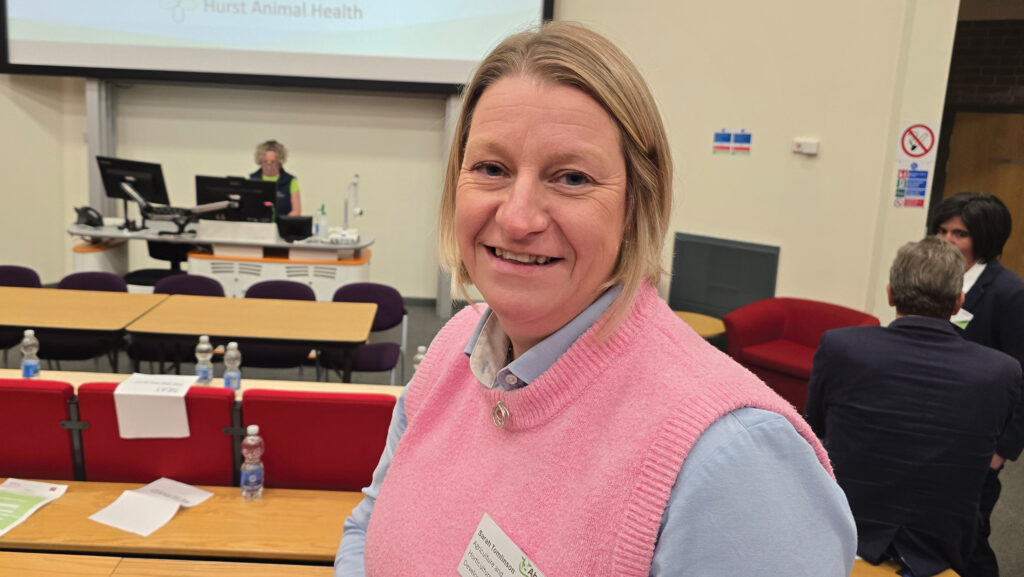
Dr Sarah Tomlinson © MAG/Anne Dunn
That creates an important distinction between identifying infection with enough certainty to justify compulsory slaughter and identifying animals which may represent a higher risk and could instead be managed accordingly.
“You’re identifying higher-risk animals,” Mrs Tomlinson said. “But there’s not an immediate need to cull them straight away. We just need to recognise that they potentially are infectious.”
She stressed: “What we’re trying to do is remove animals before they get diseased.”
Residual infection is particularly significant given the importance scientists place on cattle-to-cattle transmission.
Whole-genome sequencing, which analyses the genetic code of M. bovis, can identify related strains and help trace infection between herds, areas and species.
“Research shows an average figure of around 15 times more cows get infected by other cows than get infected by wildlife,” Prof Wood said.
“That really speaks to the need to focus on what happens between cows: residual infection, the cow transmission, and so on that needs to be picked up.”
Change in management
If statutory testing cannot identify every infected animal, experts argue the answer is not simply a more sensitive replacement.
Instead, attention is turning to whether existing test results, ancillary tests and individual animal histories could be combined to identify cattle carrying greater potential risk, including some which remain skin-test negative.
Prof Wood said: “At the moment, a farm is either free or not free, and actually, underneath that, there’s far greater risk information that’s available using the tools that we’ve already got.”

Prof James Wood © MAG/Anne Dunn
The Pembrokeshire and North Wales TB projects are already exploring this approach, using historic skin-test information to help farmers and vets identify and manage higher-risk cattle.
The aim is to use additional information to manage risk within affected herds rather than relying solely on a positive or negative statutory test.
Ancillary testing could provide another layer of information.
Dr Neil Watt, director of MV Diagnostics, which co-developed the Enferplex antibody tests, argues the current regime relies heavily on tests measuring cell-mediated immunity.
Animals producing a sufficiently strong cell-mediated immune response may be detected, he said, while some with an antibody response but without a strong enough cell-mediated response can potentially remain undetected.
“They stay in the herd when it’s OTF. They get sold to other herds and transmit infection, or they cause that herd to break down again,” he said.
Complementary role
Dr Watt believes antibody testing should complement rather than replace statutory testing, helping identify additional higher-risk cattle.
Whole-herd testing, he said, could enable farmers to identify animals carrying greater potential risk and “start to manage them out”.
“You don’t have to cull them right away, but you can start to manage them out according to the level of risk that they present,” he said.
That could prove important where substantial numbers are identified and immediate removal would be commercially difficult.
“You’ve got to keep your business going. Keep your families and genotypes going,” Dr Watt said.
“So you can’t do it by test and cull; it’s got to be about test and manage.”
Possible measures could include breeding higher-risk cattle to a terminal sire, segregating them at calving, preventing their milk being fed to calves or gradually removing them when commercially practical.
Statutory testing would continue to determine official herd status, while farmers and vets would have additional information to manage risks that may remain between tests or after restrictions are lifted.
Wildlife threat is still part of the picture
Greater emphasis on residual infection and cattle-to-cattle transmission does not remove wildlife from the eradication picture, say TB experts.
Prof Wood said whole-genome sequencing continued to show wildlife-to-cattle transmission was important, although its significance varied according to local circumstances.
He argued this required stronger wildlife surveillance and better understanding of local disease risk, with interventions targeted according to evidence.
Asked what evidence could trigger direct wildlife intervention in Wales, Dr Irvine said evidence from sources including the All Wales Badger Found Dead Survey and whole-genome sequencing would be used to investigate links between infection in cattle and wildlife.
“If that leads us into a position where there may be options to intervene, then that’s the next step we’ll have to look at,” he said.
In England, deputy chief veterinary officer Dr Ele Brown said the new strategy was moving towards badger vaccination, increasingly targeted at areas where surveillance suggested badgers could be maintaining infection.
Badger culling has stopped across England following the expiry of existing licences, although Dr Brown said the legislative framework remained. Any future action would be for a minister to decide “based on the data that’s available at that time”.
The emerging picture is therefore not simply one of choosing between cattle and wildlife. Instead, experts argue eradication will depend on better identifying where infection remains and applying interventions proportionate to local risk.
For repeatedly affected farms, that may mean paying much greater attention to what happens after reactors have been removed.
Skin test has its limitations, says Abi Reader
Welsh dairy farmer and NFU Cymru president Abi Reader said her own herd illustrates the difficulty of identifying residual TB infection.
The herd experienced a breakdown between 2010 and 2012 after a bull was bought from Devon, then regained officially TB-free (OTF) status until a further breakdown in 2019.
Retrospective analysis of skin-test results suggested infection may have persisted during the intervening years. Subsequent Enferplex antibody testing found 20% of sampled animals were positive.
Ms Reader said farmers may not always appreciate the difference between passing statutory testing and being biologically free of infection.
“The skin test is great at a herd level, but actually trying to narrow it down to an individual animal is really complicated,” she said.
“When the skin test says it’s found the disease, we’re pretty certain that it’s correct, but it can’t always find it in the first place.”
She said better use of individual animal risk information could help farmers manage higher-risk cattle between statutory tests.