

Chief vets call for bluetongue vaccination as cases surge
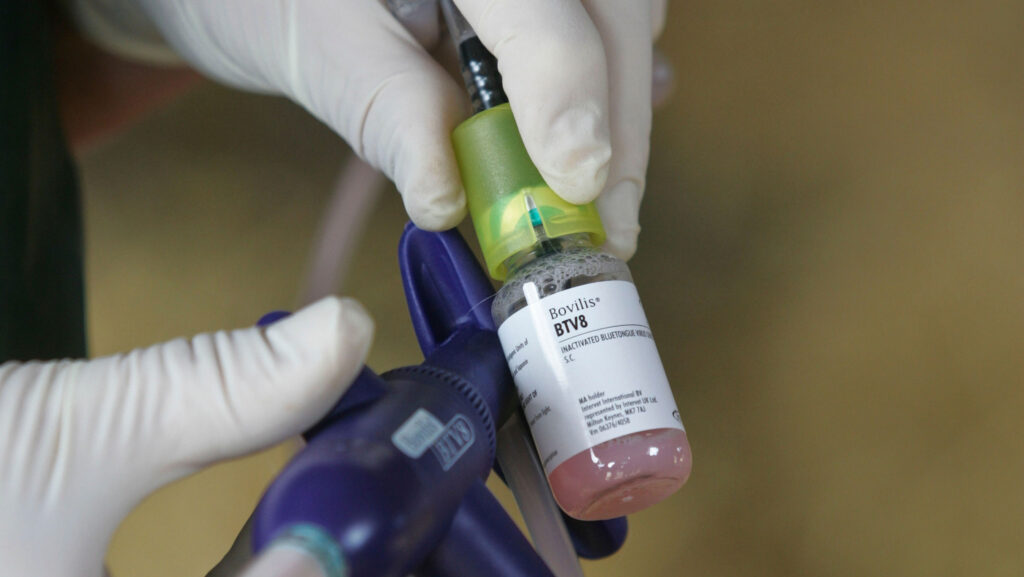 © Tim Scrivener
 Chief veterinary officers have urged livestock farmers to vaccinate against bluetongue serotype 3 (BTV-3), warning the current outbreak is accelerating, with the worst still to come.
Briefing journalists this week, UK chief veterinary officer Christine Middlemiss said 134 BTV-3 infected premises had been confirmed across Great Britain since 1 July, with sheep accounting for most cases.
The greatest concentration is in the South West.
See also: Bluetongue: Is the UK’s strategy keeping pace?
She reminded farmers that bluetongue remains a notifiable disease and any suspected cases must be reported to the Animal and Plant Health Agency (Apha).
“In England, movement control no longer has any impact.
“Infected animals can be treated symptomatically, but this is a virus,” she said.
“The only way to prevent a virus is to vaccinate, and so I strongly urge concerned farmers to vaccinate.”
Ms Middlemiss said infected midges should now be assumed to be widespread across England, making vaccination the most effective means of protecting livestock.
She also rejected claims linking vaccination with infertility.
“Some people think the vaccine can potentially cause infertility.
“It’s not the vaccine that does that. It’s having infection,” she said, urging farmers to vaccinate ahead of the breeding season to reduce fertility risks associated with disease.
Warning to act
Wales has recorded four confirmed BTV-3 cases since 1 July.
Wales’ chief veterinary officer, Richard Irvine, said there was still an opportunity to reduce the impact of the disease by sourcing stock carefully, understanding vaccination status and remaining vigilant.
He described the surge in south-west England as “a big red warning flag”.
He added: “The peak of disease is ahead of us. We’re not there yet.”
Although Wales is currently averaging only one suspected case a day, Dr Irvine said contingency plans were in place should the situation deteriorate.
“We’re not seeing, thankfully, that exponential rise in suspect cases or confirmed cases.
“But we’re planning and anticipating that could happen, and we’ll pivot our approach as necessary.”
Complacency
Scotland has yet to record a case, but chief veterinary officer Sheila Voas warned farmers not to become complacent.
“The short answer is we can’t stop infected midges crossing the border,” she said.
“But what we can do is help prevent disease through long-distance jumps involving infected animals.”
Her advice was unequivocal: “Vaccinate, vaccinate, vaccinate.”
“Anybody not vaccinating is gambling with the health and welfare of their flocks and herds,” she added.
National Sheep Association chief executive Phil Stocker said the outbreak should serve as “a really big warning sign” for producers outside the current hotspots.
“It does give people in other regions a chance to get on and vaccinate now and protect their livestock,” he said.
Vaccine supply monitored
Industry leaders said vaccine supplies remain available, although stocks could tighten if demand increases rapidly.
Ms Middlemiss said Defra was working with manufacturers and the Veterinary Medicines Directorate to secure additional supplies if required.
National Beef Association chief executive Neil Shand acknowledged there would not be enough vaccine to immunise every animal immediately if demand surged overnight.
But said a Defra-led vaccine taskforce was closely monitoring supplies.
Despite repeated calls to vaccinate, uptake has remained lower than expected.
Ms Middlemiss said about “half a million animals in total” had been vaccinated over the past year, although the figure relies on voluntary reporting by keepers.
Mr Shand said vaccination rates were “about half of what we saw last year”, partly because the severe outbreak many expected in 2025 did not materialise.
However, demand has increased considerably in recent weeks as cases have risen, with vaccine stocks being closely monitored.