

Farmers warned fleece will not protect sheep from BTV-3
 © GNP
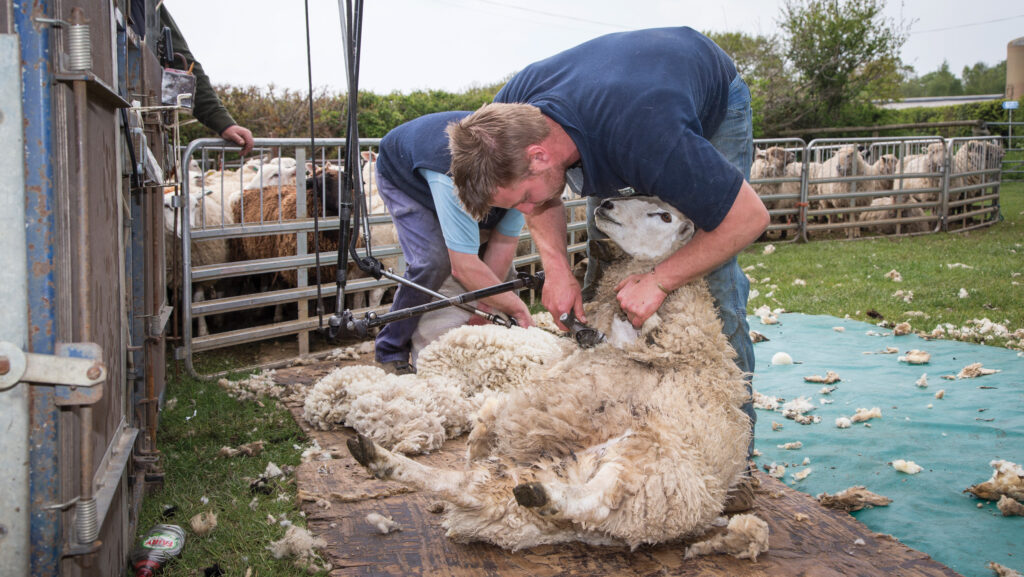
© GNP Farmers are being warned not to delay shearing in an attempt to protect sheep from bluetongue BTV-3, amid concerns the practice could create serious welfare risks.
Industry leaders and vets have rejected claims circulating on farming forums that retaining the fleece could protect sheep from infected midges.
See also: Bluetongue deaths drive up fallen stock costs
National Sheep Association chief executive Phil Stocker said: “NSA understands that some online forums are erroneously suggesting that fleeced sheep are better protected against BTV3.
“This suggestion fails to take into account the current high temperatures in the UK, that can cause heat stress, and the health and welfare implications of blowflies and maggots.
“The alleviation of heat stress is important in providing for good animal welfare. For breeding stock, this could also result in reductions in fertility and ability to mate.”
‘No meaningful protection’
Dr Kirby Dobson, of Tyndale Vets, which covers south-west England and south Wales, added that retaining the fleece offered no meaningful protection because areas including the head and legs remained exposed to midges.
NFU acting livestock board chairman Clare Wise said farmers understandably wanted to do everything possible to protect their animals, but shearing remained an essential part of good husbandry.
“It is absolutely vital for safeguarding health and welfare, particularly during hot weather,” she said.
Official figures for 13 August show BTV-3 has affected 373 premises since 1 July – 362 in England, nine in Wales and two in Scotland – with 1,583 potential cases under investigation.
Confirmed cases include 682 sheep, 141 cattle and one llama. No cases have been recorded in Northern Ireland.
Vaccine supply pressures
The warnings come as farmers in affected areas face difficulties securing vaccine amid rising demand.
Dr Dobson said uptake had increased significantly around Gloucestershire, with Bultavo 3 on backorder after a large delivery was quickly used.
It is understood the Veterinary Medicines Directorate is taking steps to increase BTV-3 vaccine availability amid shortages of GB-authorised supplies.
Manufacturers can apply to import NI/EU-authorised vaccines for contingency stocks, while Special Import Certificate applications from vets are being prioritised and made more flexible.
The GB and NI/EU versions of Bluevac-3, Bultavo 3 and Syvazul BTV 3 are produced by the same manufacturers and currently have the same composition, dosage and safety information.
However, product information could diverge in future because changes to GB and NI/EU marketing authorisations may be approved at different times.
Emergency support sought
Meanwhile, the Tenant Farmers Association (TFA) has called for an emergency government response to the combined pressures of bluetongue and drought.
It wants faster, free disease reporting and diagnosis, reimbursement of veterinary investigation costs, government-funded testing, greater laboratory capacity and financial help with vaccination.
TFA chief executive George Dunn said: “Farmers are dealing with a double whammy of bluetongue and drought.
“Whilst these may be natural phenomena, the scale of their impact demands a faster, better co-ordinated government response.”
The TFA has also proposed emergency support for viable livestock businesses facing exceptional mortality, veterinary bills, feed costs or severe grazing losses.