

How bluetongue vaccination decisions affected two flocks
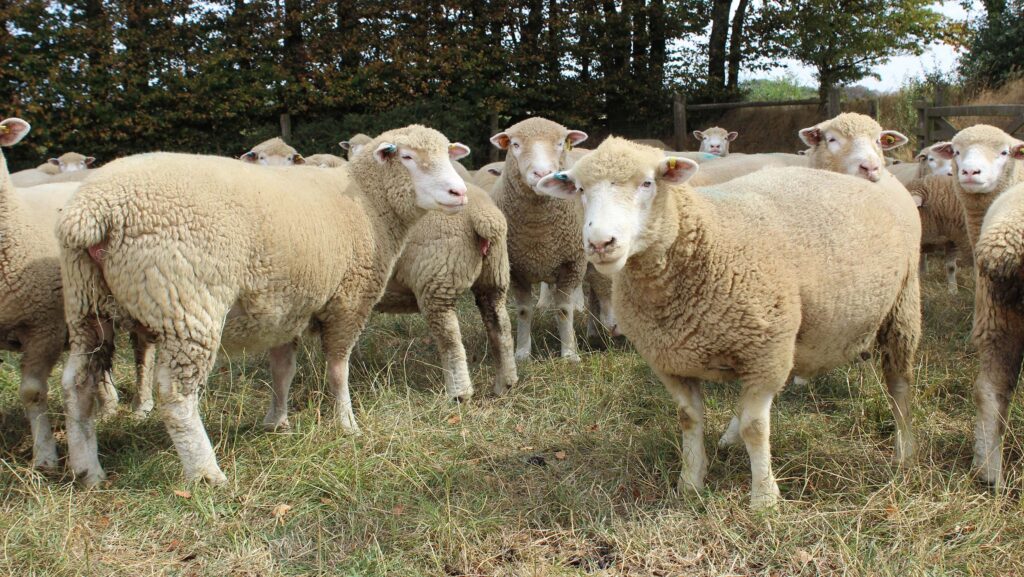 David Rendle's Poll-Dorset ewes © Ann Hardy
 There was never any doubt that David Rendle would vaccinate his flock for bluetongue.
He had done so last year, when there were few cases in his area, and this year, his 300 Poll-Dorset ewes and ewe lambs and 30 rams received their protection in March, before tupping and breeding sales.
This put the out-of-season lambing flock in a good position to resist the intense infection pressure to come.
See also: Emergency grants for farmers hit by bluetongue and drought
Farming at Woodburn Farm on the edge of Exmoor, about two-thirds of the family farm’s livestock income comes from breeding stock, so almost every animal has a high value.
The £2.50-£3 cost of the vaccine was not considered significant in this context. However, the flock did not escape unscathed.
“Protection is never 100%, but with the virus load facing our heavily pregnant ewes, I dread to think what would have happened without vaccination,” he says.
Mild symptoms
Symptoms were generally mild – mostly a subtle lameness and inflamed coronary bands, with animals immediately being treated with the anti-inflammatory meloxicam. In total,12% of the flock were treated.
A few animals had nasal discharges and in these cases an antibiotic was also used for fear of secondary bacterial pneumonia.
There were two abortions plus two deaths of heavily pregnant, vaccinated ewes, which David attributed to bluetongue combined with extreme heat on the day they both died.
“Sheep are more susceptible when stressed and they’ve had a really stressful summer, being pregnant in this heat with minimal grass,” he says. Despite this, the flock’s overall mortality rate remains low, at 0.09%.
Lambing concerns
However, for lambing, starting in the last week of August, he still has worries.
“We know the virus crosses the placenta. With such a high virus load in this area, I am worried about lambs at birth and newborn lambs becoming infected.
“However, the vaccine seems to provide good protection via colostrum and in the Netherlands, vaccinated ewes that made it to lambing had healthy offspring that did well.
Long-term strategy
“I’m also certain it will flare up next spring, and I will re-vaccinate breeding and sale animals in March,” he says.
Also emphasising the importance of water intake, he says infected animals will die of kidney failure when they don’t make the effort to go to the trough.
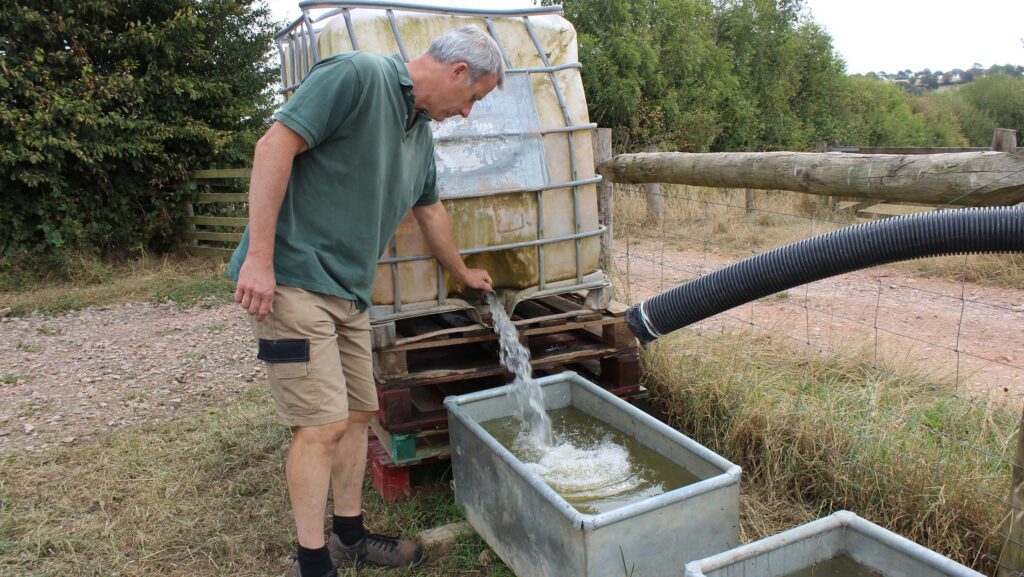
David Rendle filling the water troughs © Ann Hardy
“Next year, we will have more water troughs, put them in the shade and use small field parcels.
“And we will make more shade provision by planting more trees. It’s a long game, but bluetongue on top of heat stress has been the perfect storm.”
Unprotected flock
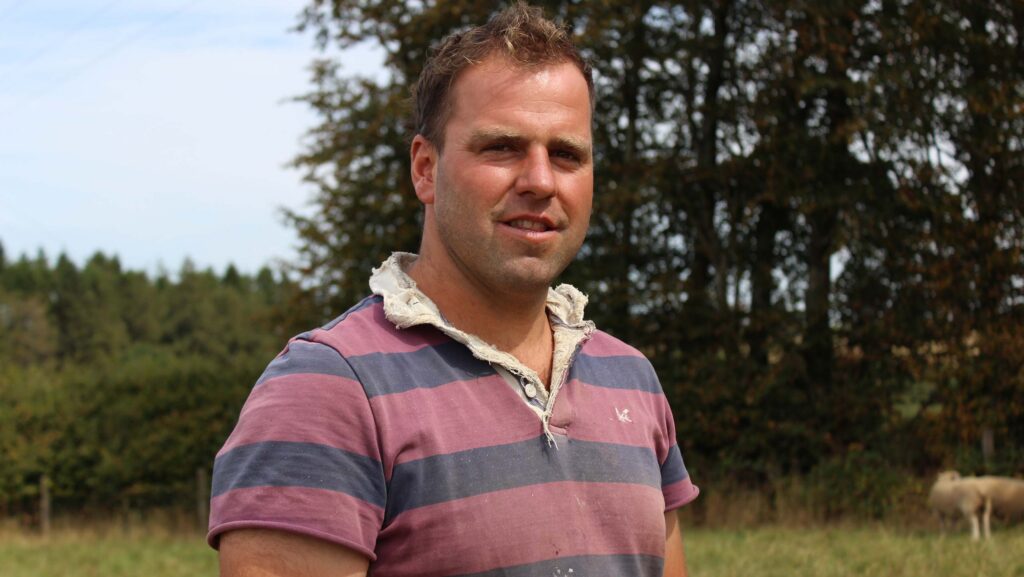
Richard Stanbury © Ann Hardy
Richard Stanbury has spent at least eight hours a day for the past four weeks treating sick sheep at Weston Farm, Knowstone, Devon.
He hadn’t vaccinated his 1,600-head flock before bluetongue hit the South West and the symptoms in his sheep have been severe.
Since late July, he has treated 700 head and is now vaccinating rapidly to protect the rest of the flock.
Lameness was the first symptom, followed by a nasal discharge, which could have been a secondary bacterial infection.
Equipping himself with anti-inflammatories and antibiotics, he rapidly treated the flock.
He also placed drinkers every 50-100m – the disease causes dehydration by damaging blood vessels and kidneys and is of far greater significance in this summer’s heat.
“I’ve never seen sheep drink water like it,” he says.
Ram fertility checks
Beginning vaccination on 6 August while continuing treatment wasn’t ideal but was the only practicable option, he says.
“We were about to vaccinate our rams when they were hit and have now had 15 cases out of 30 rams.
“They were drooling and had a raging temperature and hot feet and are still looking awful – hollow and losing flesh.”
They will be fertility tested in October before tupping in November.
Taking full responsibility for the decision not to vaccinate, he said the farm had managed without it for the past two years despite their vet’s recommendation.
“We thought if it gets prominent in the South West we would get it done.”
Next year, he says he will vaccinate the flock for fear the vector midge will have over-wintered in the area.
“The £2.50 per vaccine doesn’t sound much, but when you have hundreds of animals, it’s a massive cost,” he says.
“But factor in the labour cost of keeping animals alive and suddenly the vaccine looks cheap.”
However, his efforts to minimise losses have been reflected in just three ewes and 10 lambs lost to date.