

Advice for safely dipping sheep against scab
 © Rhian Price Media
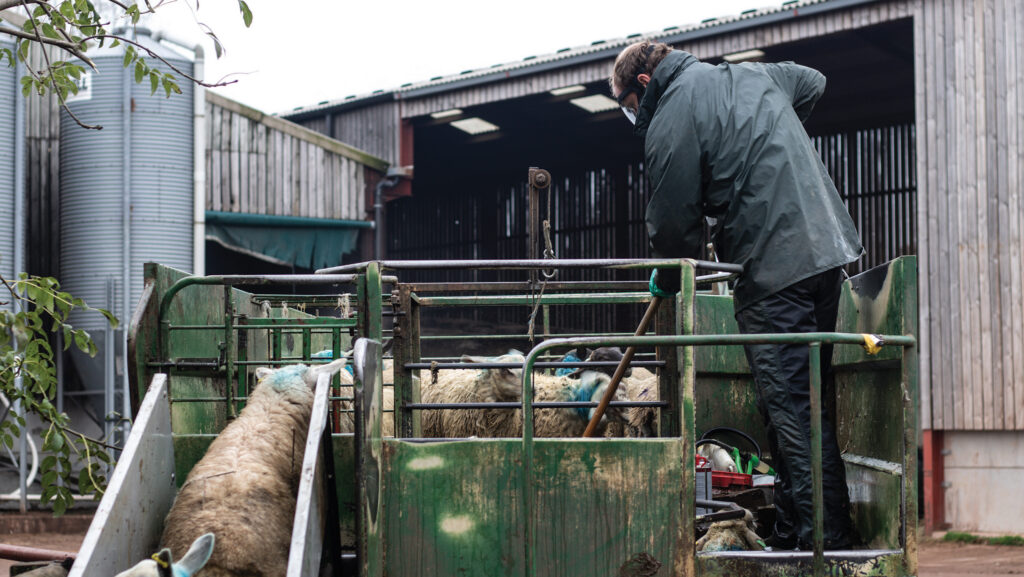
Sheep dipping is seeing a resurgence across the country because of resistance to injectable macrocyclic lactones.
However, on many farms, a “generational knowledge gap” in dipping expertise could be putting farmers at risk from highly toxic organophosphate dips.
See also: New tech offers solution to waste sheep dip disposal

Demelza Lowe © Demelza Lowe
Sheep scab, a highly contagious parasitic disease caused by mites, remains endemic across much of the UK.
Compulsory dipping, overseen by police, ceased in 1992 with the advent of injectable treatments, but efficacy and the lingering stigma associated with the parasite mean it continues to be a blight on many sheep farms.
Demelza Lowe runs Lowe Maintenance, offering land-based training to farmers. She has seen renewed interest from the next generation of farmers returning to plunge dipping.
The problem is that the knowledge and expertise has often been lost. “In many cases, granddad had the ticket, and that has bypassed a generation because they started using injectables. Now, their children must return to dipping, and the qualified dipper on the farm has died,” she says.
She also believes there is a concerning lack of regard for the dangers associated with the chemicals used in dipping. “Sheep dip contains organophosphates [OPs], a product that needs more respect.
“Unfortunately, I still see people online dipping shirtless and wearing shorts. We need to do better in terms of safety. The product is designed to kill something organic, and we are organic too, so we need to take greater care.”
Demelza offers advice on the safe use of OP dip from purchase through to use and disposal.
Five checks to carry out before dipping
- Do you have the correct PPE?
- Do you have a flow meter to check bath volume?
- Do you have a timer to ensure sheep are immersed for one minute?
- Do you have a clicker to track how many sheep have been dipped so you can replenish the bath at the right time?
- Are dipping facilities safe for the handler and sheep?
Safe dipping practices, a step-by-step guide
1. Qualification and PPE
A City & Guilds level 2 certificate of competence is legally required to purchase and use sheep dip.
Due to the product’s toxicity, PPE is paramount and should include:
- Spray-protective waterproof jacket and trousers
- Wellies
- Unlined gloves
- Full-face clear visor or full-face respirator for contract dippers
- Apron.
2. Dipping facilities
Dipping should be done outdoors in a well-ventilated area.
Baths should not be too steep and should have steps to allow sheep in and out. The bath should not have a plug because spent dip must not drain away, as it can cause water pollution.
Splashboards should be installed around the bath with chain pulleys to allow sheep in and out and protect operators from the solution.
The drainage pen should be large enough to give sheep room to dry and have sealed sides to prevent contamination of outer areas.
Mobile dippers are a good investment for farmers who can’t build permanent facilities on the farm or who have sheep in various locations.
© Rhian Price Media
3. Filling the foot-bath
A closed-transfer system should be used when measuring the concentrate from the tin to the bath to avoid direct contact with the product.
Demelza says knowing the exact volume of water in the bath is crucial for correct dilution and product efficacy.
“If you aren’t putting the correct amount in, you are better off not dipping,” she warns, adding that incorrect dilution will ultimately lead to product resistance, too.
She advises using a flow meter on the hosepipe when filling the bath so the product can be added at the correct dilution rate.
Add more product at correct intervals based on the size of the bath and also ensure it is fully replenished at the correct time.
4. Dipping technique
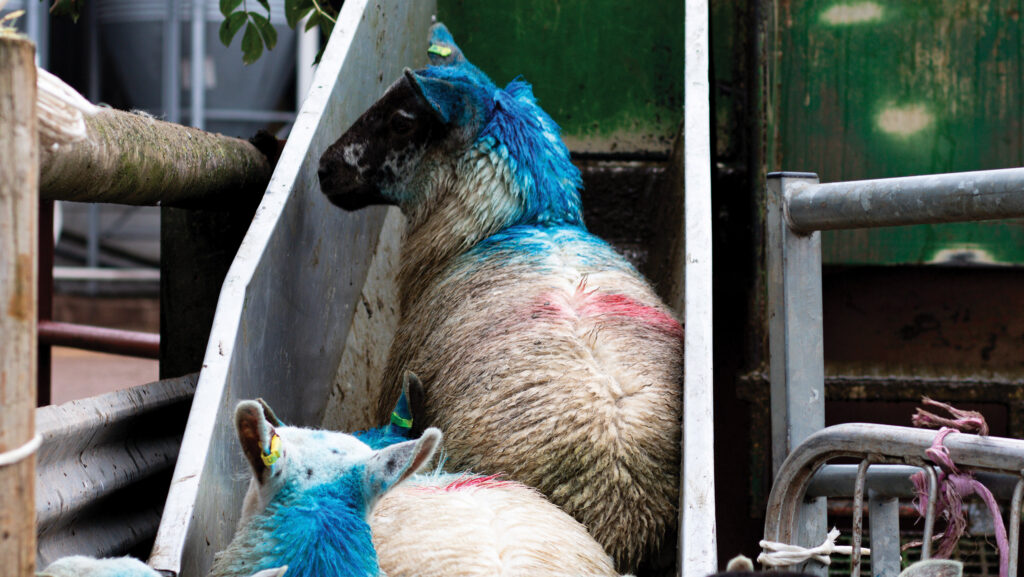
To prevent faecal contamination of the foot-bath, sheep should not be dipped on a full stomach. At least 2.5cm depth of fleece is required for the product to work.
Farmers should use a timer and ensure sheep are fully immersed in the bath for one minute. Their heads should be submerged twice to ensure the dip reaches any mites residing in the ears.

© Rhian Price Media
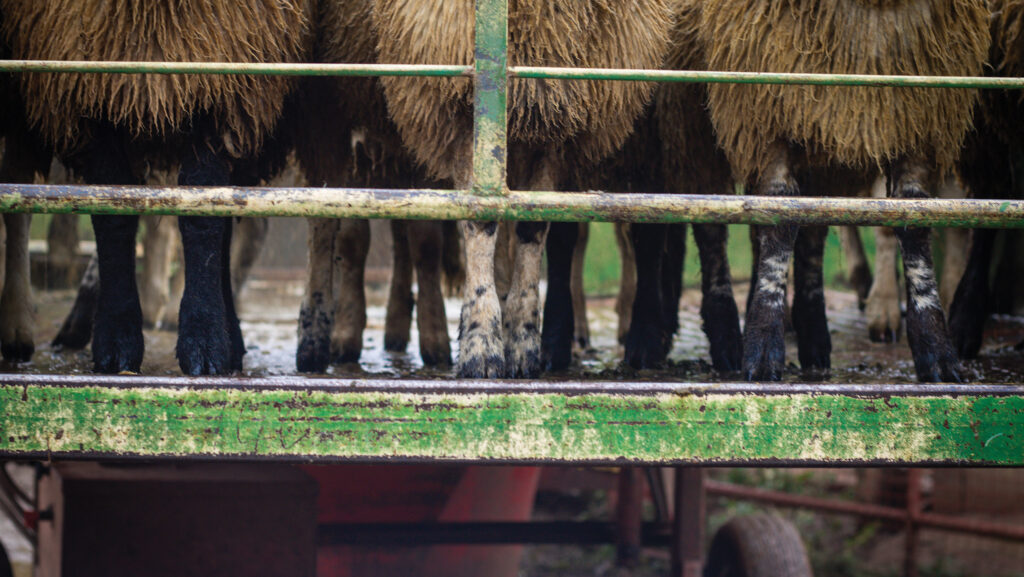
Sheep must be left for at least 10 minutes to allow the dip to drain, depending on fleece length, or until they stop dripping. Any waste dip must drain back into the bath from the drainage pen, and concrete flooring should not be damaged, to prevent seepage.
Fleeces can remain toxic for up to three months after dipping, so handlers must wear PPE during this time.
© Rhian Price Media
5. Emergency procedures
Farmers must have clear emergency protocols for accidental exposure or spills. “The draining pen should be set up with access to water so you can wash yourself off thoroughly. Remove PPE and any contaminated clothing and get changed,” says Demelza.
If exposed to sheep dip, seek medical advice immediately and take the product label to hospital. “OP poisoning may not be something your normal A&E doctor will be familiar with,” she points out.
6. Dip disposal
Spent dip cannot be left overnight. Instead, it must be pumped into an IBC clearly labelled for sheep dip use only.
Farmers must have a licence to spread spent dip on land. Natural Resources Wales (NRW) no longer issues permits in Wales.
Permits vary between devolved nations and can be bespoke to individual farms, so read the conditions of the licence thoroughly.
Challenges of disposal and prevention
Disposal licences are notoriously expensive, costing as much as £2,500 for the initial application in England and £300 annually to renew.
Spent dip can be taken to licensed waste disposal sites by dipping contractors or farmers without a permit to add to the land. However, fewer of these sites remain, and those that do charge exorbitant fees of up to £1,000 per IBC, says Demelza.
A solution called Clear Dip is currently under development and can remove close to 100% of the insecticide from spent dip.
Demelza believes it will be a gamechanger for the industry, but until it is commercially available, she says the sheep industry and regulatory agencies need to do more to reduce disposal costs and find more viable solutions to prevent illegal dumping.
“I spoke to a farmer recently who said he paid his contractor to dispose of the dip, and he set off down the road and opened the tank. That’s happening more than you think because people can’t get rid of it,” she says.
In the meantime, she encourages the industry to break the sheep scab cycle through coordinated prevention.
“Let’s all work together by testing and treating together with neighbouring farms. After all, the goal is to create a stronger and healthier flock for the future.”
