

Sheep farmers urged to vaccinate as bluetongue spreads
 © Oli Lees
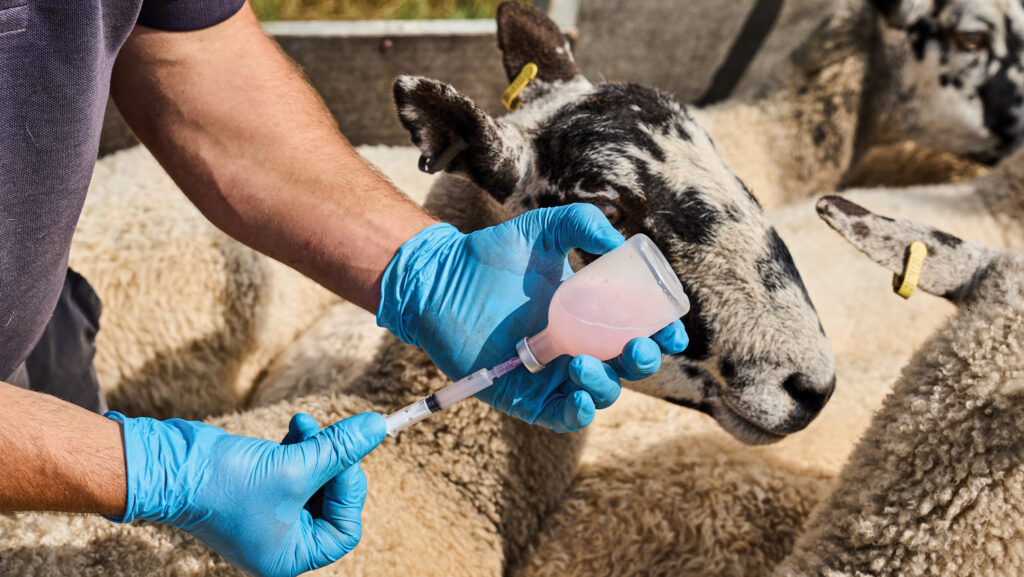
 Sheep producers are being urged to vaccinate animals as bluetongue virus outbreaks worsen.
The disease has now been detected on a growing number of farms in the South West and North West of England, as well as the West Midlands and Wales, bringing the total number of cases to 84 since 1 July.
The outbreaks are believed to stem from the bluetongue virus (BTV) overwintering in UK animals, rather than from midges blown over from continental Europe this year. This suggests the disease has been lurking undetected.
See also: How timely bluetongue vaccine prevents dummy calves
Sheep Veterinary Society president Phillipa Page called for farmers to consider vaccination imminently. “The only way to protect your animals is to vaccinate them. It’s not too late for early lambing flocks,” she said.
BTV 3 is the primary strain detected so far; however, Phillipa said BTV 8 is also present in the UK and is expected to be found.
“We have two separate vaccines against both of those strains. The gold standard is to vaccinate for both, but there are economic costs to that, and these need to be weighed up against getting the disease.”
Factor in time for vaccination to give protection
It takes three weeks from the primary vaccination to the onset of protection, so time is of the essence, she warned. She advised farmers to consult with their vets as soon as possible and discuss the situation on a case-by-case basis.
Sheep that were vaccinated last year will have protection for 12 months, but this protection could now be waning, and a booster may be required, she added.
If BTV is present in a flock, farmers are being advised to change needles after vaccinating each animal to avoid infection spread.
As the country gears up for breeding sales and tupping, chief executive of the NSA, Phil Stocker, warned producers to remain vigilant.
“Two or three weeks ago, there was little talk of bluetongue in sheep, but this has hit us very quickly and very hard.
“Be really careful about biosecurity and where you are moving sheep – you could easily spread the disease around the country.”
Although there’s no evidence BTV vaccination affects long-term ram fertility, he said a spike in temperature after vaccination could affect it for a few days.
“With tupping coming up towards the end of this month and in September, it’s important to vaccinate as early as possible,” he added.
Clinical signs of bluetongue virus and sources of help
For advice, including disease alerts and up-to-date information on the latest movement advice, visit https://ruminanthw.org.uk/bluetongue-virus-hub/
If you’re a farmer in England or Wales and suspect BTV, contact the Animal and Plant Health Agency on 03000 200 301. In Scotland, contact your Field Service Office.
To calculate how much it will cost to vaccinate your flock and how much it could save you, visit https://ahdb.org.uk/knowledge-library/btv-3-vaccination-finance-calculator-sheep
Clinical signs
- Lethargy, reluctance to move
- Crusty erosions around the nostrils and on the muzzle
- Ulcers or sores in the mouth and nose
- Discharge from the eyes or nose and drooling from the mouth
- Swelling of the muzzle, face and above the hoof
- Reddening of the skin above the hoof
- Redness of the mouth, eyes, nose
- Breathing problems
- Abortion, foetal deformities and stillbirths
- Death.
Source: Ruminant Health & Welfare
Phillipa Page and Phil Stocker were speaking to Farmers Weekly at the NSA Sheep Event at Malvern on 28 July 2026.