

Teat dip choice key to mastitis protection, study finds
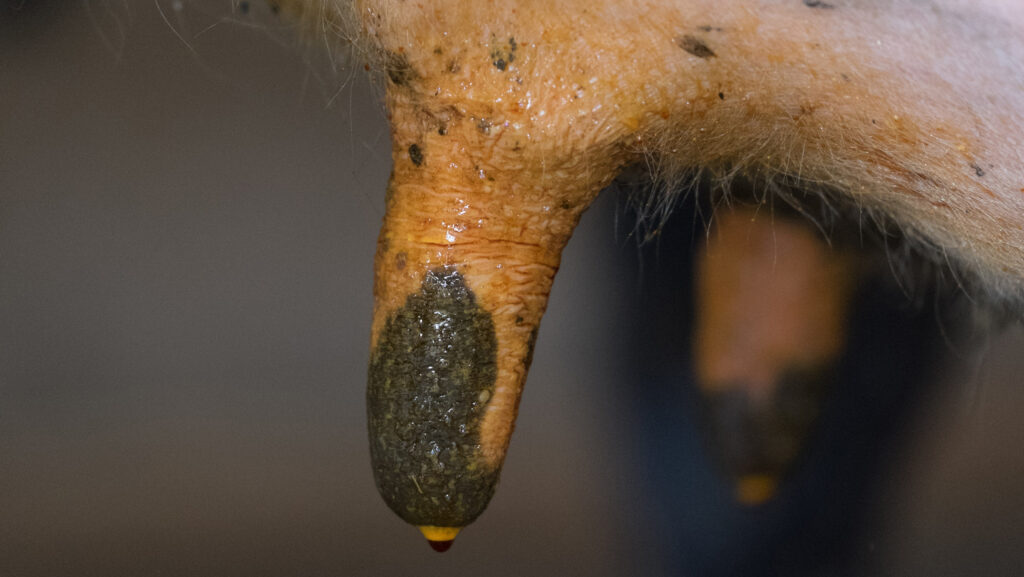 © Tim Scrivener
 The type of teat disinfection product used post-milking can have a big impact on the level of protection against environmental pathogens.
New findings from vet and researcher Sofie Piepers and her team at Ghent University in Belgium show that a chlorine dioxide dip with shield technology provided greatest protection against the environmental pathogen Streptococcus uberis.
See also: How clover leys helped lift profit after loss of rented land
Sofie says post-milking teat disinfection has two purposes: to kill transmitted bacteria, which are mainly contagious pathogens, and to protect against penetrating bacteria, which are mainly opportunistic bacteria.
She explains that it is hard to compare products with different formulations and percentages of active substance.
Past research has differed in conclusions about the effectiveness of barrier teat dips at reducing intra-mammary infections when compared with contact dips, she adds.
Three products compared
The team tested three teat dips alongside a control:
- A conventional iodine dip
- An iodine dip with shield technology
- A chlorine dioxide dip with shield technology.
The study was conducted in vitro using rubber nipples and cotton wool plugs to measure the bacterial penetration of an S uberis solution.
Results showed that, compared with a control, the chlorine dioxide dip with shield technology reduced S uberis presence on the cotton plug inside the rubber teat by 90%.
The reduction was 75% for the iodine with shield technology and 44% for a conventional iodine dip.
However, Sofie advises that the priority, regardless of product, should be making sure the teats are dipped.
This is because research shows a huge difference in new infection rates between dipping and no dipping.
“I would suggest choosing a product based on the data on the farm, so based on bacteriological culturing.
What is the most predominant pathogen – contagious versus environmental? [That] will help you to make the right choice,” she says.
Teat skin condition and teat dips
An on-farm study of 36 lactating dairy cows was conducted to look at how teat dips can affect teat skin condition and the association between skin condition and bacterial load.
In the group of cows dipped with a product containing EmulsioCare technology (providing skincare), the probability of having a “dry” or “very dry” quarter reduced from nearly 80% at the start of the study to less than 5%. No similar pattern was seen in the control group.
Alongside this, results showed that there was a clear relationship between bacterial colonisation and skin condition, with damaged skin allowing for more bacterial growth and persistence.
Sofie Piepers was speaking at the British Mastitis Conference held in Worcester on 17 June 2026