

Hot weather fuels early rise in poultry salmonella
 © Tim Scrivener
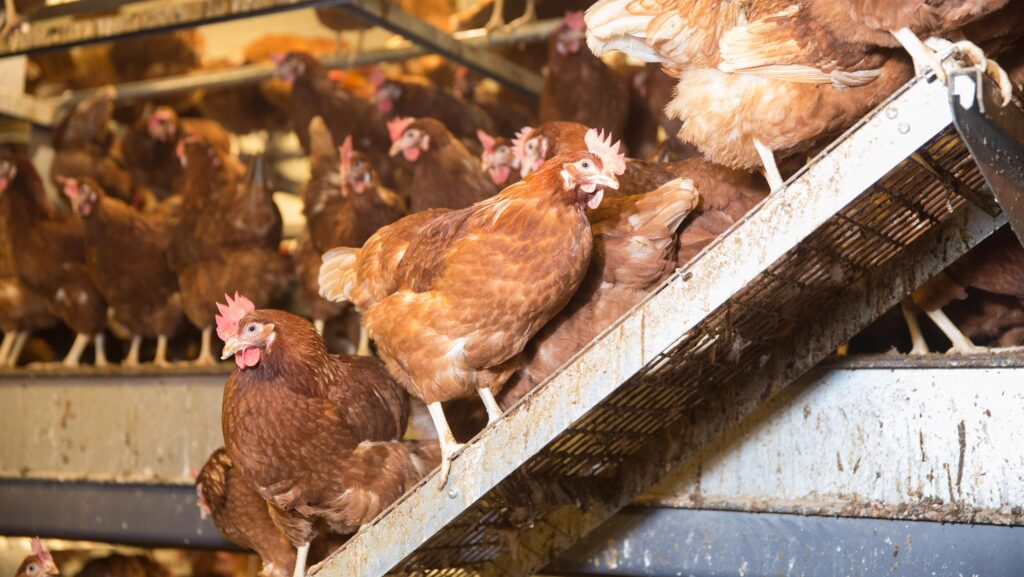
 Poultry producers are being urged to maintain strict biosecurity as hot, dry conditions contribute to an earlier-than-usual rise in salmonella cases.
Cases have risen across breeder, broiler, and layer units, likely due to early harvest and extended warm weather, causing an earlier seasonal increase than usual.
See also: Hatchery salmonella outbreak raises supply concerns
Poultry health and biosecurity specialist Livetec says it has attended just over four times as many salmonella cases so far this year compared with the same point last year, and almost twice as many as it dealt with during the whole of 2025.
Dr Paul Talling, Livetec biosecurity adviser, said farmers were understandably focused on preventing heat stress, but warned high temperatures could also leave birds more susceptible to disease.
“Birds suffering from heat stress can experience weakened immunity, compromised gut health and exhibit physiological and behavioural changes such as excessive panting and drinking, making them more vulnerable to disease,” he said.
Warm conditions can also accelerate bacterial multiplication.
Effective biosecurity
Dr Talling said farms with effective biosecurity should maintain existing procedures and avoid allowing standards to slip when routines or infrastructure were altered to cope with the heat.
“Diseases like salmonella can be carried on dust, organic matter, soil particles and vermin, so it’s important to keep areas outside sheds clean and tidy and to keep buildings rodent proof,” he said.
Opening shed doors and windows for extra ventilation can also provide access for wild birds and rodents and increase the risk of uncontrolled human movement.
Birds coping well
Rutland poultry producer Lucy Hinch, who keeps just over 200,000 free-range layers and rears 160,000 free-range pullets, said her birds had coped well with the recent heat.
“The struggle more, I think, is for the staff. It’s really quite unbearable in sheds,” she said.
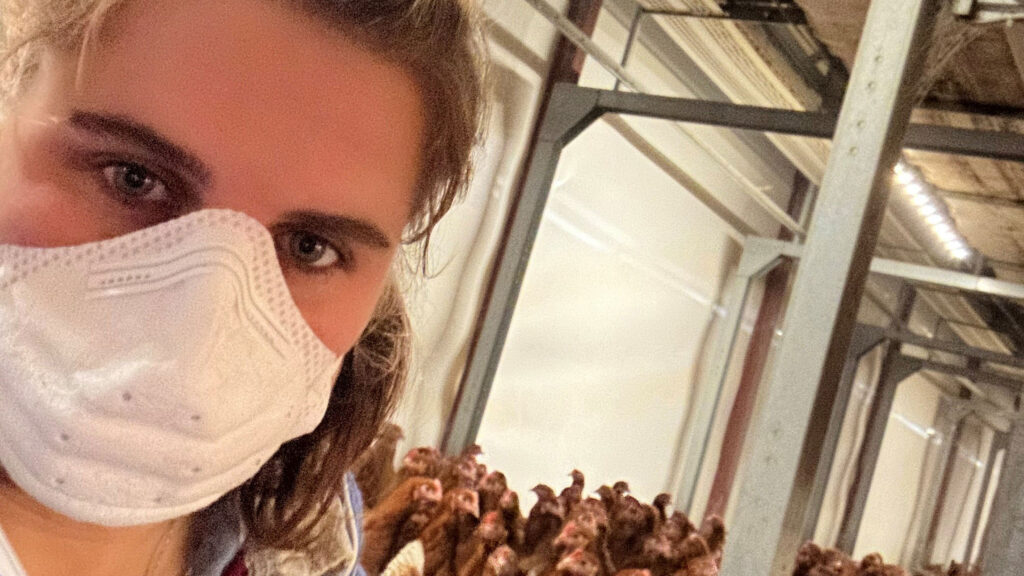
Lucy Hinch © Lucy Hinch
Birds had been ranging less during the hottest weather, while potentially stressful jobs, such as vaccinations, were being carried out earlier in the morning where possible.
She said looking after staff was important, but biosecurity standards remained unchanged.
“We insist that even with the hot weather, they have to continue to follow all the biosecurity,” she said.
Staff continued routine bird checks and wearing overalls, while foot dips were changed twice weekly.