

How farm’s cattle-handling revamp ups efficiency and safety
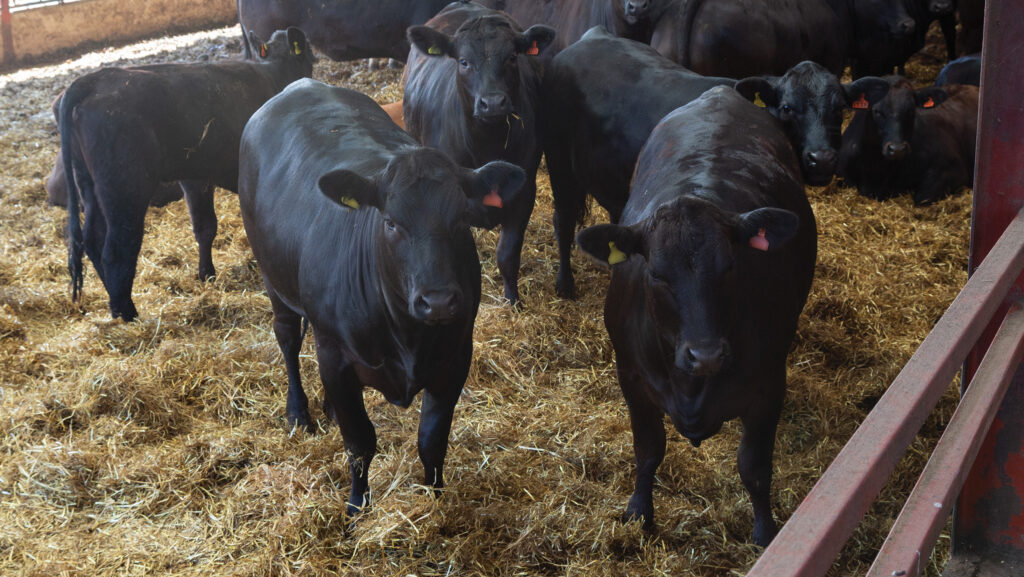 Upper Nisbet heifers in finishing shed next to handling facilities © MAG/Judith Tooth
 Regularly weighing cattle is central to Robert Neill’s beef operation in the Scottish Borders.
Progeny from his 380-cow suckler herd are taken to finishing weight – bulls this year are averaging 750kg and heifers 620kg – and sold live through the auction ring.
“It’s all about knowing the market and knowing the customer – that’s why weighing is so important,” he says.
Robert, who farms with wife Jac and sons Andrew, 26, and Harry, 24, at Upper Nisbet Farm, Jedburgh, has recently replaced the farm’s cattle-handling setup.
“If you can provide and present cattle in an orderly fashion, then the process will be quicker and cheaper,” he says.
See also: Beef welfare strategy aims to make cattle thrive, not cope
Farm facts
Upper Nisbet Farm, Jedburgh, Scottish Borders
- 688ha tenant farm on the Lothian estate
- 283ha rotational grazing and 405ha arable including grass/red clover silage leys
- 380 suckler cows, including 40 pedigree Limousins
- Crossbred herd replacements (Friesian cross Limousin or Hereford) sourced from brother’s dairy unit
- Calving indoors in April/May; heifers in March
- Progeny finished on home-grown rations: entire bulls at 12-16 months, sold at Carlisle or Darlington markets; heifers at 18-24 months at St Boswells market
Why did you need new facilities?
We had a pretty good system already, and everyone thought I was mad knocking it down, but we’d outgrown it.
The design had some drawbacks, too – the race into the crush was straight, and the funnel V-shaped, leading to bottlenecks.
Also, the old setup at was mainly outside, with just the area over the crush covered.
I reckoned putting the whole handling area under cover would create a better working environment.
The aim was to create more space and take greater account of natural cattle behaviour and safety for handlers.
What informed the design?
I was born with a welder in my hand! I love designing and making things and wanted to have the infrastructure in place to make it a pleasure, not a chore, to work with cattle.
I studied several handling systems in 2013 for my Nuffield scholarship, which focused on electronic identification (EID) and traceability.
I went to a talk by animal scientist Dr Temple Grandin and read her books on livestock handling.
The old setup was made with galvanised tin, so it was very shiny, and was cast in shadows on dark days, which cattle don’t like, so it slowed the flow.
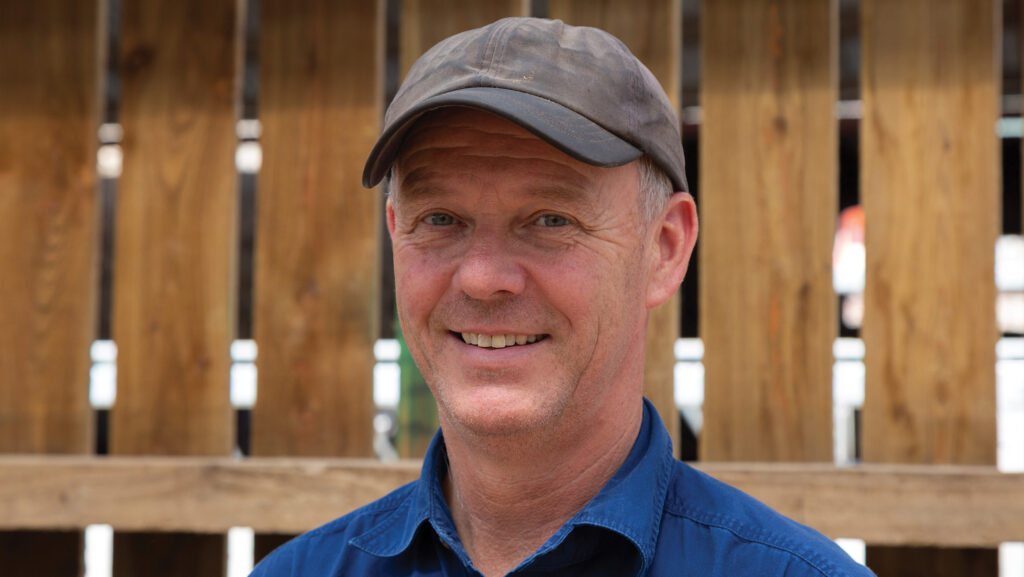
Robert Neill © MAG/Judith Tooth
What’s the new setup like?
It’s right next to the calving/finishing sheds.
The building is of steel-frame construction measuring 30.5×12.1m with concrete-panelled sides and space boarding above.
The roof is fitted with Heatguard polycarbonate sheeting.
This lets in natural light, but with very little shadowing, and heat buildup is limited as the sheets reflect UV rays.
The race is S-shaped – cattle are inquisitive – and the race gates are lined with Stockboard.
Because it is (recycled) black plastic, it isn’t shiny, it’s easy to clean and it doesn’t rot or rust.
The race leads to the TePari crush, which incorporates a TruTest weighscale indicator and data management system.
The walkway is a lot bigger and wider than before, with safety rails along its length.
Integral to the shed is an office/storeroom for anything and everything that might be needed in the way of spares and repairs.
There’s also a dedicated medicines fridge, a deep freeze for storing colostrum and an artificial insemination flask.
Who built it?
The steel frame was manufactured by John Thorburn & Sons (Construction) of Duns. Then we erected it and they put the roof on.
The race gates and shedding gates, as well as the crush, were supplied; everything else was manufactured in-house in the farm workshop.
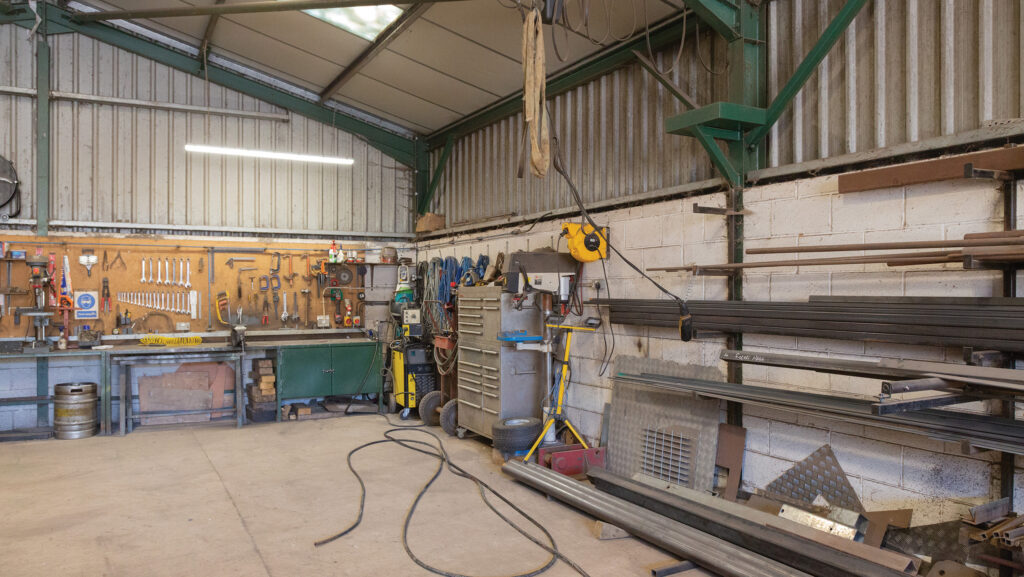
Farm workshop © MAG/Judith Tooth
I cut the steel, welded it and made the necessary holes, then sent it away to be galvanised.
What did it cost and how long did it take to build?
Work started in May 2025, and the first cattle went through that October.
If we’d had tradesmen in and hadn’t made any of the components, I reckon it would have cost about £150,000.
How is the shed used?
Cattle are brought in for annual blood testing, pregnancy diagnosis, weaning, health and fertility checks, treatments and vaccinations. TB testing is done one year in four.
Monthly weighing of finishing stock checks progress, with data used to adjust feed rations if needed. Cattle have EID tags and data is downloaded seamlessly.
We can use the crush in manual or automatic mode or by remote control. I can set the system up for vet treatments according to weight of animal.
It acts as a digital medicines book, records withdrawal periods and will flag red if the period isn’t complete.
What’s your favourite feature?
As members of SRUC’s Premium Cattle Health Scheme, we have to blood test every breeding animal over 24 months of age annually – 418 cattle last December.
To save time and cut the risk of human error, I got a barcode label printer, which the programmers at TruTest helped set up so it can print the label for each animal’s blood sample.
It cost £60 from eBay and fixes to the side of the crush.
Any other features that ease management?
The EID-compatible tag reader is usually a solid panel on the side gate of the crush, but that blocks vision. We’ve got an eRail, which forms part of the gate.
I made an adjustable fixing for the loading gate so it’s secure whatever the dimensions of the haulage lorry.
Is there anything wish you’d done differently?
No. I was a bit worried on the first day we used it, but it all went a lot better than I’d anticipated.