

Dairy roofs: What is best for cows in a changing climate?
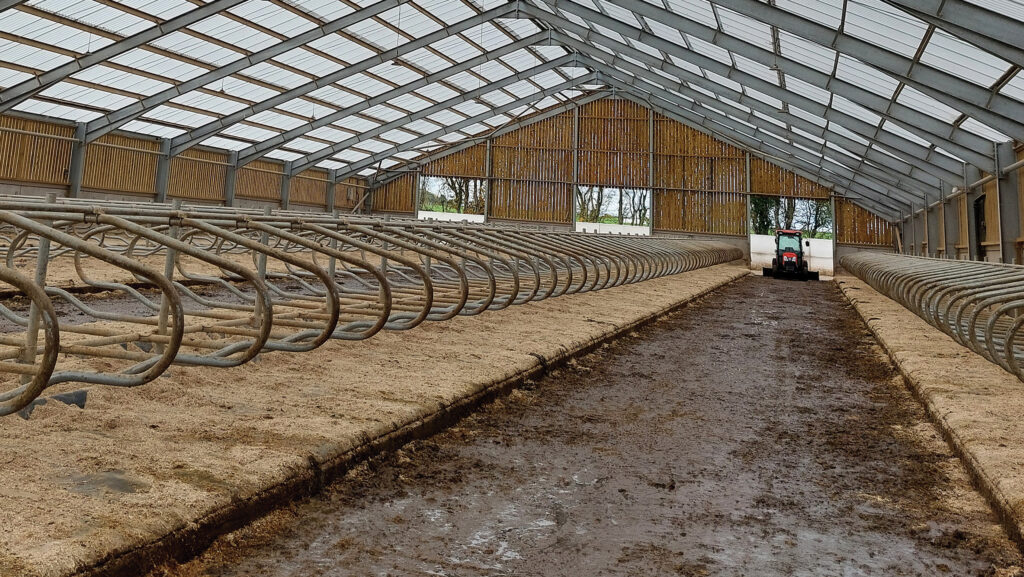 Inside the Wellingham Dairy shed © MAG/Shirley Macmillan
 A clear roof has created pleasant working conditions for staff, a great living environment for cows in winter – and has been keeping cows cool during this summer’s heatwaves.
See also: Advice on dairy buildings designed for weather extremes
A 346-cubicle shed, finished in October 2024, is just starting its third season for the autumn-calving herd at Wellingham Dairy, near Tittleshall in Norfolk.
The new shed is on a greenfield site, alongside a slurry lagoon, feed pad, loafing areas and 24:48 parlour, surrounded by a 90ha (222-acre) grazing platform.
Farm facts: Wellingham Dairy, Tittleshall, Norfolk
- 730 cross-bred cows and heifers calving this year
- Average yield is 8,300 litres at 4.65% butterfat and 3.65% protein
- Autumn block-calving
- Farms 502ha including two dairy units
The business, run by Richard Thompson and contract farmer Oli Munday, calves 730 cows and heifers starting on 21 August, with the first 350 animals based at the Tittleshall site.
The shed was designed to be in use from August until February, when cows are turned out, and the priority was to offer cows the best environment during that time, says Oli.
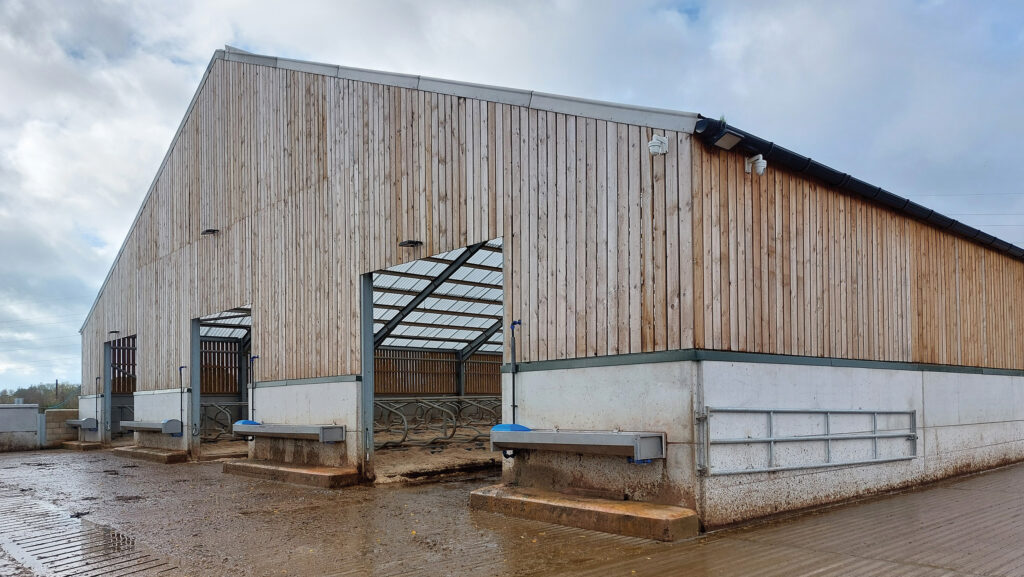
The Wellingham Dairy shed © MAG-Shirley Macmillan
Natural ventilation
The steel-frame building is 66m long, with three 4m-wide passages and six runs of cubicles with mats and pillows, topped with sawdust.
Three doorways at each end give cows free access to the loafing areas outside, as well as the feed bunker. Cow control is via spring gates, not doors.
These big openings provide airflow, as does space boarding on all sides and the ventilated ridge. All cow brushes and water troughs are external.
Originally, Oli intended to have a conventional fibre cement roof. However, he heard about a clear option from Northern Ireland company Greenhill Systems.
Called a Heatguard roof, he explains it is made from polycarbonate sheet with an outer layer containing aluminium strips.
Roofing technology
“What stood out for me was that the aluminium strips in the sheet reflect the UV light, so you have light in the shed, but no heat build-up. It’s light, airy and noticeably cooler and nicer inside – you can feel the difference compared with outside – and the cows do well.
“We are really pleased with it: in winter, it’s a better working environment,” he says.
The roof has also delivered a particular advantage this summer with the combination of drought and successive heatwaves. When grass growth halted, cows were housed and buffer-fed, making use of the shade provided by the building.
By the end of the year, Oli will have installed climate monitors and will know exactly how temperatures differ in the shed.
“We don’t normally want it to be used in summer, but it gives flexibility if we have no grass. We’ve not felt the need for fans in it yet, although our worst period for heat stress is in fresh cows in late August/early September.”
Cost
He reckons the price difference for the Heatguard roof was an extra £700/year over a 25-year lifespan.
Future issues could be what the actual lifespan is (given it’s a new product) and whether the sheets will stay clean enough to let in the light.
“The roof has a 22deg pitch, so it’s steep, and when it rains it should be self-cleaning,” he adds.
Mechanical ventilation upgrade planned to mitigate hotter summers
A 270-cow cubicle shed built a decade ago to withstand the scorching summers in Norfolk is in line for an update. As extreme temperatures and longer periods of hot weather have become normal, Alex Dann is pricing up fans for his shed.
He says that 10 years ago, construction was based on the best advice at the time for heat mitigation – and this specifically added cost to the project.
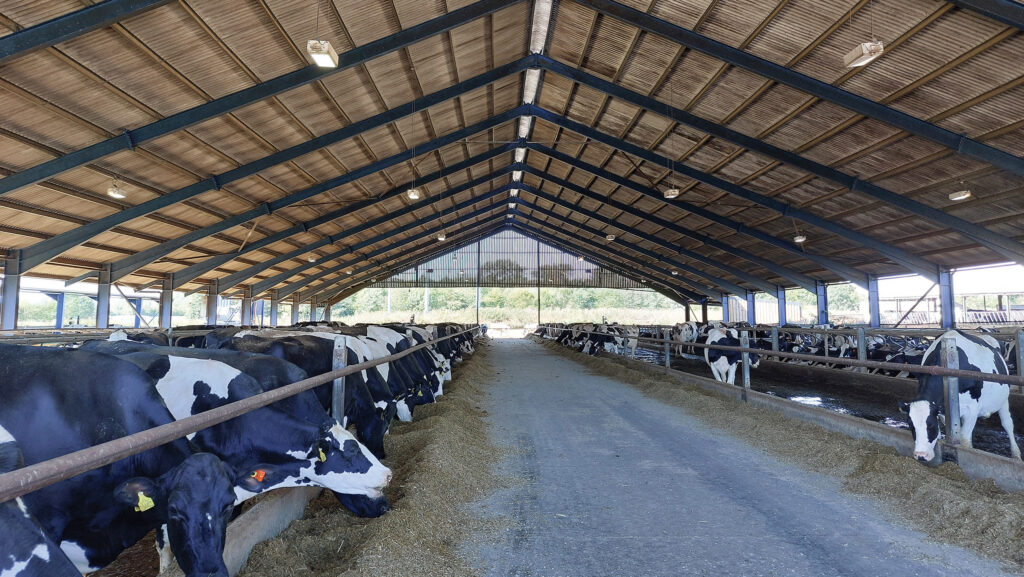
Inside the Pound Farm shed © MAG/Shirley Macmillan
The shed at Pound Farm, North Tuddenham, is 78x36m and 11m to the apex, featuring four open sides (boarding is on the gable ends). It has a 22.5deg pitch roof and a raised ridge.
Conventional solid fibre cement sheets were used all over the roof to block sunlight, although this meant extra lights were needed above cubicles and the feed passage.
Farm facts: Pound Farm, North Tuddenham, Norfolk
- 440 Holstein cows
- Farms 324ha of grass and maize
- Sells 13,000kg milk and 960kg milk solids a cow
- Milks three times a day
Effect of weather extremes
“A large, sloping, dark and vented roof with no roof lights was used to keep things cool and shady,” says Alex. “But weather patterns have changed in that time – we now get drought and [severe wet] weather. Heat is here to stay, and we’ve got to adapt to it.”
Milk yields have also increased over the years. Last year’s 38 litres/day has jumped to 46 litres/day.
“But we can lose 6 litres/day in extreme heat for a month,” says Alex. He likens a cow’s metabolism to “running a hard marathon”, and he has become concerned about heat stress.
“It’s more obvious in the cows. When it’s 40C outside, they are lethargic but OK. Then, about two days later, they stop eating, and three weeks later we get mastitis and lame cows,” he explains.
The herd’s mastitis rate is running at 18%, which he considers too high as it is usually 15%; outbreaks this year were caused by Streptococcus uberis.
Cell counts remain below 120,000 cells/ml and bactoscan readings under 10. There have also been poor scanning results, with some conception rates dropping from 52% to 25%.
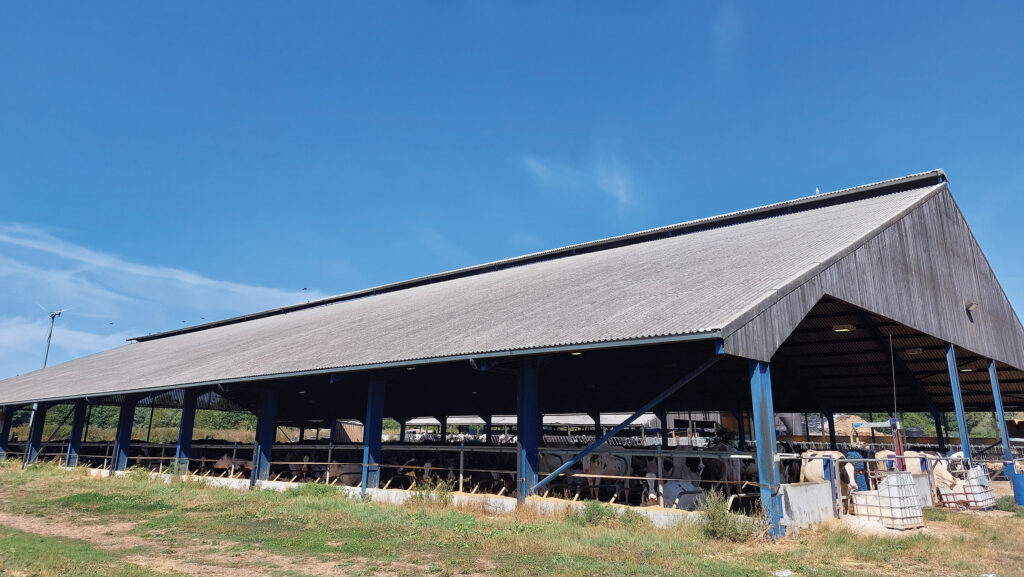
The shed on Pound Farm MAG/Shirley Macmillan
Ventilation upgrade
In recent years, Alex has added four fans to the parlour and put two misters on the collecting yard. His plan is to install three 7m-wide helicopter fans in the cubicle shed, each covering 30sq m, to push air down from the apex and out through the open sides.
He believes natural ventilation is not enough in today’s extreme weather for either cows or youngstock, and says farms have to be in full control of the climate in buildings.
Learning from experience, his new youngstock shed, for 120 calves, has been designed to avoid big fluctuations in temperature that inevitably lead to pneumonia.