

How cattle handling upgrade improved safety and work rate
 © Angus Findlay
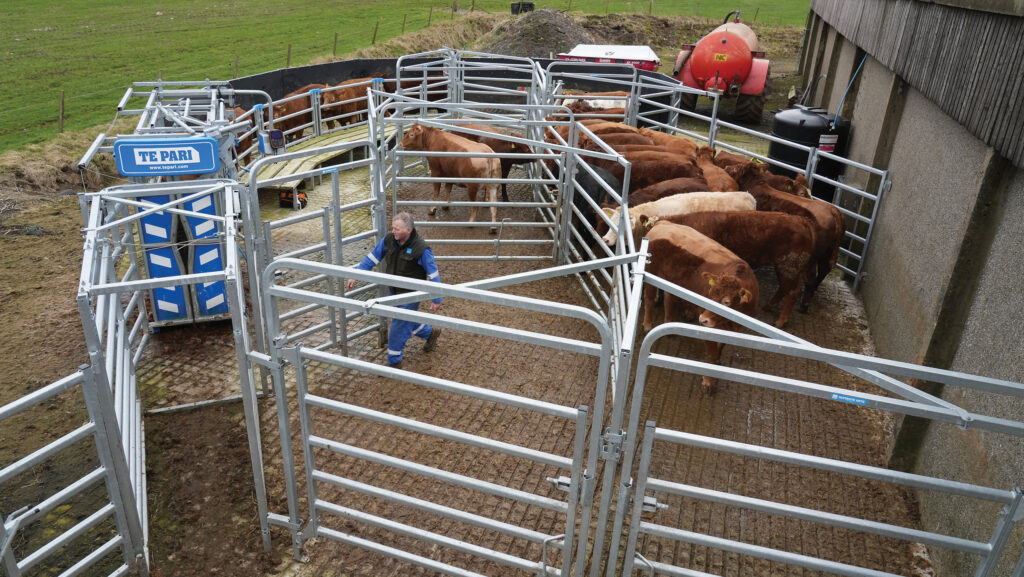
 Investing in a new cattle handling system has not just made life safer for beef farmer David Drinkwater – work is easier too.
For “the price of a front axle on a tractor”, cattle are no longer stressed when handled, which means he can clip and weigh them, foot-bathe and vaccinate, or worm them effortlessly.
David credits his Te Pari equipment setup with vastly improving workload and work rate at Chapel of Barras Farm, near Stonehaven, Aberdeenshire.
See also: 10 tips for safe cattle handling during TB testing
Low-stress handling has also encouraged him to make regular use of the system’s digital weighing function, putting him in a position to track performance, alter rations according to liveweight gain, or sell finished stock sooner.
“Before, it was all done by eye,” he says.
Farm facts: Chapel of Barras Farm, Aberdeenshire
- Farming 81ha including arable, grassland and stubble rape for neighbour’s sheep
- Cattle bought at 300-500kg at about 12 months of age
- Taken to 620kg for sale through the live ring, or to 700kg and sold to McIntosh Donald butchers at 24 months
Ease of weighing
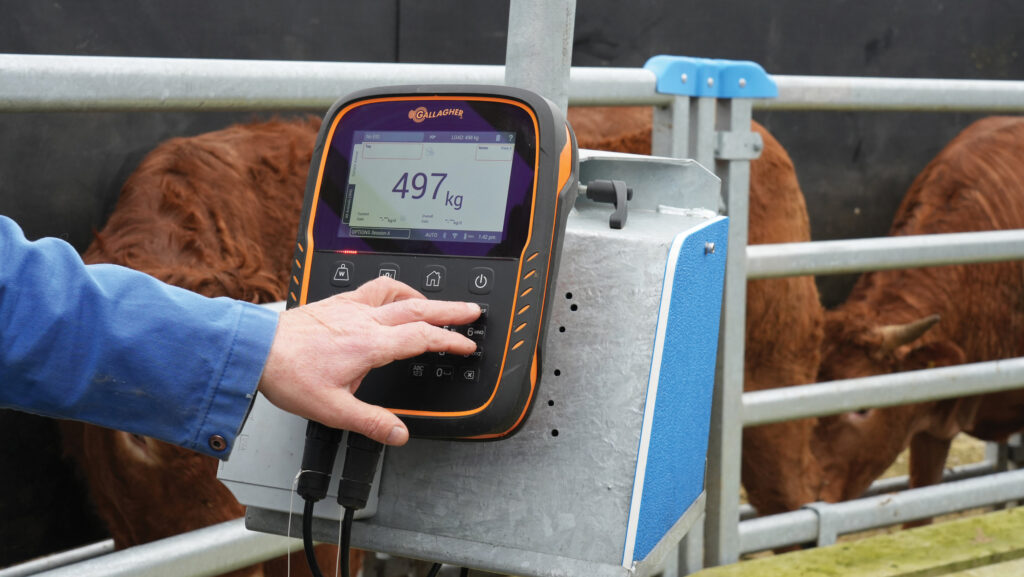
Weighing every three weeks builds a data set © Angus Findlay
In his old system, David says he would only weigh those animals near killing weight because it was “a battle” and time consuming.
Now, it takes less than 20 minutes to weigh and run a group of 50 cattle back to their pen.
“It is such an easy job – I’m weighing every three weeks, and it’s almost become a bit of an obsession to monitor them,” he says.
“I’m not stressed, cattle are not stressed. You are never ‘safe, safe’ around cattle, but we have eliminated risk.”
There are 150 cattle on the farm – mostly Limousin and Charolais heifers – at any one time being taken to finishing weight. Every animal is processed on arrival, then allocated to one of three management groups according to weight.
“We had a handling system based on a Ritchie crate [crush]. I would fasten gates to it to make pens.
“But they were never high enough, they would move and, when they scraped on the ground, the cattle would get upset. And once they got excited, you were in trouble,” he says.
Invariably, the result was a set of bent gates when animals tried to jump out.
Safe handling
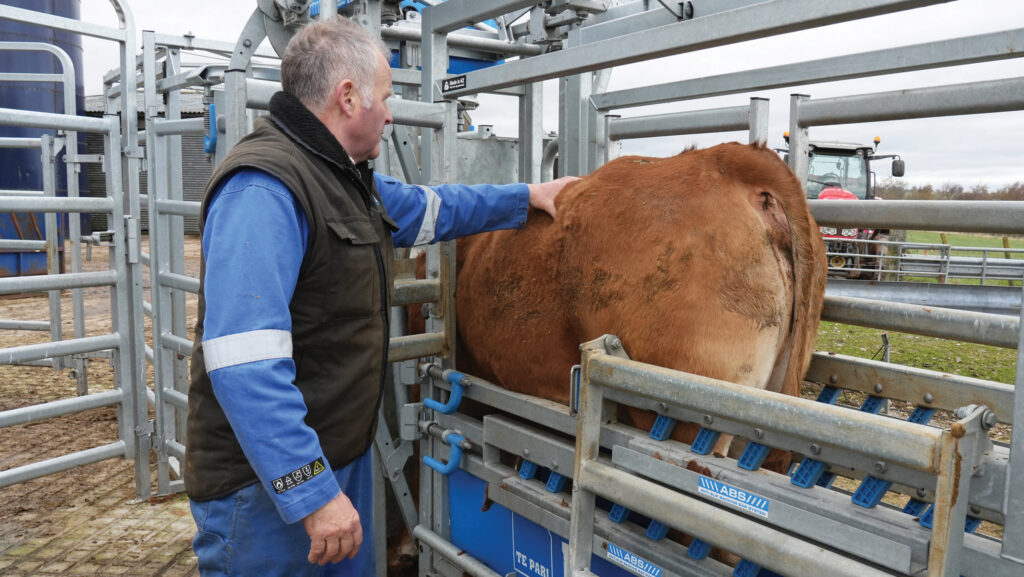
Safe handling helps the work rate © Angus Findlay
Farming solo, David says he was already safety conscious – not least because he is a valuable assistant to his wife, Michelle, in their busy farmhouse B&B.
But when there were some local fatalities associated with cattle, he decided it was time for action. He developed ideas of what he wanted through online searches and visiting a modern facility on another farm.
David then worked with Te Pari to build it: a handling system based around a Lenta MX3 crush with squeeze mechanism, a curved race, plus a three-way shedding unit.
“It’s all galvanised steel and so well built. The gates are high, railings are high and the cattle feel safe; they are not thinking about jumping out.
“Gates slam shut, but there is no noise because of nylon brushes against the steel. And there are lots of escape gates. Maintenance is just six grease nipples on the crate.
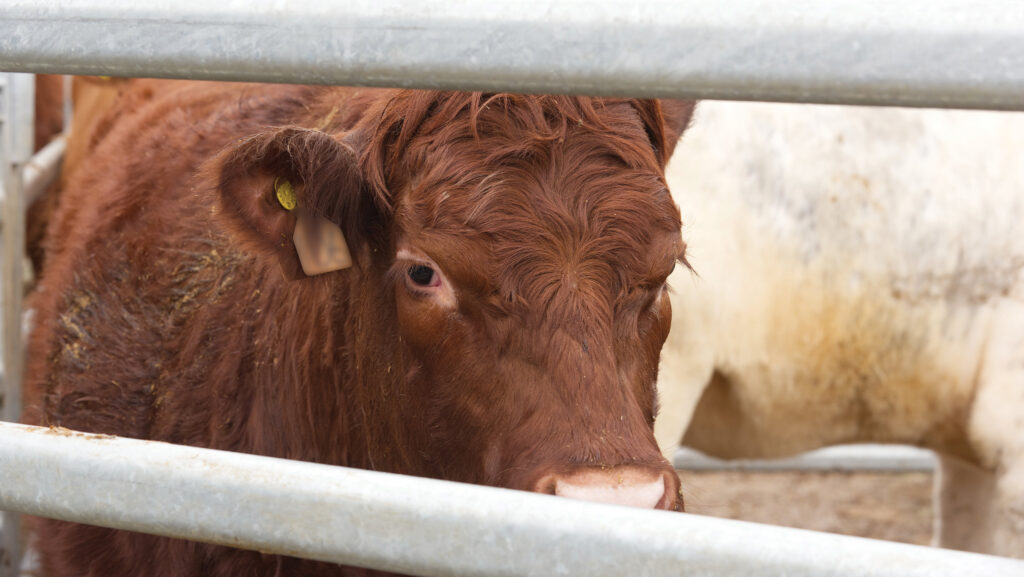
Cows readily accept a low-stress setup © Angus Findlay
“Once cattle have been in, they know the routine and stand quietly.”
The foot-bath readily slots under the curved race, which means cattle can walk round the system and through the foot-bath.
The shedder is used to pull out finished cattle for market, with David able to back his trailer into the pen to load up, without having escapees.
After 18 months, David says adding a roof is the only thing he would change, though this would add cost.
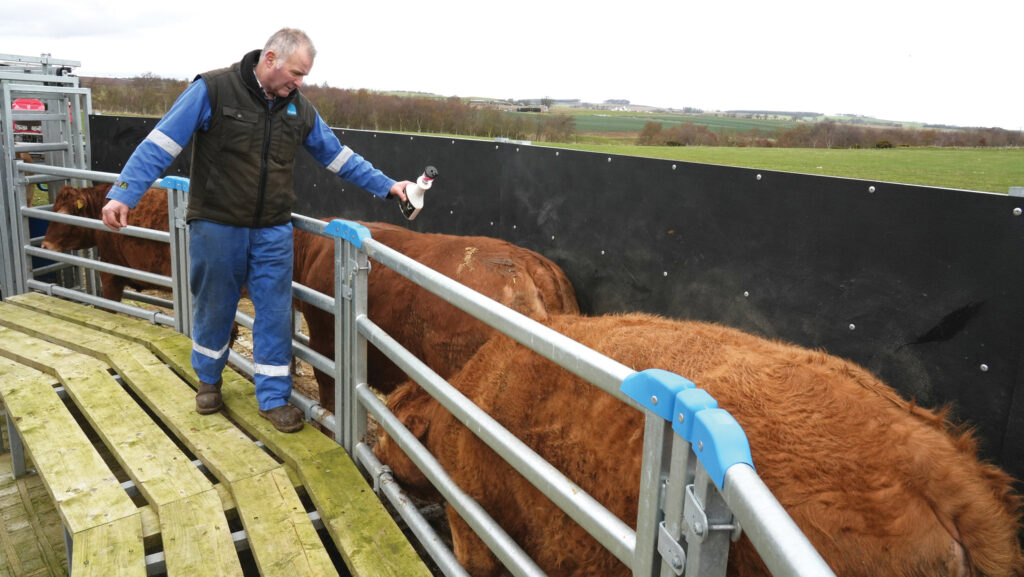
The elevated platform makes applications easier © Angus Findlay
Although the elevated walkway was not something he originally wanted, he appreciates that it makes it easy to administer pour-on treatments.
There will, however, be an addition this year with electronic identification – priced up and on his list to buy.
“The system comes with a five-year guarantee and when I leave the farm it can be sold. As it is mobile, it comes with 45% claim back on tax,” he adds.
Advice on choosing a handling system
Safety, site and savings (time and labour) are top of the list when shopping for new cattle handling facilities.
It is a significant investment decision, but the payback will be happier cows and handlers, with all-round greater efficiency, says Shropshire-based livestock consultant Miriam Parker of Livestockwise.
Her advice is to “buy once, buy well,” and focus on what is wanted for the farm rather than “chase the grant”.
She advocates getting independent advice on design and visiting other farmers with modern handling equipment.
“Don’t just copy your neighbour – his design brief will be different from yours,” she says.
Miriam advises some essentials to consider include:
Savings
Work out how much time can be saved at £12.71/hour. Can you handle cattle on your own, or with fewer people? from a good handling system. “Do real sums on how much your time is worth and how many years you will use the system for. If it’s good, you will use it more.”
Safety
The system should protect the operator and be used without them having to be in the same space as cattle. If this is not possible, Miriam says exits under, behind and through the setup are essential.
Site selection
The ideal site for cattle handling is on the perimeter of the farm, so cattle can be loaded straight from the system.
It is important to consider which way the wind blows or sun shines, while avoiding noise and distractions (such as holiday cottages, public footpaths or busy areas), as they will hinder cattle movement.
Layout
Layout is very farm specific. “Think how you will work the system. How many people are needed? Which way will the gates open? Are you left- or right-handed? Design it for the cow, not you.
Give them space to move and turn – don’t crowd them in. And measure your cattle – because equipment comes in standard sizes and needs to suit your cows and your farm.”
Batch size and the ability to hold and release different animal groups dictate space and pen requirements – including capacity to hold cattle before they return to their shed or field.
“Efficiency is lost if you mess up handling after releasing animals from the crush. Consider how to get cattle back, then fetch another group for processing,” she says.
Cattle instinct
Exploit natural cattle behaviour in the design – think curved chutes, round pens, and 30deg angles for good vision.
“They prefer left-handed movement. They also need to see clearly up the race and a way out of the system to draw them forward,” she says, adding that a good layout pulls cattle through – they do not have to be driven.
Future-proofing
It is sensible to integrate technology, such as electronic automatic identification and auto weighing, while roofing will divert clean rainwater and prevent run-off.
Consider whether the system can be expanded as cattle numbers grow, and the impact a new shed, or traditional buildings converted to non-farming use, might have on the handling setup.