

How a whole-flock health strategy cut lameness to 1.4%
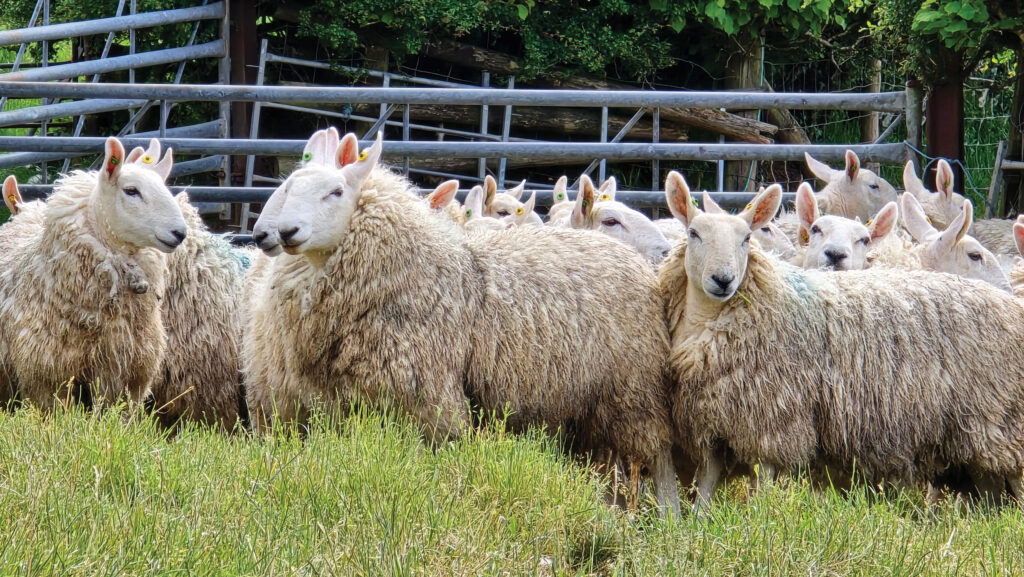 Nantgwynau Farm shearlings © MSD Animal Health
Adopting a whole-flock approach to health has helped a Carmarthenshire farmer to reduce lameness from 3% to 1.4% while improving lambing output.
Neil Stoddart is a full-time forester and first-generation farmer who established his closed flock of pedigree North Country Cheviots 12 years ago, after starting farming in 2003. He runs 125 ewes plus followers across 20ha (50 acres) at Nantgwynau Farm.
See also: Five-Point Plan updated to help hit sheep lameness targets
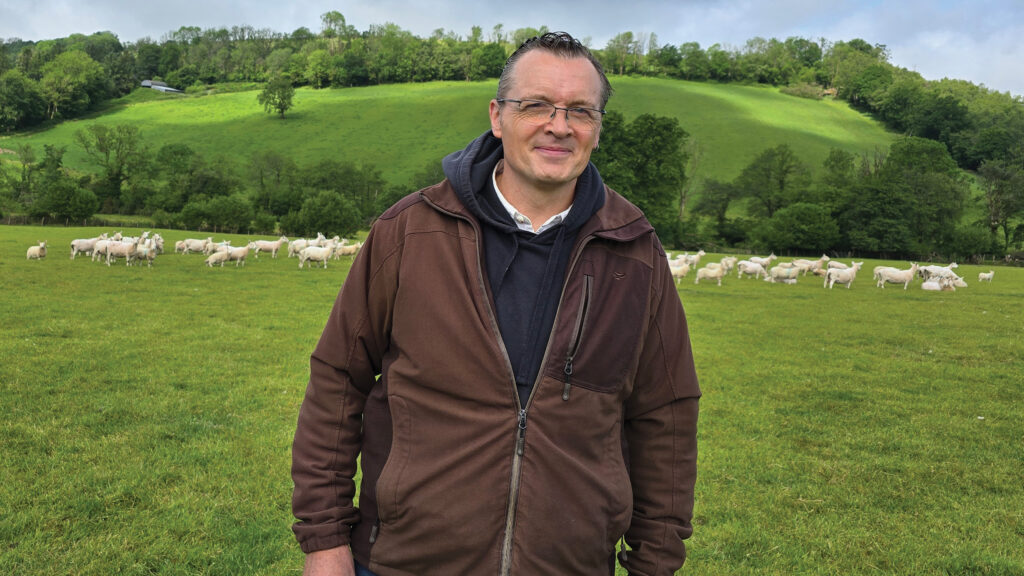
Neil Stoddart © MSD Animal Health
Despite already vaccinating for clostridial disease, pasteurella and foot-rot, Neil was unhappy with a gradual decline in fertility in the flock. Scanning percentage had fallen from 170% to 120%, and lamb losses were higher than desired.
In addition, a lot of lambs required treatment for scald in the summer, and repeated outbreaks of foot-rot in the autumn and spring before lambing meant he was gathering sheep weekly to treat them.
In 2022, he was invited to join a lameness and wider flock health management initiative through Sainsbury’s, Dunbia and MSD Animal Health.
The three-year project highlighted improvements in vaccination timing and strict adherence to the Five-Point Plan and has enabled him to shift from reactive to preventative health management.
This has helped him lift flock output and dramatically reduce labour while halving antibiotics use.
Farm facts: Nantgwynau Farm, Carmarthenshire
- Farms 20ha
- 125 pedigree North Country Cheviot ewes plus 40 ewe lambs
- Lambs indoors at the end of March
- Sells yearling rams and ewes at Llandeilo Market and privately
- Finished lambs sold to Dunbia/Sainsbury’s
- Ewe lambs average 17-18 kg deadweight and ram lambs 21kg, at RL3/U3L
Improved vaccination strategy
Neil had been using a clostridial disease and pasteurella vaccine, but he has changed when this is given. “We were vaccinating ewe lambs in the autumn, but I was leaving it too late. Now we vaccinate lambs once they are five weeks old, followed by the second dose one month later.”
Meanwhile, lambs receive a booster in the autumn before tupping, and ewes receive a pre-lambing booster in February.
Neil had also been using a foot-rot vaccine for a few years, but was only vaccinating replacements once annually. By broadening vaccination to the whole flock and changing the vaccination timing from June to late summer, he has reduced infection prevalence.
The flock had been vaccinating against toxoplasmosis for 10 years after diagnostic testing revealed low levels of the infection circulating.
However, since joining the scheme, he has introduced an enzootic abortion vaccine. “There were local farmers who had adopted it following outbreaks and we decided to introduce it as a precautionary measure,” he adds.
What is the Five-Point Lameness Reduction Plan?
- CULL badly or repeatedly affected animals Removing the worst offenders increases flock resilience. Ewes with chronic, misshapen feet are likely to be sources of infection.
- QUARANTINE incoming animals Minimises disease risk for both new and existing animals, allowing time for inclusion in the vaccination and management programme.
- TREAT clinical cases promptly Alleviates disease in affected animals and helps reduce transmission to others.
- AVOID propagation of on-farm infection Reduces spread via contaminated ground or close contact during high-risk periods.
- VACCINATE FOR FOOT-ROT twice a year Builds immunity in breeding stock. Vaccination offers additional protection during high-risk times.
Source MSD Animal Health
Tough action on lameness
Alongside changing the timing of his foot-rot vaccine, Neil took tougher action against ewes that were repeatedly lame. Ewes with contagious ovine digital dermatitis (Codd) were treated and marked for culling after one lameness episode, while ewes with foot-rot got two strikes.
“We have not seen Codd for over two years and no foot-rot in the past year,” he reports, adding that he treats lame sheep promptly – within one to two days – and gives them antibiotics and pain relief.
Bought-in rams are quarantined for three weeks and treated with an orange drench before they are turned in with ewes. They will then be enrolled on a full vaccination programme the following season.
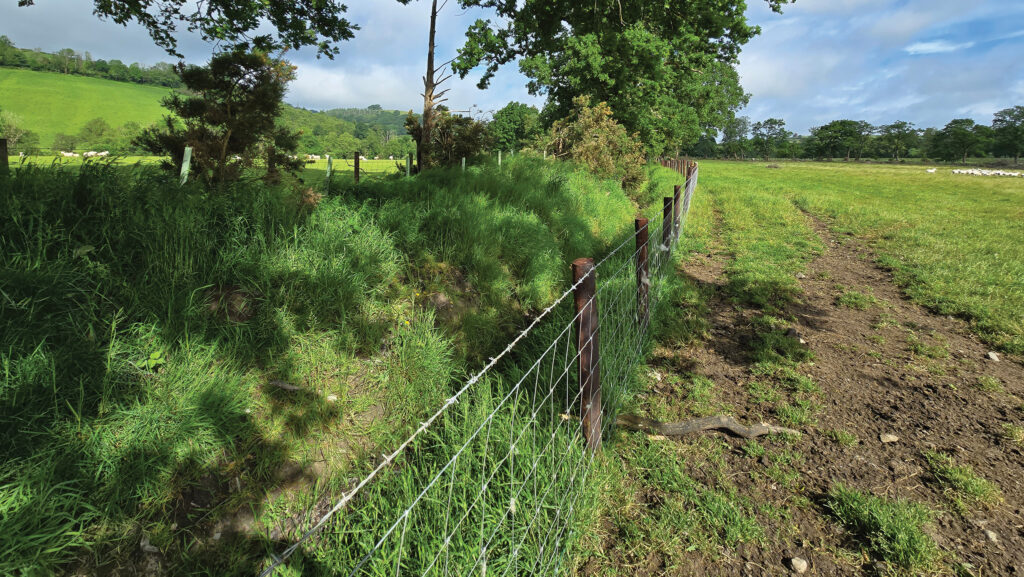
Neil has also been fastidious about stoning gateways and fencing off ditches to prevent sheep grazing wet and muddy areas of the farm. He also limes the farm routinely every three to four years to reduce bacterial pressure.
He says strict culling has been one of the hardest parts of the Five-Point Plan, but it has been critical to success. “You must be really focused on the long-term vision. It’s difficult, but we are now three to four years in, and we are seeing the benefits.”
© MSD Animal Health
Health and performance benefits
Lamb losses in the autumn have fallen because vaccination coverage against clostridial disease has improved. Antibiotics use has been cut from 1,200ml annually to just 400-600ml, now mainly for treating mastitis, and Neil has saved £300 on foot-bath treatments annually.
Now, only ewes are foot-bathed before housing at lambing time to reduce infection pressure inside the shed, rather than routinely.
Robust flock health has helped improve ewe body condition, which has, in turn, boosted flock fertility.
“We used to see a variation in ewe condition. We score before lambing and before tupping, and ewes consistently score 2.5-3, which has helped us to condense our lambing period.”
Now, 90% of the flock lamb over three weeks from the end of March, and lamb performance has also improved. “There’s a direct correlation between ewe condition and the condition of their lambs – good stock breeds good stock,” says Neil.
Lambing percentages have lifted to 160%, and lamb survival rates have improved.
“We are probably getting 20 more lambs survive, and lambs are stronger, so we can turn them out quicker. Instead of staying in the shed for three to four days, singles are turned out one day after lambing and twins after two,” he explains.
Finished ewe lambs are averaging 17-18 kg deadweight, and ram lambs weigh 21kg at RL3/U3L. Liveweights of 35-40kg are hit by September, but lambs are held as stores until Christmas, when prices tend to lift.
The best yearling rams and ewes are sold for breeding, and Neil notes the flock’s high-health status is an important selling point to his customers. “I’m really pleased we are getting repeat buyers coming back after five years, and that’s the real measure of success.”
For other farmers beginning their journey to improve flock health, he warns that improvements aren’t made overnight and that sheep producers must have the discipline to stick to the plan.
“You must take a whole-farm approach to flock health and adopt every part of the Five-Point Plan. Even then, you won’t see a big win in year one. You need to keep at it and maintain self-discipline, and you will reap the rewards in years two and three and beyond.”