

How adding biochar to broiler litter cut ammonia by 20%
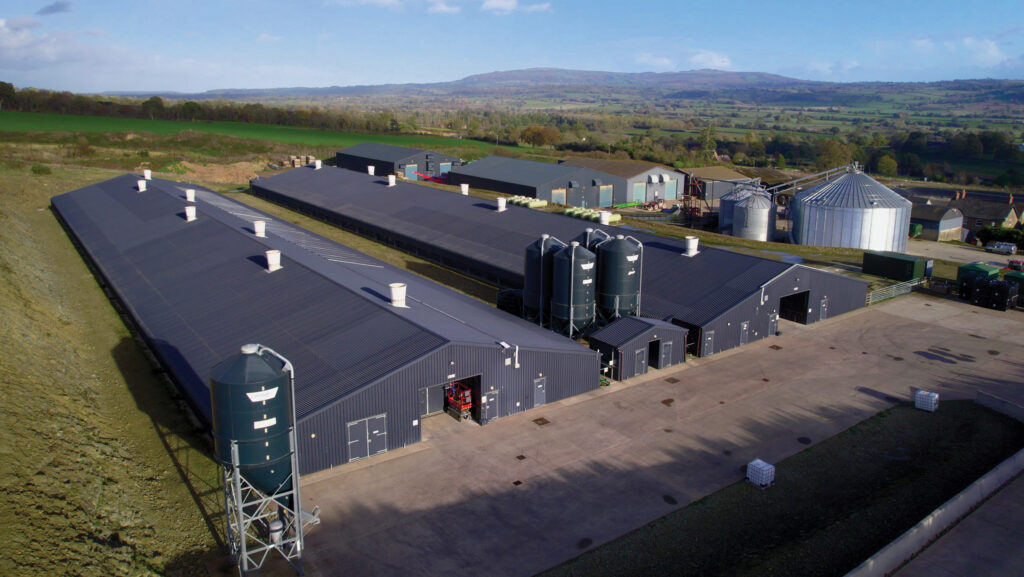 Corfton Farm © Transfixus Creative
Ammonia concentrations inside the broiler sheds at a Shropshire farm have reduced by 20% since a biochar additive was incorporated into the bedding.
Third-generation farmer Stephen Povall and his son Thomas, who grow 190,000 birds at Corfton Farm, Craven Arms, have ammonia sensors fitted in each of the four sheds housing them.
See also: How bokashi is helping a poultry farm’s nutrient management
In May this year, they introduced an engineered biochar at a rate equivalent to 20% of the volume of litter.
Their ambition was twofold: to reduce the ammonia levels in the birds’ environment and enhance the nutrient value of the muck that they spread onto their arable land.
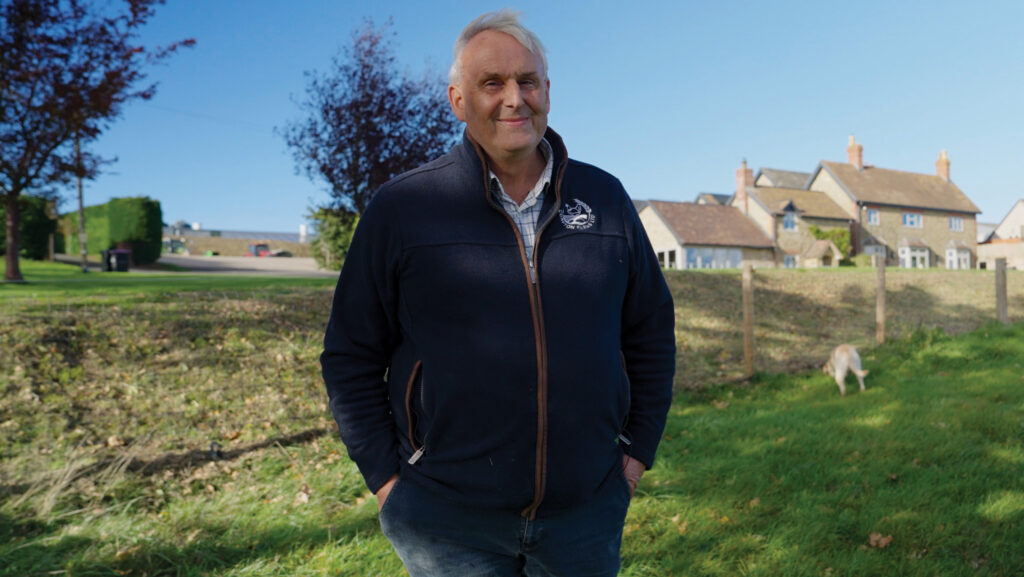
Stephen Povall © Transfixus-Creative
Farm facts: Corfton Farm, Craven Arms, Shropshire
- 688ha farmed, mostly on contract-farming agreements and one-year lets
- Ross birds
- Birds grown to supply Avara’s processing plant at Hereford
- 7.5 cycles a year
- Potatoes sold to McCain
Bird health benefits
In that production cycle, and in the subsequent crops, ammonia levels in the shed have consistently been 20% lower.
Incidence of pododermatitis and respiratory diseases were already low, in part because the sheds have indirect heating systems.
But Stephen says having less ammonia in the sheds can only be good for bird health and in preventing those conditions from developing.
Trialling the biochar additive in the housing at Corfton Farm has in part been funded by the Accelerating Development of Practices and Technologies (Adopt) grant programme delivered by Innovate UK and Defra.
Stephen is convinced by its benefits, though, and plans to make it a standard component of his poultry system.
Air quality and soil health
Biochar is a type of charcoal produced during the process of pyrolysis and has been in existence for millennia.
Yet is only in recent years that its benefits in agriculture and other applications are being fully understood and valued.
“It is pure carbon and very absorbent, so it is very good at absorbing ammonia,” Stephen explains. “It also has tremendous benefits for the land when it is spread in the muck – it is a win-win situation on many counts, really.”
The Povalls, who also grow 486ha (1,200 acres) of wheat and 182ha (450 acres) of potatoes, diversified into broiler production in 2015 after a poor potato season that resulted from exceptionally wet weather during the growing and harvesting periods.
“In that year, we thought we ought to be farming at 34C on concrete, not growing potatoes, so we decided to go into broilers,” says Stephen.
Expansion plans
The business is currently at the pre-planning stage of applying for permission to erect a further two sheds at the farm.
The aim is to increase bird numbers, in part to counter the contraction in crop sizes that has resulted from new regulations on stocking densities.
The use of biochar will form part of the application submission to the local planning authority, highlighting its ammonia reduction benefits.
As part of the planned investment in expansion, Stephen is also seeking consent for a pyrolysis unit to burn the poultry litter to heat the sheds.
That unit would also enable him to produce low-grade biochar to spread onto his land.
“The science shows that the biochar stabilises the nutrients in the chicken manure.
“This stops phosphates leaching from [the manure], and it also retains the nitrogen in that muck until the roots of the plant are actually in need of it,” says Stephen.
Biochar is also known to have a liming effect, which is beneficial to crops growing in acidic soil.
Method of application
Stephen has been experimenting with different ways of incorporating the biochar additive into poultry litter.
He has settled on laying pelleted straw bedding first and adding the biochar on top of that, and he will monitor ammonia levels as the crop progresses.
“As the litter builds up in the shed as the birds get further into the cycle and are scratching around, they bury the biochar, so that could reduce its effectiveness,” he suggests.
He tried spreading the biochar onto the litter with a spinning disc, but stopped using that system because of the levels of dust it created, opting instead for a spreading bucket.
Stephen believes there could also be benefits in adding biochar to chicken feed.
“That might be something that could happen in the future, although we would need to get permission from the integrators for that,” he says.
Biochar trial focus on bird health
The UK biochar market has experienced significant growth in recent years, driven by its greater use in agriculture, carbon removal projects and government-led net-zero initiatives.
One of the companies operating in that market is Raft Energy, a business that originated from founder Ben Pluke’s own experiences of keeping “backyard” chickens.

Ben Pluke © Raft Energy
Although a qualified osteopath, he admits to being a “bit of a tinkerer”.
That led to him building a small anaerobic digester in his garden to produce electricity from manure produced by his small flock of chickens, combined with food waste.
Ammonia absorption at bird height
Ben and his co-founder have scaled that up and are engineering waste wood from forestry management and tree surgery into different products, including biochar for use as a poultry bedding additive.
The company is partway through the trials phase for that additive, but the theory is that the product absorbs ammonia at bird height.
“The farmer needs to keep ammonia levels below 20ppm during the six weeks that the birds are in the sheds.
The science shows the biochar bedding additive achieves that, and, importantly, does so at the height of the bird,” says Ben.
That is important, he adds, because it has direct health benefits.
“When a bird is healthier, it doesn’t have respiratory problems or problems with its feet, and that will inevitably increase the value per kilogram or the value per bird to the farmer.”
Cost benefit
The biochar additive is an additional cost in a sector where profit margins are very tight, but Ben says it delivers a good return on that investment. He is confident that the use of biochar will only increase in agriculture.
“From the science, we know the benefits exist, but we need to complete a full-cycle analysis for one year to show that to be the case,” he says.
Biochar has been proven by academics worldwide to be a useful method of increasing carbon sequestration, as it resists degradation and can lock up carbon in soil for thousands of years.
Another potential opportunity is from its inclusion in the diet of farm animals.
Studies across Europe have proven its beneficial effects in the growth of animals, possibly because it improves their digestion.
Explore more / Transition
Follow the experiences of our 16 Transition Farmers and access in-depth supplements, expert webinars, live events and practical content covering the challenges and opportunities facing farm businesses.
Transition is an independent editorial initiative supported by our UK-wide network of partners.
Explore the Transition hub for the latest insights, resources and events.
