

How bulk milk sampling tech helped slash mastitis cases
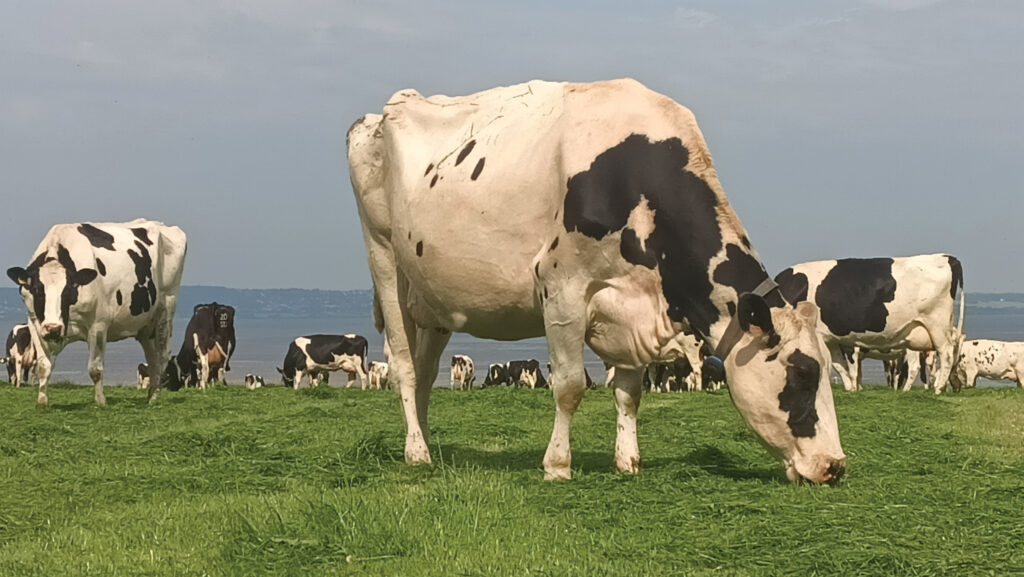 © Rhys Davies
 A block-calving dairy unit has cut its herd mastitis rate by 75%, helped by a technique that analyses cow DNA using a single milk sample taken from the bulk tank.
The new technology works out the current somatic cell count (SCC) status of individual milkers.
In 2025, the Davies family tried it out in tandem with their routine milk recording at Moor Farm, Holywell.
See also: How teamwork got dairy herd’s mastitis spike under control
Farm facts
Moor Farm, Holywell, Flintshire
- 81ha farmed
- Eight-week calving block from 15 March
- Milk yield average 7,500 litres at 4.59% fat and 3.65% protein
- 618kg milk solids a cow a year
- Annual antibiotics usage 5.06mg/population corrected unit
- 80 heifer replacements reared a year
Rhys Davies, who farms with his parents, Dei and Heulwen, was already milk recording to gather a wide range of data.
This included butterfat and protein content, and Johne’s significance for every cow, while SCC status informed antibiotic treatments and drying off protocols.
Based on the data the GenoCells technology generated, only cows in the herd with an SCC higher than 200,000 cells/ml were treated with antibiotics.
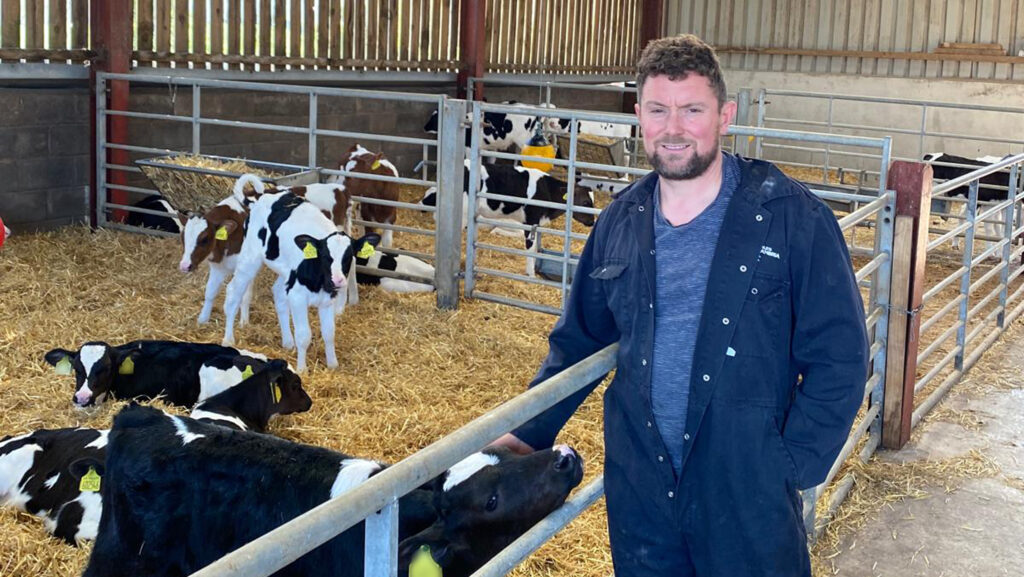
Rhys Davies with calves © Rhys Davies
In 2025, there were just three cases of mastitis in the herd of 113 Holstein Friesians, compared with 12 in the previous 12 months.
In addition, use of antibiotics tubes halved because once the family knew which cows had high SCCs, they tested each quarter and treated only quarters that needed it.
SCC data without the hassle of milk recording
Rhys sees the technology from NMR as a “game changer”, particularly for large block-calving herds with basic parlours.
“Milk recording is potentially more onerous if you are milking hundreds of cows in a big parlour with a quick throughput,” he says.
“If those herds do record, it is mostly only for a few times of the year, because it is time consuming or they don’t have the labour needed. With this new technique, they can gather cell count data at any time without that hassle of recording.”
Calculation of milk yield average
Milk yield average is needed to establish SCC status. In a block-calving herd, where individual yield data might not be available, the technology can work out an average, since cows are at a similar stage in their lactation.
The trial at Moor Farm showed a 98.6% correlation between that average and the actual yields captured on milk meters during recording.
© Tim Scrivener
By contrast, in an all-year-round calving herd, individual milk yields would need to be submitted with the bulk milk sample, as they would vary between cows.
Sampling accuracy on par with traditional milk recording
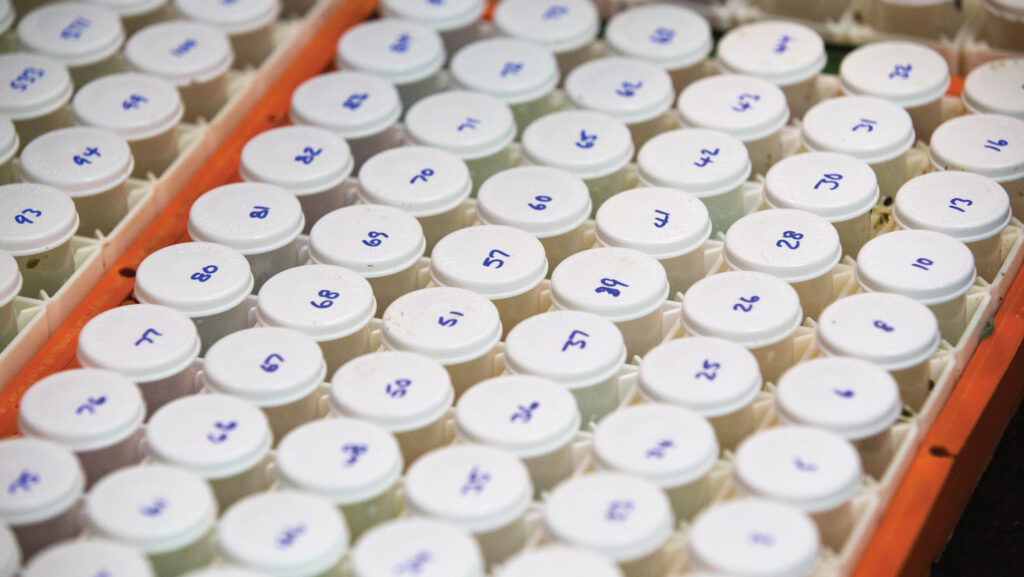
Sampling itself involves someone on the farm taking a sample from the bulk tank once every cow has been milked and the tank agitated; this is then mailed to a laboratory for analysis.
The Davies family received funding and support from Farming Connect to trial the technology and to compare how accurate it was compared with traditional milk recording. At 94%, it showed a high correlation on SCCs.
Rhys took milk samples from each quarter of the cows flagged as having a high SCC. These samples were analysed using the California Milk Test (CMT). Because he only treated the infected quarters, fewer antibiotic tubes were used.
At drying off, antibiotics and a sealant were only used on cows with an SCC higher than 200,000 cells/ml in the final three months of their lactation. Selective dry cow therapy (SCDT) was used on the rest of the herd.
Drawback for herds feeding calves whole milk
For Rhys, the only obstacle to using GenoCells more fully in the grass-based herd is his system of feeding whole milk to calves before they are weaned.
“We feed around 400 litres of milk every day, which we take from the first few rows of cows in the parlour. So there would be no use in sampling [before calves are weaned], because milk from every cow needs to go into the bulk tank for it to work.”
Why adopt the new technology long term?
Rhys plans to continue to milk record monthly to get actual butterfat and protein percentages for each cow. He will do this alongside more frequent bulk testing for SCCs.
“It might be that every two weeks, during certain stages in the lactation, we will pay for that extra cell count report,” he says.
“In the run-up to drying off, for example, instead of relying on one or two milk recordings for the SCC data in the final month, to inform our SDCT protocols, we will do an extra one or two bulk samples to validate our milk recording data.”
He believes that removing the need for individual recording will make GenoCells appealing in grazing systems that do not focus on recording for yield. But it has many benefits for dairy farmers in general, he says. It enables every farm to identify subclinical mastitis, improve milk quality, reduce antibiotics use, and inform their SDCT programme.
“We have been working towards reducing our mastitis levels and our use of antibiotics. I wouldn’t say the reduction we have seen in each is wholly down to GenoCells, but the extra data has certainly helped to inform drying off,” says Rhys.
“I also think that because we use less antibiotics, we get fewer cases of mastitis in the next lactation.”
Technology adds value to genomic herd data
GenoCells uses genomic data, which, until recently, was only available from purebred herds, but now extends to crossbred animals too. Most of the cows in the Ffrwd pedigree herd at Moor Farm are genotyped – heifers are tested at two weeks old, using the AHDB Dairy Herd Genetic Report to rank for protein percentage, fertility index, maintenance and mastitis.
In this way, the existing DNA data in each cow’s genomic profile can be used to identify somatic cell count (SCC) status in the bulk milk sample. But farms do not need to genomically test to use the technology – the bulk sampling system can retrieve genotypes from the breeding company. Alternatively, a cartilage sample could be taken from an animal and analysed.
Advantage for grazing herds
Rhys Davies thinks that being able to capitalise on the usefulness of genomic data by using it to work out SCC status increases its value to grazing herds. It is a valuable “add-on” after the initial genomic sample has been taken from calves and is another reason for crossbred herds to genotype, he says.
“We genomically test all our calves, and the index results give us important data on them. What is nice about GenoCells is that it can use the DNA data on record. So, for example, for my third or fourth calvers, I already had the DNA sample, so I was able to easily use it when sampling.
“When you are genotyping, you think you are paying only for the genomic index, but now it allows the prospect of using it to bulk milk sample for SCCs in the future too.”