

How funding boost improved performance in two flocks
 Checking worm burdens can identify resistance issues © Tim Scrivener
 The farmers I work with are inquisitive, knowledgeable and strive to improve their productivity.
Each year brings about its own challenges, commonly in the form of weather or disease, but investigating these problems can be limited by cost.
See also: 6 tips on how to carry out faecal egg counts
About the author

Laura Britton is a vet at Bishopton Veterinary Group. Not from a farming background, she developed an interest in the industry through her experience of running a flock of sheep on rented grassland around York.
For a selection of my flocks, the Animal Health and Welfare Pathway (AHWP) funding has played a vital role in overcoming the cost barrier to further testing and achieving.
In many cases, it has led to diagnoses that will significantly alter the production outcomes for these farmers.
Investigation of worm burdens
When a query was passed to me about a farmer reporting “scouring lambs”, it was a good opportunity to access the AHWP funding to investigate the problem.
I wanted to make sure we checked for the most commonly occurring gut parasites that cause diarrhoea in lambs – namely worms, coccidiosis and fluke.
It made total sense that the worm egg count should be funded by the AHWP, so the farmer collected 10-15 fresh individual faecal samples from a group of grazing lambs.
The results came back incredibly high, with hundreds of worm eggs found in the pooled sample.
Based on the time of year and the farm’s previous worming history, my advice was to treat these lambs with a clear oral wormer.
Analysis and further action
To claim for round one, a post-treatment check test must also be carried out after administering the wormer, to make sure it has done the job.
In this case, when using a clear wormer, the post-treatment samples were to be collected 14 days after dosing.
I explained to the farmer that we should see at least a 95% reduction in worm eggs from the original result.
Unfortunately, the post-treatment samples had reduced by only 72%. This was a serious problem and meant we had to consider whether wormer resistance was developing on the farm.
First, we double-checked basic good practice:
- The lambs had been weighed
- The dosing gun had been calibrated to give the correct amount of wormer
- The samples had been collected exactly 14 days after treatment.
Progression to integrated parasite management
We made the decision to treat these lambs again with a different class of wormer.
I wrote the AHWP report outlining the findings and explaining that parasite control on this farm would need to be carefully planned in the future.
Thankfully, after using the additional wormer, further testing produced a low result, and the farmer was able to claim the £574 of available funding and move on to round two, the Endemic Disease Follow Up (EDFU).
We used this funding (£658) for routine worm egg counts over the grazing season, with the aim of limiting the resistance and working on integrated parasite management, so the farmer doesn’t have to rely as heavily on wormers.
Investigation of poor scanning results
On another farm, the flock of 220 Texel-cross ewes was struggling with scanning percentage.
Each year, the average scan result was getting lower despite vaccinating for both main causes of abortion.
When analysing the scanning data, it was clear to see the low result was not caused by empty ewes, but because far too many ewes were expecting singles.
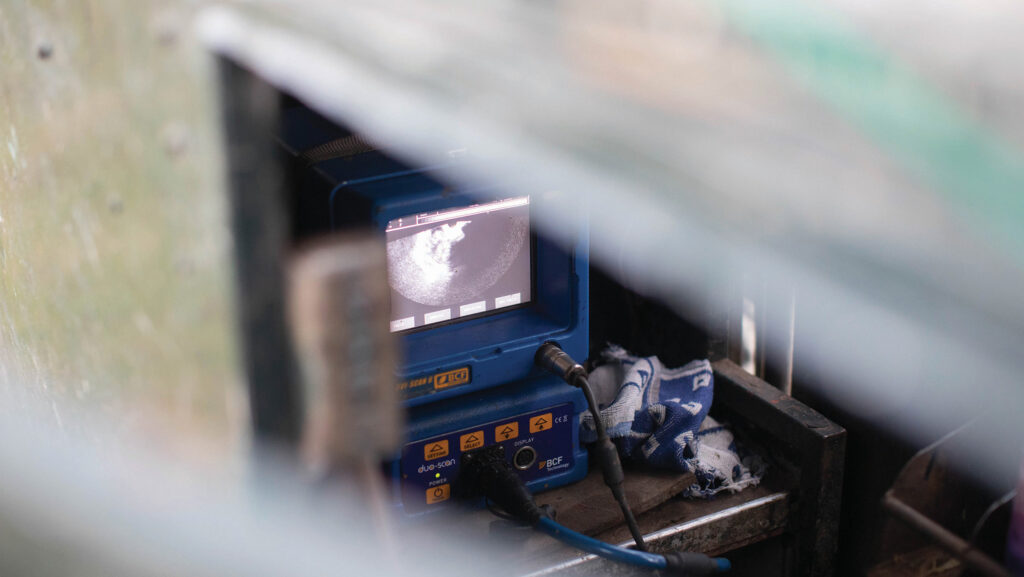
Probing scanning results can highlight mineral imbalances © Tim Scrivener
So, what was responsible for these ewes only ovulating one egg and therefore only carrying one lamb?
We made some initial checks for health and nutrition:
- Body condition score – good (but not too good)
- Infectious disease – well controlled with vaccinations and quarantine protocols for incoming stock
- Ram fertility – breeding males were fertility tested and were getting the ewes pregnant, albeit with only one lamb.
Having ruled out these causes, we decided to investigate iodine levels. This trace element is important in adult sheep and responsible for fertility, among other things.
Assessment of worming strategy
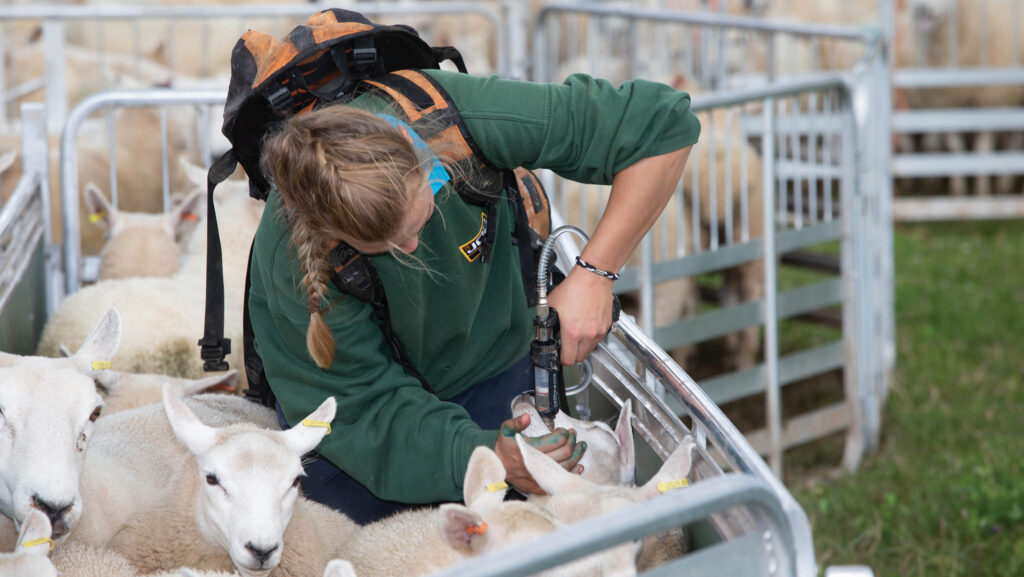
First, though, the farmer completed round one of the AHWP, collecting 10-15 fresh individual faecal samples from a group of grazing lambs.
This group hadn’t been treated with a wormer since receiving a white drench in May for Nematodirus.
© Tim Scrivener
Because of the hot, dry conditions in the summer, their results came back low, and they didn’t need to be treated.
I wrote the first report, and the farmer claimed the available £574 to cover the cost of the worm egg count, my visit and my time preparing the findings.
Suspected iodine deficiency
On to round two, where the flexibility of the EDFU allowed us to investigate the much-anticipated iodine levels in the breeding ewes.
Sheep farmers have a huge choice of testing options to claim the next round of funding, and this is where having a conversation with your vet can be very helpful.
In this case, we decided the £658 pot of funding would be best used to blood sample six ewes for trace elements, including iodine, with the remainder put towards any products needed for supplementation.
As we suspected, the group of six averaged a very low iodine result, with the other trace elements all within normal limits.
Impact of iodine supplementation
Off the back of the EDFU report, £658 was claimed by the farmer to cover the cost of me taking the blood samples and writing the report, plus the lab fees.
This left some cash remaining, which helped pay for an injectable iodine solution.
This was administered to the ewes at least four weeks pre-tupping. Tups went in, and we nervously awaited scanning day.
As a sheep vet, I don’t often get contacted when things are going well, and my conversations are normally addressing issues and problem solving.
So it was a nice surprise when I received a message from the farmer letting me know they’d had their best scanning result in years.