

How to reduce the risk of enterococcus lameness in broilers
 © Poultry Health Services
 Lameness is one of the most significant economic and welfare challenges facing every UK livestock sector, and commercial broiler production is no exception.
As with digital dermatitis in cattle, lameness in poultry can originate from infectious causes.
Chief among these are enterococcus pathogens, bacteria that leak from the bird’s gut when it is under stress.
The resulting infection principally affects the legs, but it can also find its way into the spinal cord, explains poultry vet Sara Perez.
See also: How biomarkers can help uncover hidden flock health issues
The bacteria infect the bird by entering its bloodstream, attacking joints and bones where they will proliferate and cause paralysis.
Sara says a telltale sign of infection is a posture described as a “dog sit”, where the legs buckle but the bird appears to be in a semi-standing position.
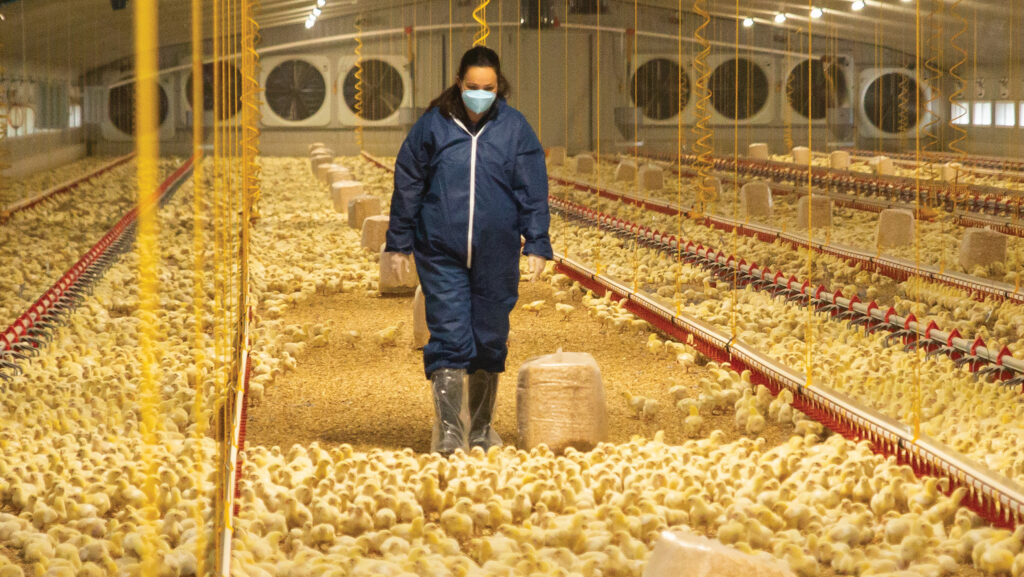
Sara Perez © Poultry Health Services
When the bacteria enter the vertebral column, they produce abscesses that exert pressure on the spinal cord.
“The clinical manifestation of paralysis is similar in both cases: the bird can’t walk.
“And when that happens, it won’t be able to get to a source of feed and water,” says Sara, veterinary director at Poultry Health Services.
Incidence of enterococcus lameness has decreased in the past three years or so because poultry farmers have given greater attention to detail during the first days of life to safeguard gut health from day one.
However, some systems get locked into a cycle of reinfection. When this happens, mortality rates can be very high.
We look at some of the key ways flocks can be protected.
Ensure shed conditions are right for the bird from day one
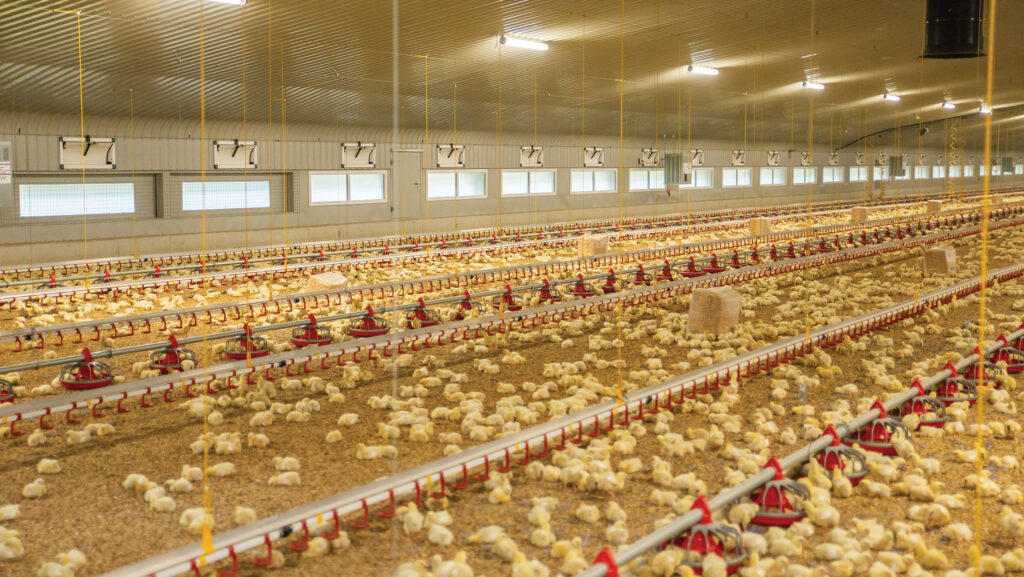
Protection of the the bird starts from when it is one day old and focuses largely on housing environment and water hygiene.
Everything from the brooding temperature to humidity and carbon dioxide levels must be within the recommended range.
If they are not correct, it will put the bird under stress, resulting in leakage of enterococcus bacteria into the bloodstream at that very early age.
Sara says infection might not be evident initially but, as the bird grows and gains weight, more pressure is applied to the joints, and paralysis will occur at this point.
© Poultry Health Services
“It might be that the paralysis isn’t apparent until the bird is 30 days old, but if the environment in the brooding house wasn’t right for it, the infection will actually have started when it was two or three days of age.”
If the yolk sac wasn’t absorbed properly, and the gut microbiome didn’t settle adequately because the birds were too hot or too cold or were exposed to too much carbon dioxide, all that stress will result in leakage, she adds.
Apply correct shed management protocols
Enterococcus lameness can originate from poor management of the shed.
For example, if the structure and facilities weren’t adequately cleaned and disinfected before the chicks were introduced and a good level of hygiene applied thereafter.
Because the birds all share the same litter, they will have contact with contaminated faeces if gut leakage has occurred in some of the flock.
“It is important when chicks are placed in a shed that everything is as clean as it can possibly be.
“Put the effort into good, shed management and it really can prevent infection,” Sara advises.
Ensure drinking water is fresh and clean at all times
Water is a known carrier of enterococcus bacteria, so it is essential that the farm’s water sanitation and monitoring system is robust.
“If the shed is stocked with 50,000 birds where the birds are all drinking from the same drinkers, and there is some enterococcus infection, it will spread quite quickly through the flock,” says Sara.
Encourage strong immunity
A young bird’s immune system can be severely compromised by diseases such as gumboro, a condition originating from an infectious bursal virus.
When this happens, the bird becomes more susceptible to enterococcus bacteria, if that pathogen is present in the shed environment or elsewhere.
Sara advises having a good vaccination programme to prevent immunosuppression by protecting the flock against these diseases.
Control coccidiosis and practise tight biosecurity
Coccidiosis is a key predisposing factor for enterococcus lameness, as it damages the gut barrier.
That damage makes leakage of bacteria into the bloodstream much more likely.
Effective coccidiosis disinfection at shed turnaround and maintaining a good environment in the shed are therefore critical.
Sara recommends using coccidial-specific disinfectants at turnaround time.
Good biosecurity will also keep infection rates low – for example, farmers should have dedicated personal protective equipment for every shed, including overalls, boots and gloves, and sanitise their hands between sheds.
Remember that treating birds isn’t always effective
Once infected, the enterococcus bacteria become well embedded in the bone and the joints.
As there is only a small amount of blood supply to these areas, it is difficult for antibiotic treatment to reach where the bacteria are. As a result, it is often not very successful.
“Antibiotics can’t travel to the infected bone or joint in sufficient amounts to kill the bacteria, so the bacteria survive and proliferate,” says Sara, adding that some antibiotics are also less effective than others.
An antibiogram – a sensitivity test carried out in a laboratory – can be used to check the effectiveness of different antibiotics to enterococcus bacteria.
This will enable the most effective one to be used. However, that medication is offered through water, and when birds have paralysis, they are not able to access the drinkers, Sara points out.
Any medication that if offered through water for this condition therefore has a very limited effect.
When birds are exhibiting the early signs of infection, treatment can be successful and a cost-effective solution, she adds.
But culling is often the most effective way to deal with birds suffering from enterococcus paralysis to protect welfare and prevent further spread to the rest of the flock.
Be aware that concurrent infections may be present
A bird may sometimes have concurrent infections. For example, as well as enterococcus lameness, reovirus, a virus that affects its joints, can often be present.
Enterococcus lameness and E coli are another known combination of infections, says Sara.
Even if enterococcus lameness is present, there may be more than one infection causing the clinical signs.
Diagnosing any secondary infection is evidently vital as each may require different approaches to prevention and treatment.