

How cattle in-vitro fertilisation breeds more elite females
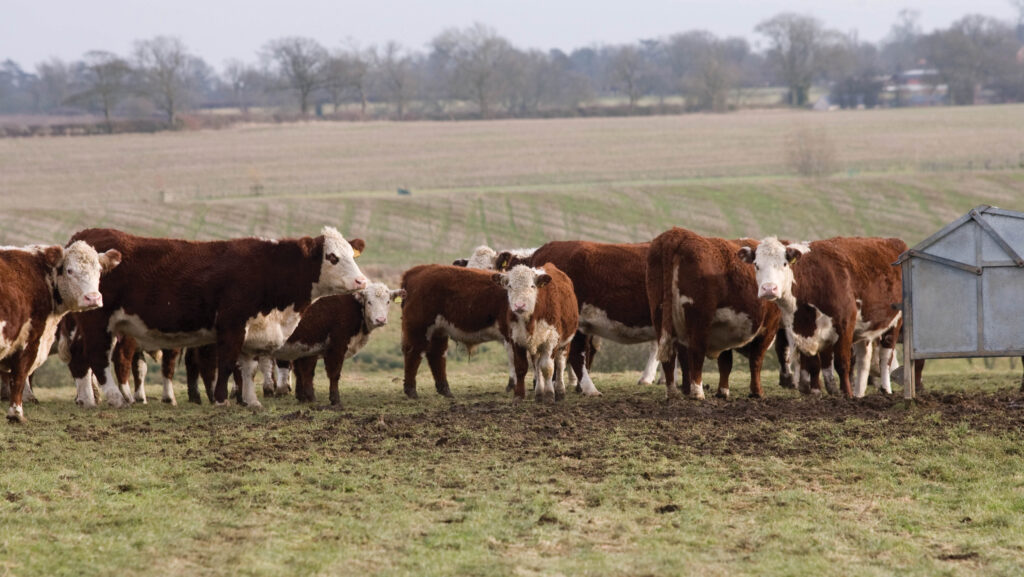 © Tim Scrivener
 The use of in-vitro fertilisation in cattle breeding is growing globally, driven by advances in genomics and an increasing desire among farmers to breed more intensively from their best animals.
“Most of the work is carried out on young, genomic Holstein heifers or pedigree animals, as farmers try to amplify elite genetics within their herds,” explains vet Rob Simmons of Paragon Vet Group, Cumbria.
See also: How to use genomics to improve dairy economic performance
Paragon started its cattle embryo service in 1993, and Rob has been at the forefront of in-vitro fertilisation (IVF) work across Europe, and in Japan and Australia.
Figures from the Embryo Technology Society show that more than two million IVF embryos were produced worldwide last year – around seven times more than those generated from conventional flushing techniques.
That growth is mirrored at a national level. At Paragon, about 75% of the 4,500 embryos created last year were produced using IVF because of the advantages it offers over traditional multiple ovulation and embryo transfer (Moet), according to Rob.
Breeding protocols
Under Moet protocols, a donor animal is synchronised to a reference heat, then receives eight injections of follicle-stimulating hormone (FSH) to encourage all follicles to develop on the ovaries.
Ovulation is induced and the animal is inseminated three times within a 36-hour window. After one week, embryos are flushed from the uterus.
IVF protocols require fewer hormones. While the animal is synchronised and FSH may be administered to stimulate follicle growth, rather than establishing a pregnancy, IVF involves collecting oocytes (eggs) directly from the ovaries.
“They are then fertilised in the lab with semen and grown for seven days. From there, embryos can be frozen or transferred into a recipient animal,” explains Rob.
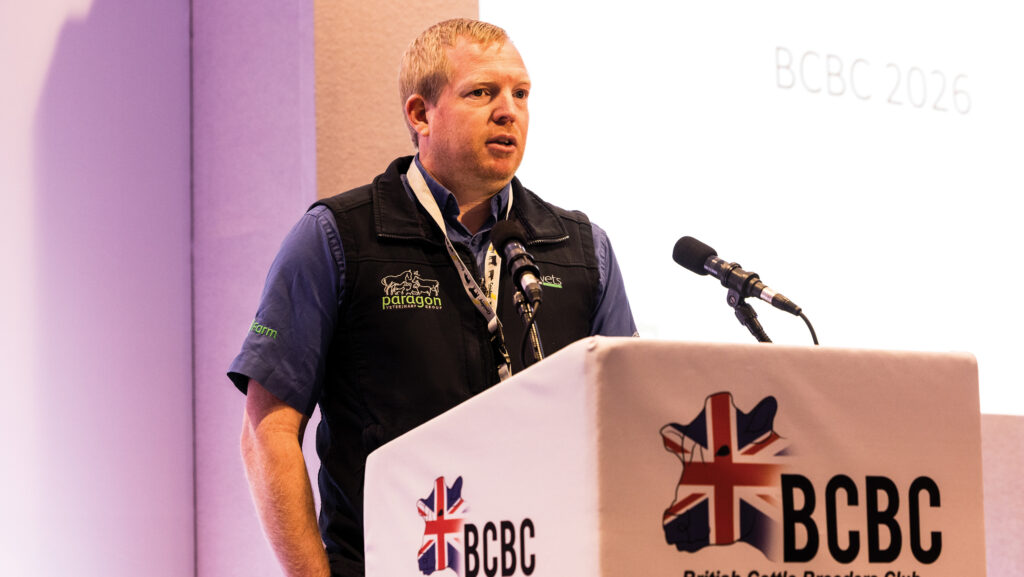
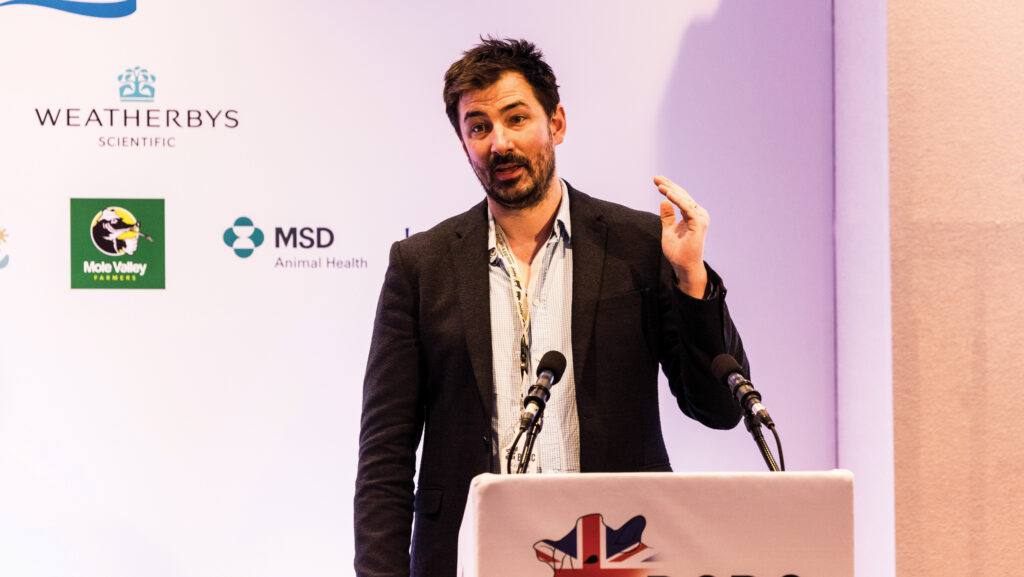
Rob Simmons © Orlena Henderson
However, IVF is not a silver bullet: “If farmers are going to use IVF, they need to go into it with their eyes open,” he says.
“It can be five times more expensive, and pregnancy rates are typically 5% lower compared to conventional embryos.”
Global data suggests pregnancy loss can also be higher, at about 15%.
Large calves were historically a concern associated with IVF, although Rob explains most companies have now changed the serum in embryo culture media that appeared to be contributing to the issue.
“As a result, we’re seeing fewer oversized calves,” he adds.
Time-saving technique
On the positive side, IVF is less time-consuming for farmers and far more semen efficient.
“Farmers don’t need to heat detect donors and there are fewer injections to administer. And because semen is placed directly with the egg in the lab, it doesn’t require as much – one straw can be used for three or more donors.”
Perhaps the most significant advantage is that IVF lowers the age at which donors can be used: in the UK, from heifers as young as seven months, without affecting their age at first calving.
Because IVF does not establish a pregnancy in the donor, it also avoids potential future fertility issues, and embryos can be collected from pregnant animals because it does not disturb the uterus.
Collections can also take place every two weeks, compared with every six weeks under Moet, increasing the potential number of embryos produced.
Looking ahead, Rob believes the future could lie in embryo biopsy and genomic testing.
While not yet available in the UK, technology in the US allows cells to be taken from embryos to assess their genomic profile before transfer.
“That opens the door to selecting the best embryos with lower conception risk. It’s an exciting prospect,” he adds.
Using IVF to expand
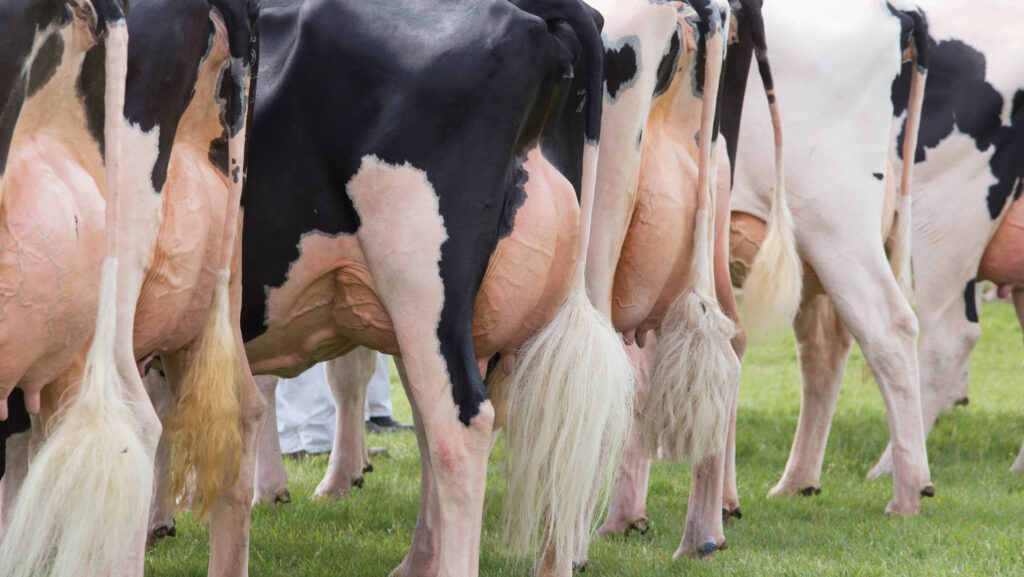
© Tim Scrivener
Herefordshire mixed farmer Ben Lewis began using IVF five years ago in his 70-cow pedigree Hereford herd at Dilwyn.
The original driver was expansion, he says.
“We wanted to double the size of the herd from 36 to 70 cows while maintaining health status. Doing that from your top cows is difficult when you also want to sell breeding stock,” he explains.
Ben has used both Moet and IVF on proven cows and selected heifers, with embryos transferred into the bottom 15% of the herd.
He committed to IVF, largely because it fits better with their system.
“With IVF, we can collect embryos from in-calf animals, so we are not losing production. We’ve had empty flushes with Moet, but every IVF collection has produced viable eggs.”
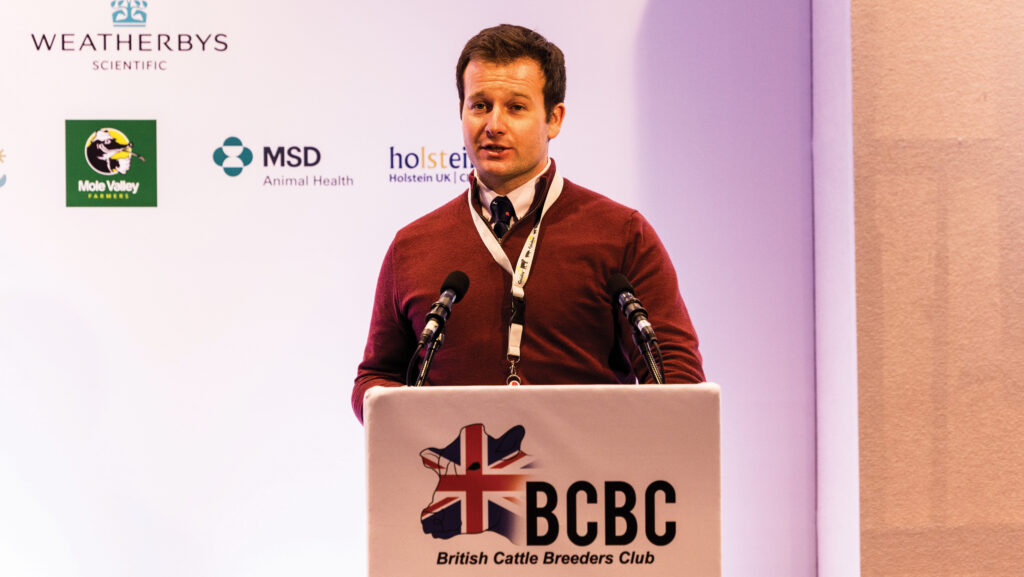
Ben Lewis © Orlena Henderson
Ben has implanted 115 embryos, resulting in 64 live calves – a 53% success rate.
Over five years, he says embryo-produced calves have averaged £3,359 a head, compared with £2,180 for progeny bred from the bottom 15% of cows.
“Once costs are accounted for, we’re about £530 a calf better off. That doesn’t include the value of better females retained in the herd.”
However, a drop in conception rates to 30% would remove that advantage, he adds.
Management is critical: “We aim to keep the diet consistent for 60 days pre- and post-transfer. Autumn-calving cows are easier to manage; keeping spring-calving cows housed is much harder,” he says.
“I see IVF as a management tool that rewards good cows, good systems and good decision making. Done properly, it could be very powerful. Done half-heartedly, it’s a waste of time and money.”
Dairy herd returns to Moet
After spending nearly £40,000 over three years on IVF and getting just 10 calves from 100 embryos, Keith Gue says his family decided “enough was enough”.
Keith milks 700 cows across two farms in West Sussex as part of a mixed farming enterprise covering more than 950ha (2,347 acres).
Keith Gue © Orlena Henderson
Huddlestone Farms is the second highest herd nationally for profitable lifetime index (PLI), but Keith wanted to accelerate progress further and increase the number of bulls sold into stud.
They began using donor heifers for oocyte collection, but results fell short of expectations.
“First, we struggled to get oocyte numbers, then we couldn’t get them to convert to embryos. Every time we fixed a problem, another challenge came along. IVF seems to work well in beef, but is a struggle with dairy,” he explains.
As a result, they have focused on optimising Moet. “We may not be generating embryos as quickly or as early as we could, but we’re happy with the results,” he adds.
He believes Moet spreads risk because more animals are flushed to compensate for fewer eggs generated by each animal. He also says genetic selection can easily backfire when using IVF.
“If your selection isn’t accurate, you could be selecting the completely wrong animal, and you won’t know until two years later.”
Reducing cost
Keith’s brother Matt, a vet, implants most embryos, and fresh transfer can reduce costs to as low as £80 a live calf.
Furthermore, conception rates are as high as 90% compared with a 55-65% average from frozen.
The genetic gap in the herd is narrowing, which means returns are diminishing.
Furthermore, disease outbreaks such as bluetongue and TB make flushing more challenging because of rules about where eggs can be produced, stored and implanted.
“We are flushing £800 PLI cows and putting embryos into £700 PLI cows – there is no return on that.
“Now it is about finding the balance for the best return on investment. Like all farmers, sexed semen pregnancies are still the best value. We will generate embryos, but 100/year rather than 150,” says Keith.
Rob Simmons, Ben Lewis and Keith Gue were speaking at the British Cattle Breeders’ conference in January