

How organic autumn-block herd hit 77% six-week in-calf rate
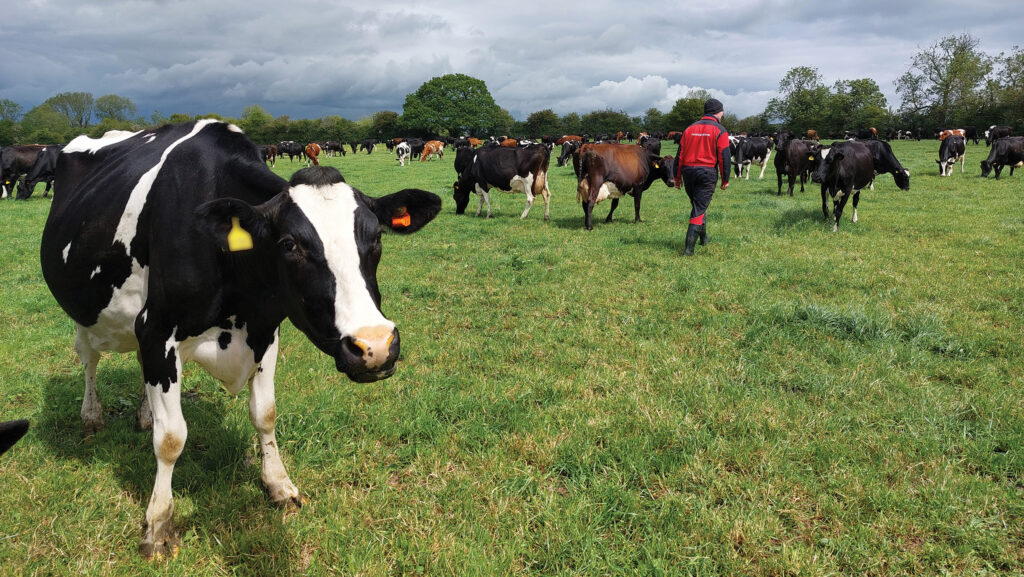
Improving fertility in an organic autumn block-calving herd has cut the calving spread from 16 weeks to 9.5 – without resorting to hormones, buying in replacements or culling cows.
Milk production has also risen and the business has dispensed with a spring-calving group of stragglers.
See also: Advice on managing transition for better cow fertility
The herd, at Clares Barn Farm, Twycross, Warwickshire, run by brothers Jonathan and Alistair Hughes, switched from calving year-round in the early 2000s.
Farm Facts: Clares Barn Farm, Twycross, Warwickshire
- 650 crossbred cows
- 320 replacement heifers
- Farming 525ha over two units including a 211ha milking platform
- Beef calves sold privately at two weeks of age
First, a split-block was created before achieving a full, 12-week autumn spread. By 2019, however, poor fertility saw the brothers reinstate a spring group of cows that had slipped their autumn slot.
They were also rearing too many heifers to replace fertility culls, says Alistair. “Cows started calving mid-August and finished mid-December.
“Heifers were calving mainly at the front of the block in August/September but were still dragging on till December.”
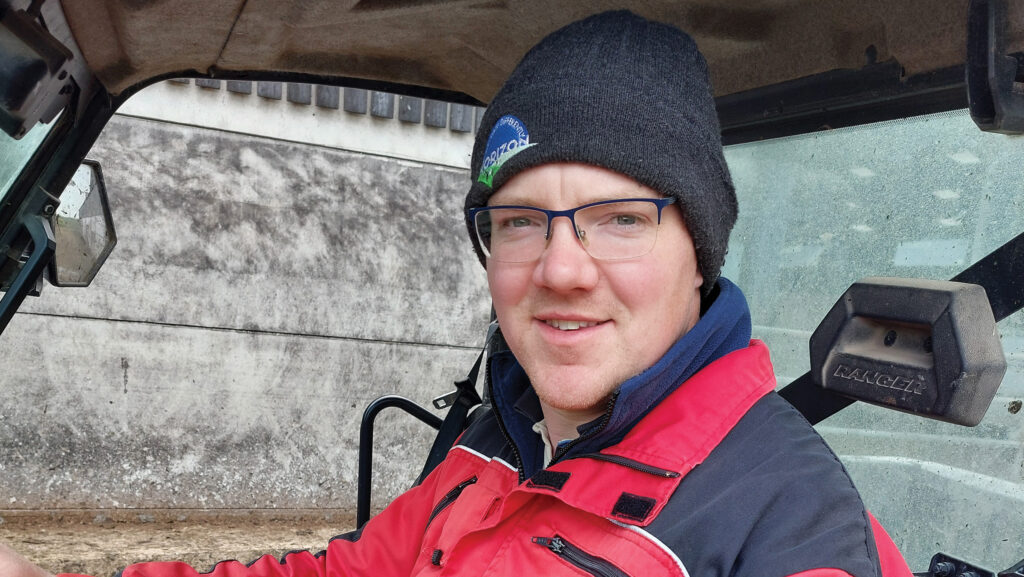
Alistair Hughes © MAG/Shirley Macmillan
Vet input to identify weak areas
Through discussion groups and AHDB meetings, the brothers were beginning to analyse their fertility statistics – mostly calving interval and conception rate – but were less focused on fertility. “We didn’t have any issues – we were just ‘average’,” says Jonathan.
A big incentive for changing this was buying the farm, says Alistair. “As we became owners, a high debt drove us to be more efficient and cut costs.”
Realising they needed to do better, they turned to vet Dave Gilbert of Horizon Vets for advice. His blunt verdict, after analysing their data, was that herd fertility was “rubbish”, says Jonathan.
“We weren’t performing on his KPIs [see “Fertility KPIs are hitting or close to target”].
Late-calving cows had fewer cycles to get back in-calf, so we were always chasing our tails, and we needed a higher proportion calving in the first six weeks.”
Dave identified a “multitude of things” causing problems and devised a plan of improvements for Alistair and Jonathan, compatible with their organic status.
Inseminatation protocols
© MAG/Shirley Macmillan
Jonathan, Alistair and their three staff got training in artificial insemination (AI), replacing a technician service.
Protocols were set up for everyone to follow, breaking down the detail into easy steps. Alistair says the team’s consistency and commitment in following them “has been a key factor in tightening the block”.
Cows are now served as soon as they are out of the parlour, not drafted separately from the herd for up to six hours.
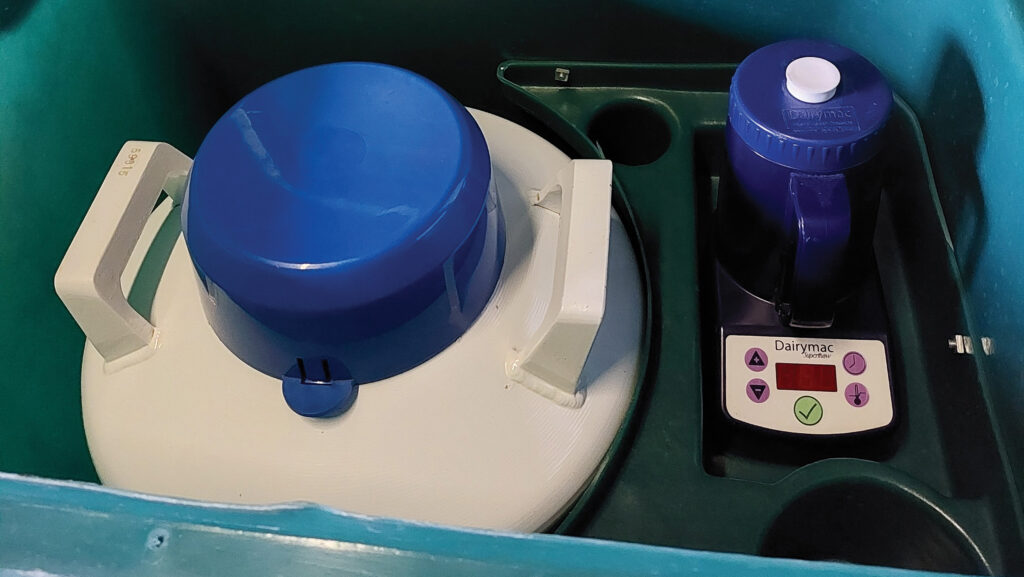
“We serve twice a day, not once. We locate the semen flask close to the AI race, so we don’t walk 40m each time we serve a cow.
“We thaw one straw at a time and check the temperature of the water bath,” explains Jonathan.
Transition rations
The cows had been calving on standing hay. But the brothers admitted that quality varied from year to year, which resulted in inconsistent feed intakes and risked mineral imbalances.
“We had – mostly subclinical – ketosis and milk fever when the hay was green,” he adds.
To bring in a more regular nutrient profile, three weeks pre-calving the daily diet was changed to 1kg of soya a head, 2.5kg dry matter (DM) a cow of wholecrop, plus the standing hay.
This supplied sufficient protein and energy for calving. As well as 30g/day of magnesium chloride in water troughs, an extra 90g/day was included in the feed, together with 30g/day of magnesium oxide.
This resulted in fewer metabolic issues, fewer down cows and fewer assisted calvings (see table 2). To evaluate dry cow diet performance, Alistair says they now monitor colostrum quality.
A cow giving four litres at more than 24% on the Brix scale is ideal. Diets can be tweaked once the first cows calve, if necessary.
“Once calved, we fed a higher quality cake with more slow-release energy, so cows were on a rising plane of nutrition.
“We didn’t push hard on residuals in the paddock, grazing to only 1,700kg DM/ha; cows were fully fed,” says Jonathan.
Concentrate rates were also increased to 4kg a head in the parlour plus 4kg in the forage wagon, alongside lucerne, wholecrop and grass silage.
Fodder beet is introduced from November at 3kg DM a head.
Heat detection tags
Heat detection used to be four times a day, with a final check at 10-11pm.
This made for a long winter with pre-mating heat checks followed by 12 weeks of AI. (They have not had a stock bull on the farm since 2010.)
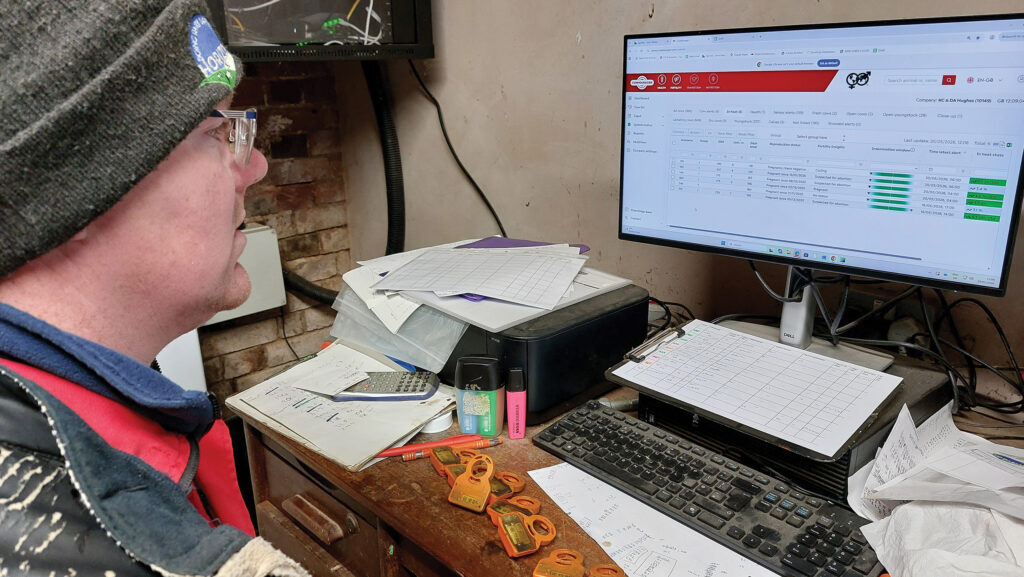
Instead, in 2021, the brothers bought Cow Manager ear tags, followed by tags for heifers a year later.
The farm’s annual subscription is £11,000 – one-third of an employee’s salary, they reckon – and there are additional benefits from the health data.
“If we are paying £30/straw, we want to know a cow is on heat at the right point,” says Jonathan.
Post-calving checks
Alistair learned how to check cows for metritis, which is done three weeks post-calving.
They are treated according to the Metricheck score, re-examined after seven to 10 days and treated again where necessary.
“We want to spot dirty cows early on and needed the consistency of one person interpreting the results,” he explains.
Extra changes
An external, drive-by feed barrier for another 100 cows (plus more water troughs) reduced competition for feed and bullying, and created extra loafing space for bulling cows.
Yard concrete was re-grooved two years ago; sand is spread on any slippery areas.
Heifers are weighed monthly until breeding; poor doers are fed 1kg/day of rolled oats and given priority grazing.
A vet tech scores mobility and body condition every quarter, and poorer cows are dried off three to four weeks early.
© MAG/Shirley Macmillan
Future challenges
Dave now conducts a fertility review every April, which allows the team to plan for the next mating season.
“We also do a pre-breeding meeting with the staff, mid-October, to review calving and early Metricheck results, to get everyone in the right head space.
“We start AI on 13 November for heifers and 20 November for cows,” says Alistair.
It has taken them five years to sharpen things up, he adds. He and Jonathan are pleased with their progress, getting rid of the spring group in 2023 and no longer having late-calving cows.
Heifers now start calving from mid-August, cows follow later in the month, and everything is finished by 31 October.
“We are only rearing 150-160 heifers a year, which is a 22% replacement rate – before, it was 28-30%. It’s still too many; we could potentially lower it now with sexed semen,” says Alistair.
“We are now trying to breed out of our best cows and maintain performance. That’s a challenge in itself.”
Fertility KPIs are hitting or close to target |
|||
|
|
2020 |
2025 |
Target |
|
Cows calved 42 days before planned start of mating |
76% |
89% |
More than 90% |
|
21-day submission rate |
85% |
92% |
More than 90% |
|
Herd conception rate |
44% |
57% |
More than 60% |
|
6-week in-calf rate |
56% |
77% |
More than 78% |
|
Final in-calf rate after 9.5 weeks |
88% |
91% |
More than 90% |
|
Empty rate |
12% |
9% |
Less than 10% |
First calvers |
||
|
2020 |
2025 |
|
|
Six-week in-calf rate |
78% |
87% |
|
Final in-calf rate |
93% |
96% |
|
Conception rate |
40% |
71% |
Milk yield and constituents have increased alongside fertility gains |
||
|
|
2020 |
2025 |
|
Milk yield |
6,531 litres |
7,726 litres |
|
Fat |
4.61% |
4.76% |
|
Protein |
3.7% |
3.83% |
|
Concentrates a cow |
1.21t |
1.85t |
|
Milk fever cases |
14 |
5 |
|
Down cow numbers |
3 |
1 |
|
Assisted calvings* |
29 |
42 |
|
Ketosis cases* |
2 |
8 |
|
*Attributed to better record-keeping |
||