

Pros and cons of sweeper bulls v all artificial insemination
 © Debbie James
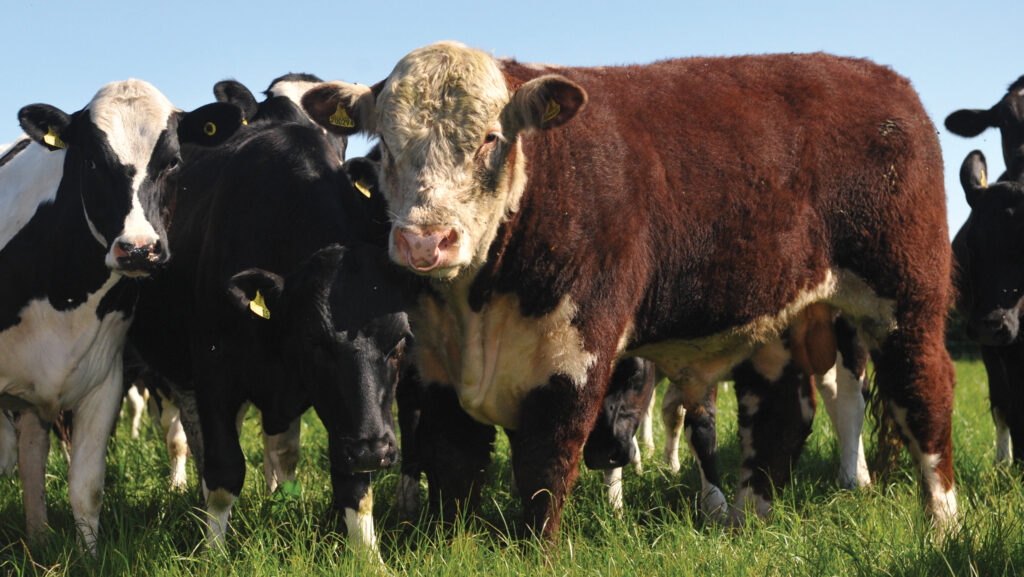
 Running bulls in dairy herds carries safety and biosecurity risks, but they are an effective and often low-cost means of sweeping up cows and heifers not in-calf after the artificial insemination programme.
Breeding policies differ according to farm system and scale – for some, artificial insemination (AI) in combination with sweeper bulls is a tried and tested approach, while others choose an all-AI programme.
See also: Tips on managing sweeper bulls
Anecdotal evidence suggests more farmers might be shifting to AI-only, principally autumn calvers, according to LIC consultant Sean Chubb.
“I am seeing more autumn than spring herds going down that route, and it seems to be because more of those herds have collars or similar heat-detection technology,” he says.
There are benefits and disadvantages of each of these breeding policies.
AI in combination with sweeper bulls
Pros
Labour saving
Pressure on labour can be intense during the breeding period, and this is where farms with sweeper bulls may score the biggest advantage. The pressure in those systems lifts after the defined AI cycle ends.
“Once the bulls go out, pretty much everyone switches off from the mating period and it’s back to the usual labour roster. That is where those farms see the savings,” says Sean.
Cost
Running a bull comes with the upfront purchase outlay but, thereafter, the costs are relatively low. As the numbers needed are generally small, there is not a noticeable impact on grazing.
A bull has an intrinsic value too – once breeding ends, their purchase cost can be offset, with many farmers selling them to another farm or into the meat chain.
Sean says running a sweeper bull is more or less cost neutral. “Many farmers will run their sweepers for a couple of years. When they do that, there can be big savings compared with AI-only breeding.”
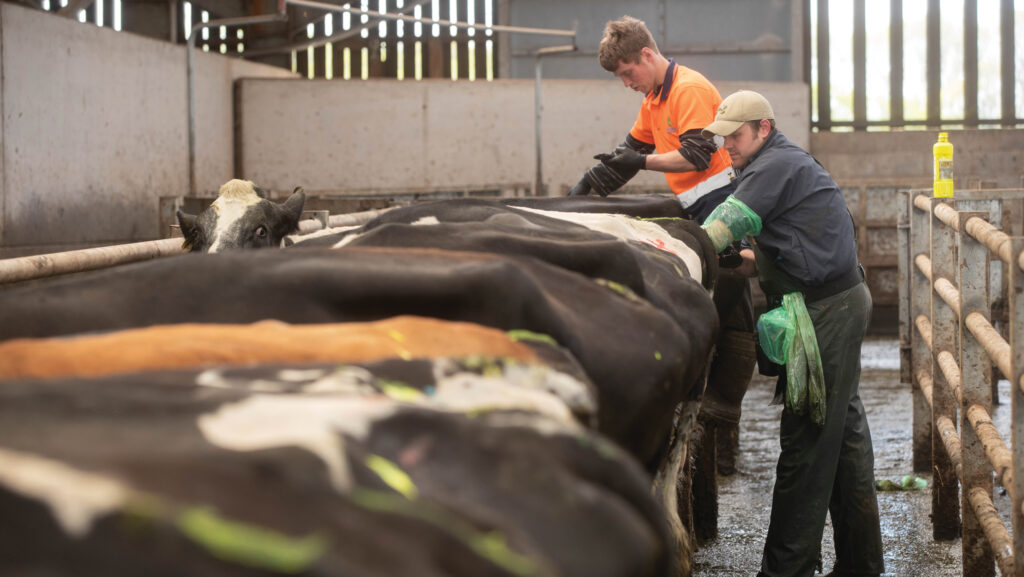
Training farm staff to inseminate offers flexibility and can save breeding costs © Tim Scrivener
Unless the heifer and cow breeding periods overlap entirely, the same bulls could be used across both groups in the same season.
It is more common, however, to run a yearling bull with heifers, so there is less risk of physical damage to those smaller animals from service.
A younger bull may have poorer semen mobility, though, and semen production can also be low, so the ratio of bulls to heifers should be higher than for mixed-age cows.
Reliability
Bulls instinctively know which cows are on heat and do not rely on activity from other cows as a farmer might when visually observing which animals are ready for insemination.
Nevertheless, Sean warns that farmers should not put all their trust in bulls, advising the use of tail paint or a similar heat detection aid.
“Make a weekly check and keep a record of the cows that need their tail paint reapplying,” he says.
“This will give you an idea of which cows are coming back into heat, and it might indicate that the bulls are not working properly or that there could be a fertility issue with those cows.”
Cons
Health risks
Introducing new cattle onto a farm comes with a risk of importing bovine viral diarrhoea, infectious bovine rhinotracheitis and other diseases. A major risk that many overlook is Johne’s, says Sean.
“No one ever tests their bulls for Johne’s, but will turn them in with their heifers grazing a block of supposedly clean fields set aside specifically for youngstock, to protect them from Johne’s.
“Johne’s and a lot of other biosecurity risks do get overlooked.”
A fat bull will be less inclined to work. So too will a lame one, which means monitoring and maintaining foot health must be a priority.
Furthermore, if a bull has to be removed and replaced, this can result in bulls investing their time and energy in fighting one another instead of servicing cows.
“Bull health is really important for keeping the cohort as one – if you have to pull one out, it will upset the pecking order of the group,” Sean warns, adding that semen viability is also compromised in unhealthy bulls.
Management
When bulls are retained on farm between breeding periods, managing them can be tricky. They are a safety risk to staff and the public, and to other stock.
“A bull might break into a field of heifers, and you could have a situation where those heifers will be calving out of sync with the calving block,” he points out.
Genetic history
The genetics of a stock bull can be more of an unknown compared to an AI sire, and that can make a big difference to the potential of its progeny.
All AI
Pros
Superior genetics
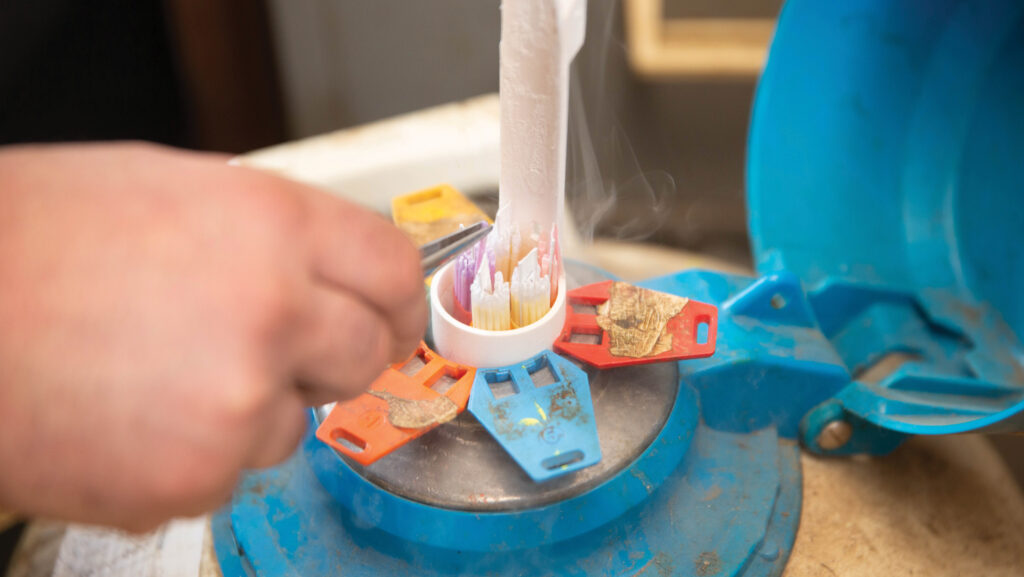
Sexed semen makes it easier to breed replacements from cows calving early in the block © Tim Scrivener
Semen from AI bulls is subject to rigorous progeny testing, therefore farmers will know what they are getting when they select sires for their breeding programme.
Having a named sire on the passport can often increase calf value too.
“That will be true whether you sell or retain the calf, because that data gives a lot more understanding of the performance to expect from that animal, and there is greater reliability on the type of calf you will get from that bull,” says Sean.
“When you buy genetics through an AI straw, all that has been worked out for you.”
Safety
AI completely removes the safety risk of running a bull. Although the number of farmers in the UK killed or seriously injured by bulls annually is relatively low compared with other causes, incidents involving more minor injuries can often go unreported, masking the true figures.
Ease of monitoring
Farms that artificially inseminate might monitor herd fertility more closely because they are drafting animals daily. “They will know the numbers that are being put forward for service, and how many are repeating,” says Sean.
Cons
Cost
Cost is perhaps the only disadvantage of an all-AI programme, but it is a big one, and more so if a technician is used. “There will be days when there might be just one cow to inseminate, but travel and the technician’s time will need to be factored in, and it can make that one insemination expensive,” he says.
Do-it-yourself insemination is a more cost-effective option, he believes. “Realistically, farmers need to do their own insemination if they are inseminating at the back end of the serving period – those last six weeks.”
Heat detection technology will make the job easier, but that comes at a cost too, although some of that investment will be offset by labour savings.
A sorting gate is another technology that has made it easier for farmers to transition to all AI – once the data of the cow for drafting is punched into the system, the gate does the rest.
The gate also saves labour, as Sean saw when working on a dairy farm in New Zealand. The business had two farms, one with a sorting gate and one without.
“We needed an extra labour unit for drafting in the parlour that didn’t have the sorting gate, or it would have slowed the milking down too much, but we could manage with the usual staff in the other.”