

Farmer Focus: AI request results in bespoke breeding index
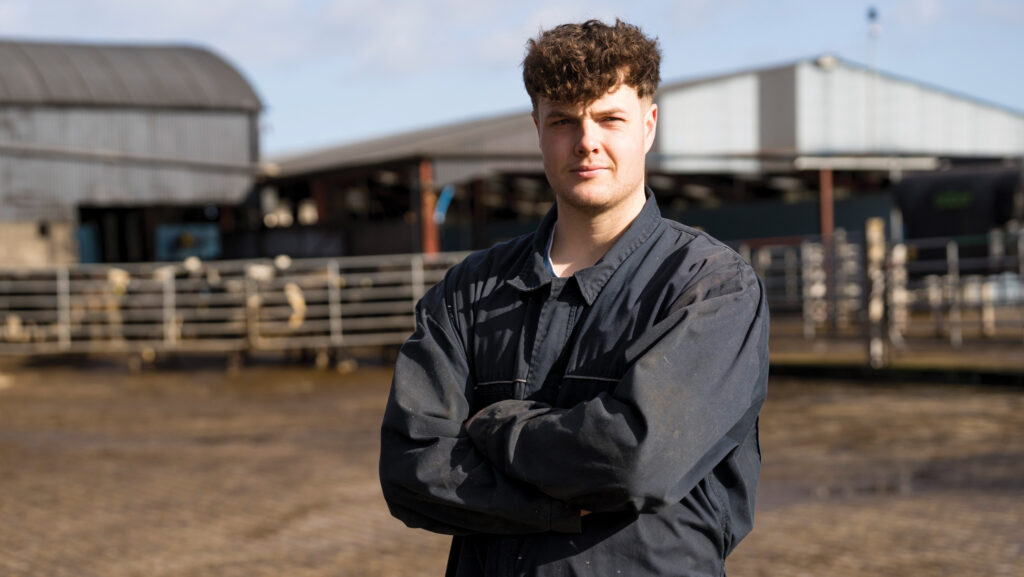 Ewan McCracken © Steffan Hill
 It’s good news. A clear TB test has allowed us to ship many of the beef calves off the farm. We can finally breathe a sigh of relief.
The good May weather undoubtedly brings busy times here on the farm. You could even say it’s as hectic as calving.
With grass growing across the farm at an average of 60kg dry matter/ha a day, the whole farm has just surged.
See also: How spring block calver uses nurse cows to rear replacements
About the author

We’ve baled one-fifth of the farm in the past fortnight, with more to come, as the herd’s demand simply can’t keep up with supply.
As of 20 May, we started our breeding programme.
I wrote last year that we wanted to change our programme for the replacement year-2 heifers (R2) because of poor results with fixed-time artificial insemination.
With heifer conception rates averaging about 40-45% in the past five years at first service, it was costing us monetarily and in genetic gain.
The fact the heifers’ out-block is seven miles away from the main farm posed an additional challenge, as it made it harder to monitor heats without the investment of collars and heat detection.
First, with the help of artificial intelligence, we ranked all of the R2 heifers based on their dams’ production history.
I provided ChatGPT with the average fat and protein percentage and litres for each of the heifers’ mothers, prompting it to make a list of the top 50% of heifers from which to breed replacements.
It was important that calculations were based on a New Zealand-style system favouring milk constituents, while maintaining profitable production.
The result was a breeding index: (0.35 × protein score) + (0.3 × fat score) + (0.25 × milk solids score) + (0.1 × yield score).
As predictive genomic data for crossbreeds is just getting started, this method will likely be our best bet for figuring out how to achieve the best genetic gain.
Importantly, the data revealed how good our next generation’s milk constituents could be, but equally how poorly some of their mothers were performing.
This highlighted how much genetic loss we were suffering by breeding the less-than-average heifers in a blanket insemination protocol.
The selected heifers have been brought to the home farm for their sexed semen AM/PM service using scratch cards and a prostaglandin injection programme.
We’re sort of making it up as we go along – we’ll keep you posted.