

Farmer Focus: Bluetongue confusion ahead of ram sale
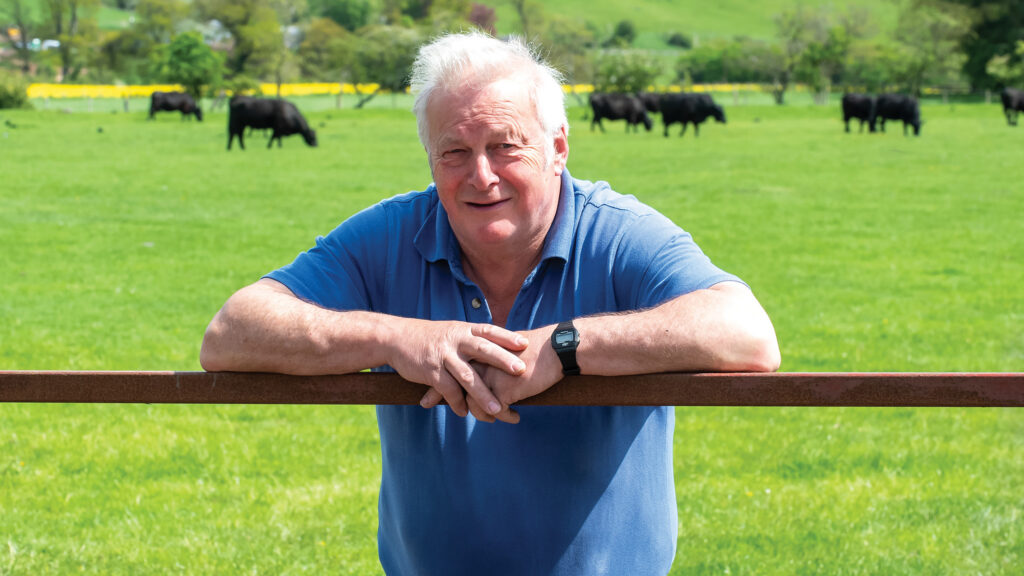 James Playfair-Hannay © Angus Findlay
 As I write my penultimate article, I am watching a beautiful shower of rain: not too heavy, just enough to soak in. I hope it’s not my imagination, but I do think I can see the grass growing again.
See also: How an annual ram MOT can help optimise flock performance
About the author

The bulls have been out with the cows for nine weeks and are now back home. Cows and calves look remarkably well considering the lack of grazing.
Vitamin D certainly seems to make a big difference. Hopefully, the pregnancy rates will be good too. Calves are now getting onto creep feeding prior to weaning in October.
The mob/rotational grazing has worked notwithstanding a few challenges trying to provide sufficient water, particularly on the really hot, sunny days. Springs on the hills dried up and the rivers and burns were running very low.
Now, following a few rain showers the watercourses should be replenishing. No doubt after such a long dry spell we will have an elongated wet season.
Now that bluetongue virus is circulating in south-west Scotland, it has brought fear and disaster to many. Wearing my Border Union Agricultural Society hat, there are major concerns over the forthcoming Kelso Ram Sales on 11 September.
There is currently much confusion over what regulations will actually be in place, as the sale will take place outside the Scottish government’s vector control period. This is supposed to end on 10 September, as temperatures are expected to fall, reducing the number of midges and the veracity of the virus.
Since when did nature adhere to the whims of politicians? There are many local shows at this time of year, most of which have cancelled their sheep classes.
This year, we intend to vaccinate the animals we will be selling for breeding – if and when we can get vaccine (which appears to be in very short supply).
Harvest has mostly been completed, with the exception of a couple of fields of beans, which are ready as soon as conditions allow. I guess it will go down as an average harvest.
Winter crops had above-average yields with good bushel weights, while spring oats were very disappointing. However, with no drying – and improving prices – the end result should be okay.
Our glasses are still half full in these challenging times.