

Farmer Focus: Calving success measured over staff breakfast
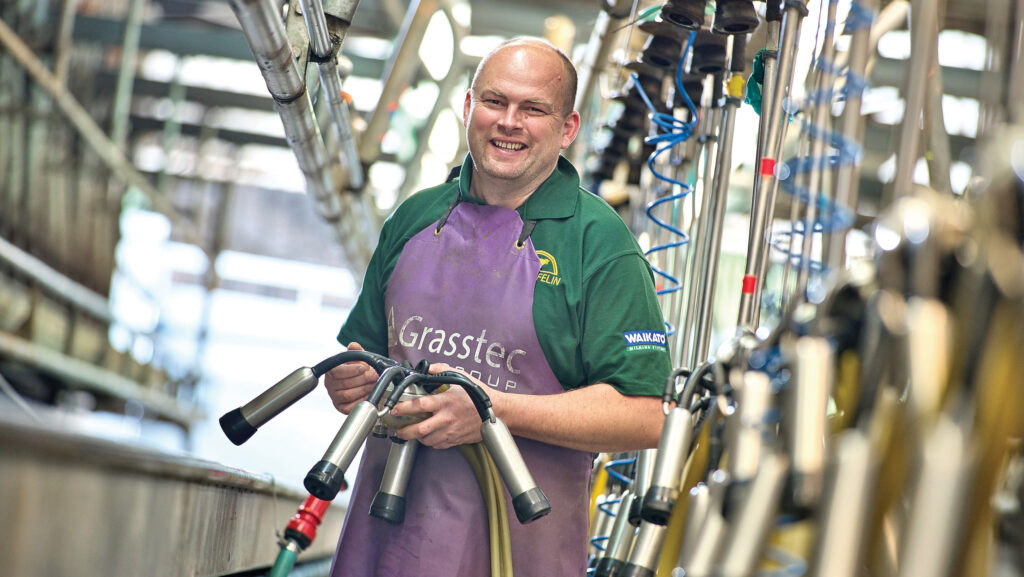 Eurig Jenkins © Richard Stanton
 Calving’s finished and we’re back to having one group of cows, as to opposed to dry, calving pen, colostrum and milkers.
Cow condition is good and they are definitely pumping the milk out, at about 4.8% butterfat, with protein sitting around 3.32%.
See also: Advice on balancing fibre and concentrates in dairy diets
About the author

The focus is already on getting cows cycling for the start of serving at the end of April.
It’s a case of keeping them fully fed and trying to get as much energy as possible into them.
With more than 150 Blue calves sold in March, and only about 45 baby calves left to sell, the workload has definitely eased off in the calf shed.
The heifer replacements are on once-a-day milk and are eating cake.
They have all been dehorned and vaccinated ready to be turned out after weaning – weather permitting, any time after mid-April.
I often get asked, “How did calving go?” I have slightly changed my approach to answering.
First, a cow will calve whether we are ready or not, and she will calve any time of the day and anywhere she wants to.
It’s up to us to be ready to cope with that and get her in the ideal body condition score, keep her environment clean and fully vaccinated and, ideally two days before calving, get her into the calving shed where clean, deep bedding is available.
When we revamped cow housing four years ago, I designed it so that all calving pens have self-locking yokes, water, and silage accessible via telehandler, to ease management in our busy time.
I also prefer to have too many staff on, so everything gets done properly, and I measure that success by everyone having breakfast together at about 8.30am – we did that consistently this year, even on our busiest of days.
It’s more of a personal thing, but I enjoy having breakfast together, and I tend to set jobs for the day so everyone knows what the plan is, the most important jobs get done first, and jobs where more than one person are needed are also prioritised.
Fertiliser is now being applied after the milkers and about 40ha (100 acres) of silage have been shut up.
I’m afraid I’m going to have to spray some fields, as docks are starting to affect my mental health.