

Farmer Focus: Culling and concentrates up as drought bites
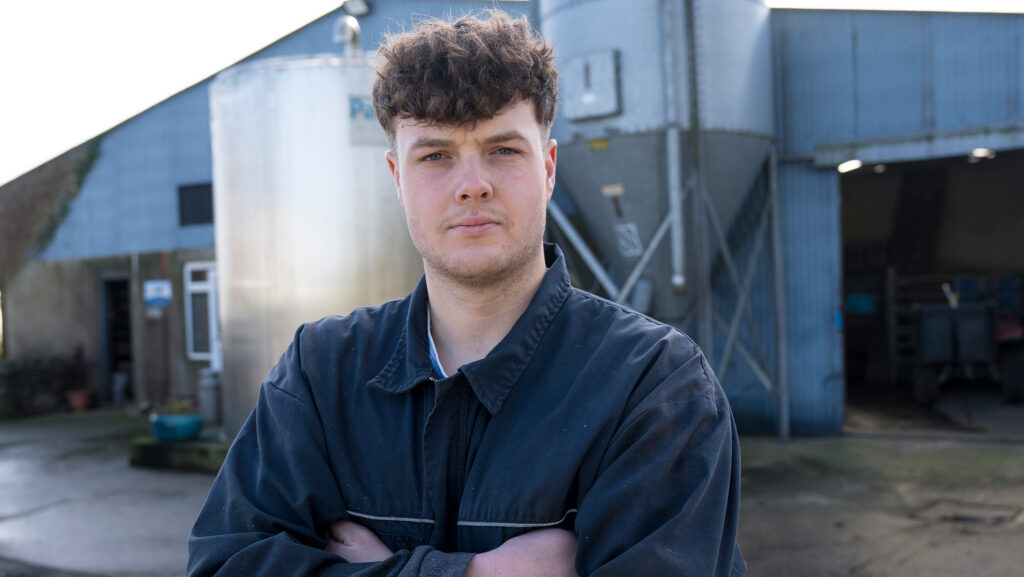 Ewan McCracken © Steffan Hill
 Many people reading this from England will be rolling their eyes when I say we haven’t had decent rainfall in more than four weeks in Northern Ireland.
Our rocky knowes (hillocks) have started dying, along with shallow, hilly soils, which has led to a drop in average farm cover and grass quality.
After using Agrinet to plan for the worst-case scenarios, we have been culling cows with high somatic cell counts and increasing rotation length.
We’ve increased the meal fed in the parlour from 2kg to 4kg and started feeding surplus bales from the platform.
See also: Advice on calculating cull cow costs accurately
About the author

Not only is the farm stunted from a lack of moisture but also an absence of nitrogen. This is most evident in fields that have received parlour washings recently, which are returning above average re-growths, even with no rainfall.
I know we’ve always been told that spreading artificial fertiliser during a drought is a pointless exercise, however, most mornings there has been a significant dew on heavier covers.
After applying calcium ammonium nitrate two weeks ago, there should be enough moisture for it to dissolve. We aren’t panicking yet, as some rain is forecast for this coming week.
But even if more does come, we won’t be out of the woods for a while.
Some of you might be aware of new “clover-friendly” sprays on the market claiming to target invasive weeds while not affecting clover plants.
Our confidence in these products has significantly diminished as a few farmers in our discussion group, and the wider community, have had very variable results.
This, combined with the very narrow window in which the spray is effective, meant we held out and kept going with manual spot spraying.
Older clover fields that we classed as “overrun” with dockens were placed on the future reseeding list.
Then, this spring, the local farmer who usually does our spraying invested in a Rumbojet sprayer, which uses onboard cameras to detect and target unwanted weeds.
This decreases the volume of spray used dramatically, keeping the overall cost down.
We trialled the sprayer for our clover fields, and a couple of weeks after the first spray, the dock plants were withering, while nearby clover plants were untouched.
This is not a sponsored ad in any way, but when technology improves the efficiency of farms, it is definitely worth talking about.