

Farmer Focus: Dry weather has left us with higher forage costs
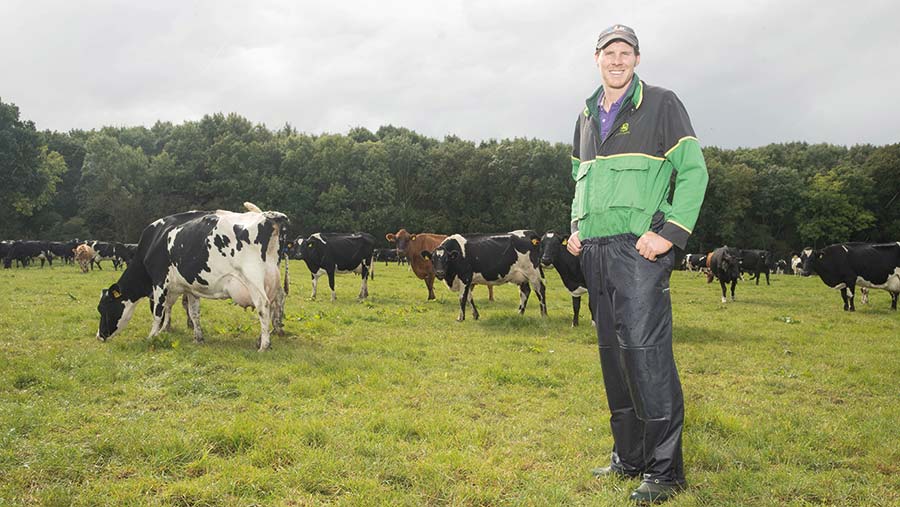 © Tim Scrivener
 October is normally the month when we begin to familiarise ourselves again with the somewhat simple but repetitive winter routine: bedding, feeding and scraping.
Unfortunately, due to the drought, it feels like we’ve already been doing this for an eternity.
Our autumn-calving cows have been housed each night since early September. We have also needed to supplement-feed silage out at the paddocks since July.
Couple this with calving and it has been a rather busy time for us all.
See also: Discounted youngstock create opportunity for some farms
Adding to our problems, we tried to get some temporary labour pre-calving, which has been a struggle.
There is a very limited pool of skilled workers in the dairy sector, and it seems to be forever shrinking.
Unfortunately, we were let down at the last minute. This will inevitably lead us to focus on automation and simplification in the future, wherever possible.
As with farming, this is one of the few factors we can try to control.
On the plus side, the fresh cows have transitioned well.
Production is averaging 2.2kg milk solids a day and we are feeding approximately 4kg dry matter (DM) fresh grass, 6kg DM concentrate and 8.5kg DM silage.
There have been a few more calving assists with bigger calves than we had hoped.
We have used Angus beef sires, so whether this is purely sire choice or down to nutrition, we will analyse before breeding again.
Feedstocks are a concern for the coming winter, with protein being in short supply.
Although we had a good first cut for the grass, second cut was non-existent. We’ve had two good cuts of lucerne, but the third cut has been poor.
Slurry has been applied onto grassland before the rain, in the hope of getting another late silage cut. Wholecrop yields have suffered by about 40% from last year, but luckily, we managed to buy standing wholecrop from an organic neighbour.
The fodder beet and maize will obviously have decreased yields.
That said, it is incredible how well these crops can grow under intense heat and such little moisture (less than 50mm rainfall for a majority of the growing season).
Combating shortages in dietary protein will be costly: increasing the cake protein from 18% to 20% will cost roughly £50/t.