

Farmer Focus: Finished lambs disappoint at market
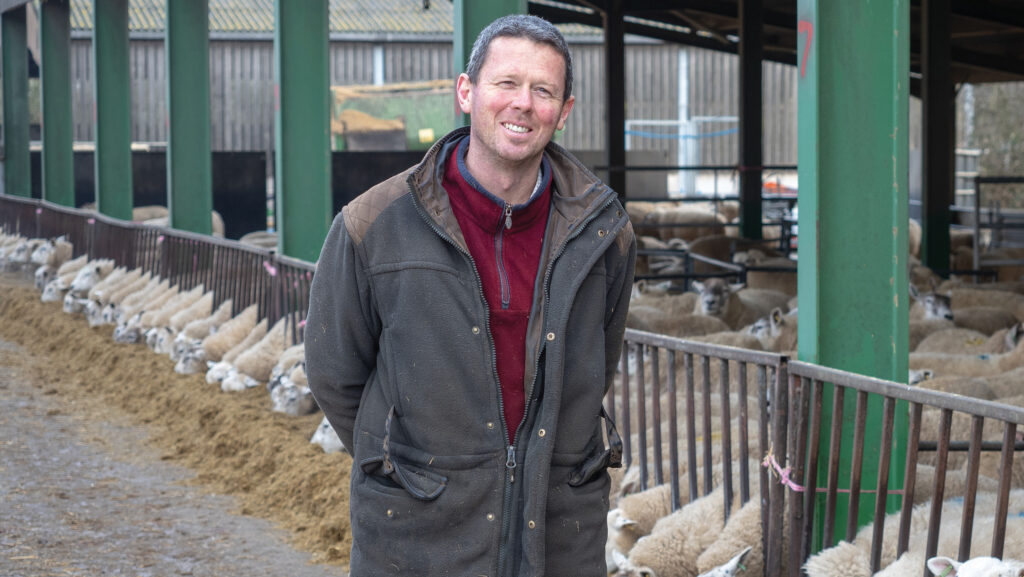 James Kimber © Kathy Horniblow
 So far, we have missed most of the promised rain. A fantastic crop of maize came off on the Glorious Twelfth in 37C temperatures, but the herbal ley seed stayed in the shed for another three weeks, while some small lambs foraged a few dropped cobs and leaves.
Then, after a really nice rain last week, the rotavator made a lovely seed-bed. Air-seeded and heavy rolled, we are now looking for a good soaking.
See also: Advice on buying replacement ewes for breeding
About the author
A big bunch of lambs that had been on pellets for six weeks have gone, weighing 49kg. Although they handled well, with good covers, they were dusty and stale-looking and have not sold well in the live auction.
The next batch of 400 on pellets should get a wash; if not, we will try deadweight, as we can’t afford to feed them and still not sell well.
The commercial ewes are on a small field on hay to rest all the other fields to hopefully get some tupping grass. Some 200 were too thin, so they are on 0.4kg of ewe rolls in another field.
The feed bill and hay use have taken any market price advantage away again this year. I find it difficult to understand the high prices of breeding ewes.
Yes, the lamb and cull ewe prices are good, but every input bill is showing high inflation. Overall profitability is no better, or less, and the high ewe price is in the flock depreciation for her lifetime.
The cows look pretty good. Their management hasn’t changed insofar as the autumn calvers are on hay to maintain a lower dietary intake to ensure easier calving.
They have been bolused with cobalt, iodine, selenium and copper. The silage pit will be opened as soon as calving gets going in October.
We are trying to make improvements on the management farm, and ditch cleaning is the obvious place to start. This needs to be linked to subsoiling, but the clay has dried out rock solid, so that will now be a spring job.
We have turned a few fields with a rotavator and spun some brassica seed on to provide a bit of winter food and cover. The plan is a silage mix, then cultivations before a long-term herbal ley. It’s going to be a steady job.