

Farmer Focus: Flock cut to balance winter feed budget
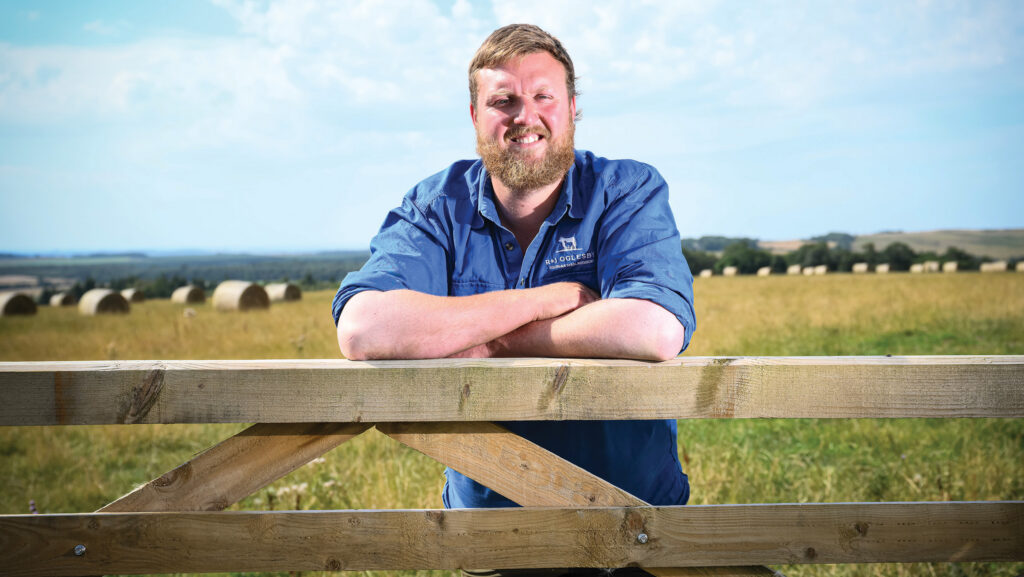 Richard Oglesby © Richard Lee
It has been a tough autumn so far, with just 15mm of rainfall in September resulting in limited grass growth. We have been growing about 10kg of dry matter (DM)/ha a day for months now.
But with a demand of 27kg DM/day, this was unsustainable. So, with an average grass cover of 1,800kg DM/ha and a winter feed budget falling 75t short, the past couple of months have been focused on getting stock off farm to reduce demand.
See also: Young couple transform livestock farm with focus on costs
About the author

We went through the ewes again and pulled out 123 culls, then decided to sell a further 171 ewes for breeding.
We finished 778 lambs, with a further 1,098 going as stores, leaving an average lamb price of £122.62 for this season (up £18 on the year).
This year, we have tried something different: with limited grass for finishing lambs two seasons in a row, we bought some hoppers (which hold about 1t of lamb finishing pellets that can be accessed ad-lib) and decided to feed 563 lambs in the shed.
I am a big believer that successful businesses are always trying to improve and implement something new.
However, finishing lambs on hoppers isn’t the one for us. In hindsight, we would have been £9.90 a head better off selling lambs as stores this year.
We costed the lambs into the shed at a store value of £110, and they left averaging £133.66 (after knock-offs, haulage and including selling the last few as stores).
But the costs were just too high – although it was exciting to see lambs gaining up to 600g/day through the auto drafter!
Jen and I bought our first 40 ewes in 2015 and spent nine years building numbers up to 2,000. We seem to have spent the past two years bringing them down again.
We’ll have 1,050 ewes and 255 ewe lambs going to the tup this year, replacing those livestock units with an expanding suckler cow enterprise.
Since starting with cows three years ago, we have been incredibly impressed with how well they perform under pressure.
Through wet, cold, hot, dry, and too frequently having their grazing taken by the sheep when things get tight, they always seem to deliver the same results.
We recently pregnancy tested the cows and were very pleased with the results considering they are all outwintered, calve outdoors and have a bulling period of seven weeks: heifers and cows were both 93% in-calf.