

Farmer Focus: Grass challenge – but drought not to blame
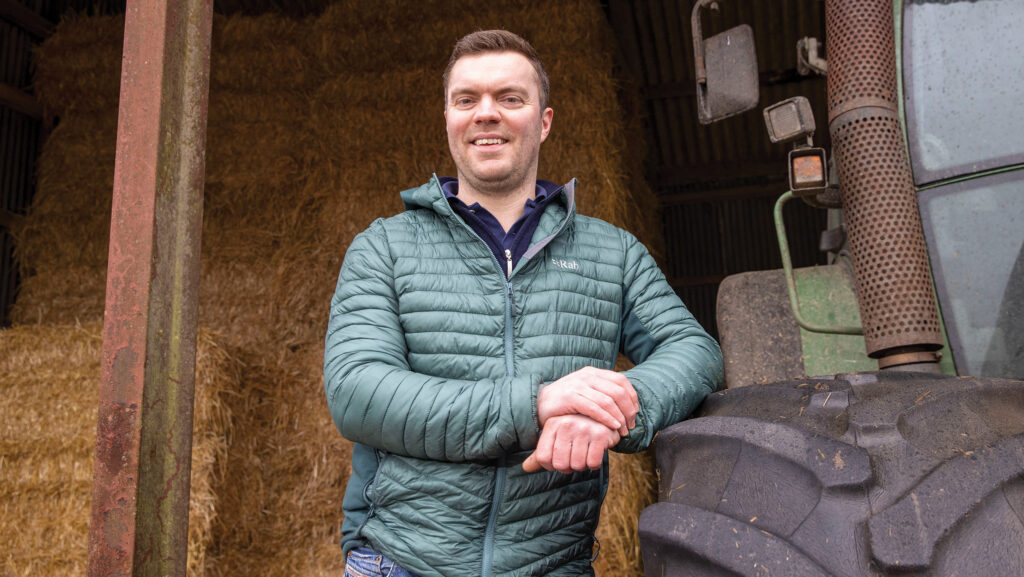 Colin Murdoch © Jeff Holmes
 August is the time of year when farming in Ayrshire becomes less about careful planning and more about staring at weather apps until one eventually tells you what you want to hear.
Harvest is under way at Buntonhill with winter barley safely gathered and attention now turning to wheat, which is still at least a fortnight from being ripe.
See also: How farm’s electronic weather station aids grazing decisions
About the author

Yields of both grain and straw from the barley were encouraging, making a pleasant change from spending all year putting money into a crop, then being disappointed by what comes out the other end.
Much of our wheat will be caustic treated and fed back to the cows.
There’s something reassuring about producing as much feed as possible from home, although once you add up seed, fertiliser, sprays, diesel, machinery and your own time, it’s probably best not to investigate the word “cheap” too closely.
The spring wheat will go into the new clamp as wholecrop – assuming the concrete has cured in time. There’s nothing like building a clamp immediately before you need to fill it to focus the mind.
Grass management has also been challenging, although for reasons that may be painful reading further south: we can’t keep up with it.
Enough moisture and warm days have kept grass growing, the clamps are full and we’ve taken 40ha (100 acres) of surplus out for square bales. (You know where to find me if you’re short of forage.)
My father remembers visiting family in Essex during the school holidays as a boy and they were feeding cows through the summer even then. We’ll go with climate change, though.
The Jerseys continue to do what Jerseys do best: produce milk with plenty in it.
We’ll never win many arguments based purely on litres, but fortunately the milk cheque isn’t paid entirely on who can pump the most into the tanker.
It still amazes me how obsessed parts of the dairy industry remain with litres a cow.
Surely what matters is the value of what leaves the farm, not simply the volume?
A litre containing more than 6% fat looks rather different on a spreadsheet from one containing 4%.
Hopefully, the wheat will be safely harvested, treated and stored before thoughts turn to autumn.
For now, I’d happily settle for five consecutive dry days.
That’s ambitious for Ayrshire, so I’ll compromise and take three – preferably from the same weather forecast!