

Farmer Focus: Gravity-fed water boosts grazing block supply
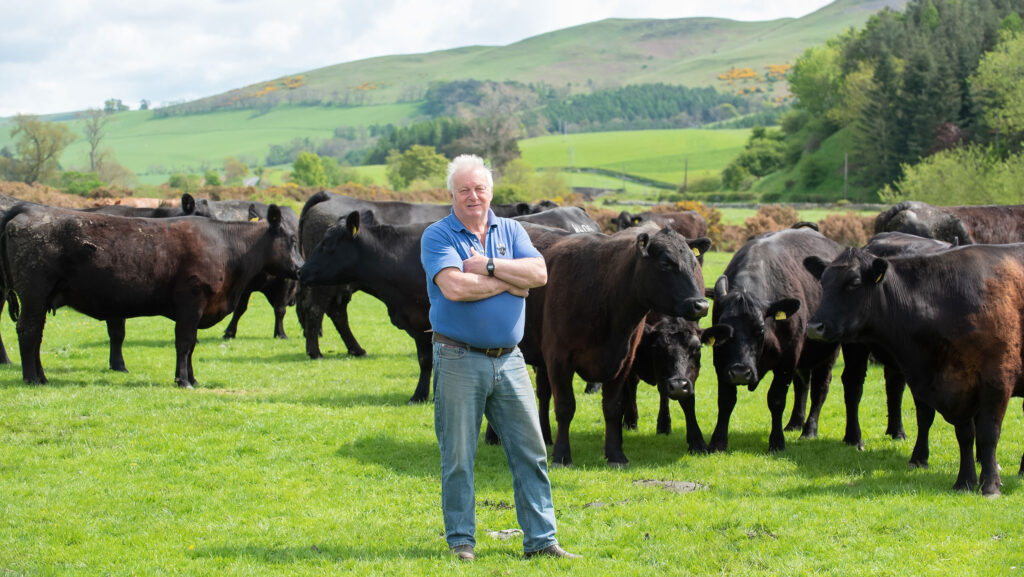 James Playfair-Hannay © Angus Findlay
 As we see yet another prime minister quit their post, and with change at the helm of Defra, can it get any worse?
I suspect it will, as we appear to have decision-makers running the country who don’t understand nature and food production.
See also: Advice on harvesting rainwater to build farm resilience
About the author
However, we are an optimistic breed of people as we continue to operate in difficult conditions.
I’ve just returned from a couple of days at the Royal Highland Show, meeting up with friends new and old.
There was a buoyant mood despite the woes in the pig and dairy sectors where producers are quitting.
Since l last wrote, the much-needed rain arrived. As a result, the countryside is looking very different and much transformed.
Winter cereal crops look as if they will produce decent yields; spring crops, although much improved, still look thin and certainly will not produce record yields.
Hay and silage crops have improved immensely with the rain, and now we just need the sun to shine at the right time.
The grass fields where the rotational grazing herd is running have gone to seed without increasing bulk; however, we have been able to shut up one of the grazing fields for hay.
In the past, when we set stocked in bulling groups of about 30 cows, there was sufficient water from burns and springs.
These are now inadequate for the much larger rotational group.
The Agri Environment and Climate Scheme, which we have enrolled in, has encouraged us to protect watercourses by fencing livestock away.
The scheme has enabled us to dig some wells and, with solar-powered pumps, construct a means of providing drinking water for livestock.
One of these systems will be lifting water 187m up a hill to a storage tank. This can then be gravity fed to several water troughs for the 121ha (300-acre) block.
Last week, we inseminated 110 cows and heifers, and this week the bulls have gone to the rest of the herd and will be changed in three weeks’ time; no Hereford this season.
The cows and calves, I have to admit, are looking extremely well and so I hope that they bull quickly. Again, we are aiming for 70%-plus conception to first cycle.