

Farmer Focus: June rain limits silage-making options in NI
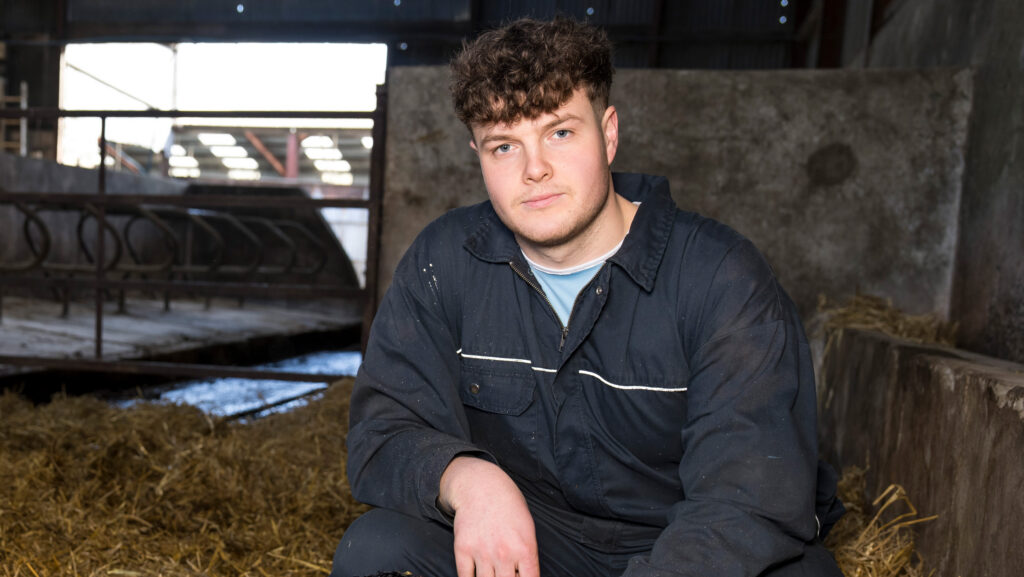 Ewan McCracken © Steffan Hill
 It has definitely been a few years since I’ve seen this much rainfall in June – 100mm-plus in four weeks.
It has limited the options for silage harvesting for most farmers across Northern Ireland, and with later cuts of silage comes lower quality. Could we see this impact winter milk production?
See also: 6 tips on producing grass silage at optimal dry matter
About the author

For us at home, a combination of heat and moisture caused average growths to spike to 80kg dry matter/ha a day in late May and into June.
Although these conditions are not something to complain about, it has not been an easy start to the summer.
Grass continues to enter its reproductive stage regardless of the rainfall. This leaves us with limited options when it comes to utilising excess grass on the platform.
As usual, it’s never straightforward and it seems like we are just firefighting. Baling would be the obvious choice to remove surpluses.
However, with only momentary periods of dry weather, we have to keep these fields out of the rotation for longer, which could lead to a platform shortage if prolonged.
Our second option is not as pretty, but will ensure that quality forage intakes are maintained during this breeding period, while also reducing wastage from topping.
So, in addition to reducing meal to 2kg a cow a day, the herd is entering paddocks mostly unrestricted, preventing the intake of too much of the lower-quality, lignified stem.
After the herd has grazed the best out of the sward, we then bale after a week or two of regrowth. These bales can be fed as dry-off feed come December.
So how has all of this affected our first-cut silage?
With nearly one-third of the silo still uneaten from last year, the decision was made to take a larger acreage of first cut, thus eliminating the need for a costly second. We can even make some high-quality bales from this block if necessary.
Three weeks after weaning and the calves are coming along nicely. The vet has recommended not to give de-wormer yet as a faecal worm egg count has come back negative for infection.
This highlights the importance of rotating grazing blocks yearly for youngstock and reducing anthelmintics resistance.
Some scouring is present from coccidiosis but, with a drench and some fibrous grass, it should clear up soon.