

Farmer Focus: Lucerne crop is only green area on farm
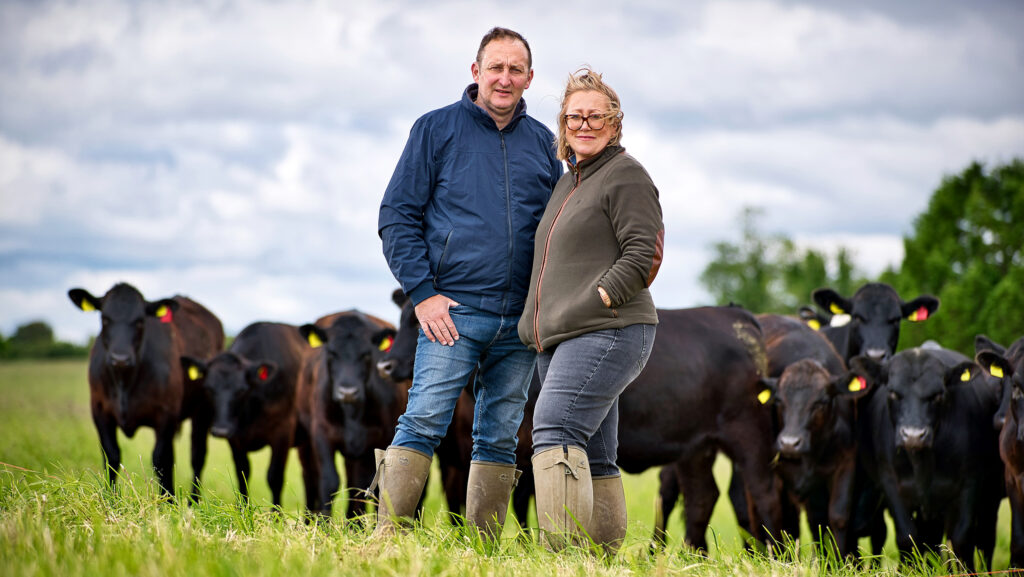 Dan and Catherine Mercer © Richard Stanton
 Like many others this summer, harvest was all wrapped up and finished before the end of July.
This was a first for us, having finished in the middle of August last year, which we thought then was unprecedented.
Conditions here are tinder-dry and there have been quite a few fires locally in the recent days.
The only up side to this weather has meant we have used the patio most evenings.
See also: How growing lucerne could build resilience for Welsh farm
About the author

We haven’t been able to get a second cut for hay as the grass has burned off and there’s nothing to cut.
Fortunately, we planted 8ha (20 acres) of lucerne in the spring, which is the only green area currently on the farm.
We have taken a first cut from it and we may get two more if we are lucky enough to get some rain.
This will help buffer the total mixed rations throughout the winter for the stores and finishing cattle and will help with the depleted silage stocks.
Again, our maize looks as though it isn’t going to produce a decent crop. That’s the third year running.
With this in mind, we have taken the decision to take it out of the rotation and replace it with a three-year grass rotation, which we can use for both grazing and cutting.
The sucklers out on Salisbury Plain still have plenty of rough grazing in front of them, albeit rather brown.
The group of cows and calves at home that have been on the adaptive multipaddock/long-grass grazing are faring well all things considered.
Leaving grass behind them has proved this way of grazing is more drought tolerant and resilient than set stocking.
Unfortunately, the government’s recent announcement committing £65m to help fund improvement to water access and development of on-farm water reservoirs is too little too late.
It will not help feed hungry livestock this winter.
Those of us who have already started feeding our winter feedstocks to our animals are going to need more than this, with some serious assistance and support now.
The government needs to commit to help us keep our businesses going so we can keep on producing food in the future.
With the threat of bluetongue moving ever closer to us daily, we continue to monitor and keep a close eye on the livestock. Our thoughts are with all of those affected by this.