

Farmer Focus: Managing risk is the essence of farming
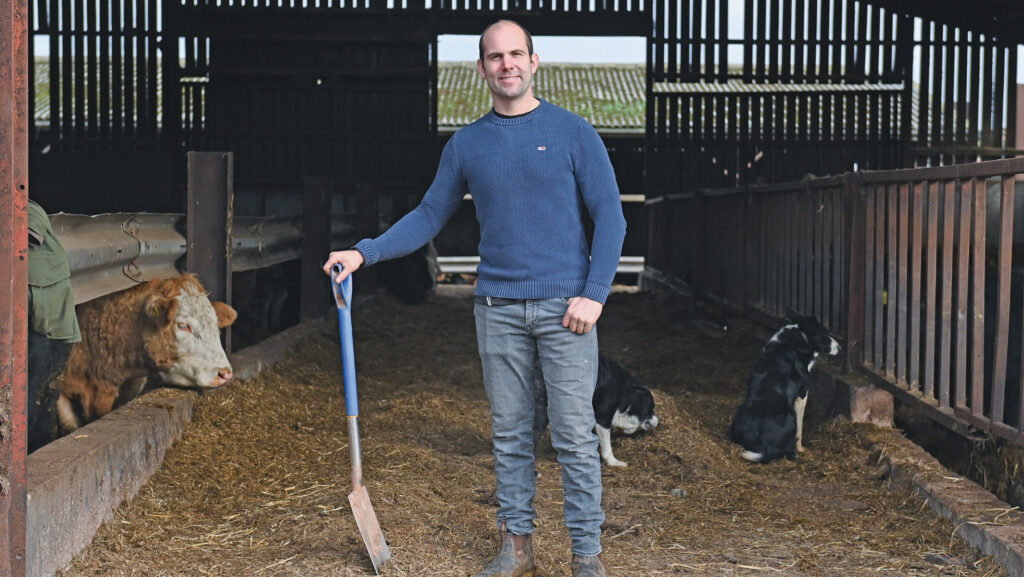 Dan Phillips © Richard Swingler
 This farming job seems pretty good, doesn’t it? Well, no, not if you believe the doom-laden videos filling up my social media feed over the past couple of weeks.
Or, indeed, the endless news articles discussing the catastrophic harvest and devastating effects of this prolonged drought.
See also: Drought-hit farmers offered £2,000 emergency grants
About the author
Don’t get me wrong, things could definitely be better. Our wheat yields were disappointing on average, about 8t/ha. Spring beans were particularly poor, yielding about 3t/ha.
Fat cattle trade is down at £6.15/kg, compared with £6.40/kg last year. Grazing grass is non-existent, so ewes as well as lambs are having to be fed.
But on the positive side, oilseed yields were excellent this year, averaging more than 4.6t/ha, and the price is £55/t more than this time in 2025. Wheat is trading at about £30/t higher, and fat lambs at the same levels as this time last year.
And there will be no expensive drying costs this season. It has, quite frankly, been the quickest and most stress-free harvest on record, albeit with the most early-morning starts on the combine that I can remember.
Of course, I appreciate some farms are facing very real financial pressures, but when I see the Facebook farmers, standing in front of hugely expensive pieces of kit, telling me that this year is the death of farming, I do wonder whether all the doom mongering is justified.
I can recall numerous short- and longer-term crises in the 20 years I’ve been farming: BSE, foot-and-mouth, Schmallenberg, bluetongue, avian influenza, salmonella, swine fever, Brexit, Covid, the Ukraine war and Iranian conflict, as well as fluctuating commodity prices.
It has always felt as if UK agriculture is just lurching from one crisis to another. As farmers, we are, in essence, crisis managers: changing plans, tightening budgets and managing each issue as it arises in the best way we can.
Successful farming isn’t avoiding risk, it is managing it as successfully as possible.
Farming is always a gamble, never knowing whether what you are planting, rearing or buying this year will be worth anything next year. But it is the risk we all take.
And certainly, in this neck of the woods, if one farmer decided to pack up tomorrow because there was no money in it, why would neighbouring farmers be queuing up to take on more land?