

Farmer Focus: New grazing challenges heifer immunity to ticks
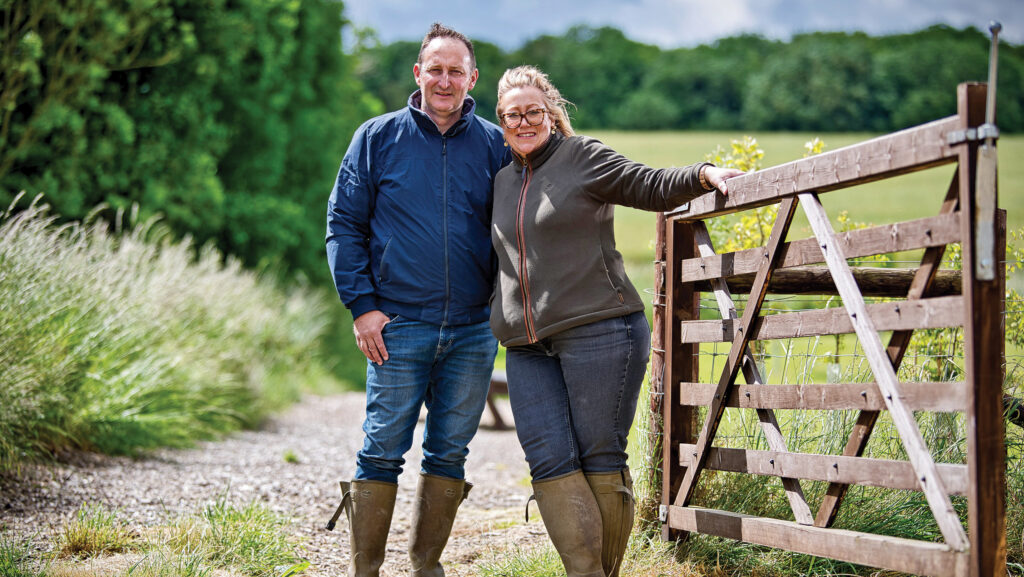 Dan and Catherine Mercer © Richard Stanton
It has been a welcome change to the weather here. With the drop in temperature and some much-needed rain, it is easy to forget how dry it was during the hot summer months now everything has greened up.
The drilling is all done until next spring and we can now start focusing on getting the cattle ready for the winter.
See also: Advice on grazing management to reduce tick risk to cattle
About the author

Our recent grass silage analysis results were very average this year, which was to be expected.
However, with the addition of the lucerne bales made in the past few weeks, we can buffer the protein level in the total mixed ration to get the cattle through the winter months and get our home-bred heifers to a weight where they can be bulled next year, plus get the steer calves at a good weight for sale next May.
Grazing new and ungrazed areas on Salisbury Plain has brought a few new challenges this year, namely babesiosis (redwater fever).
Unfortunately, with the huge amount of scrub and bushes out there, ticks thrive amongst it and, with the dry hot weather over the past few months, it has been prevalent.
Regretfully we have lost two home-bred suckler cows to the disease. Hopefully over the next few years we can continue to build up more immunity in the herd to the disease.
Having discussed the situation with our vet Bea, we are considering vaccinating our home-bred heifers that will be coming into the herd to help start the immunity process, before they are exposed to it.
Sadly, with redwater fever by the time you notice it in cattle, it is often too late to recover from it.
Over the past few weeks, we have been steadily moving the cows closer to home ready for weaning.
We tend to wean outside using specially built permanent handling pens, where we can sort the calves safely.
This enables us to load them up and then bring them all back home inside for winter. We will then leave the cows in fenced paddocks with a line of electric around the outside and hope for the best.
We use this opportunity to also to vaccinate for leptospirosis and bovine virus diarrhoea and also pregnancy test during the same week while they are near the handling system.
Fingers crossed for a good conception rate this year.