

Farmer Focus: No mud on road as maize harvest brought in
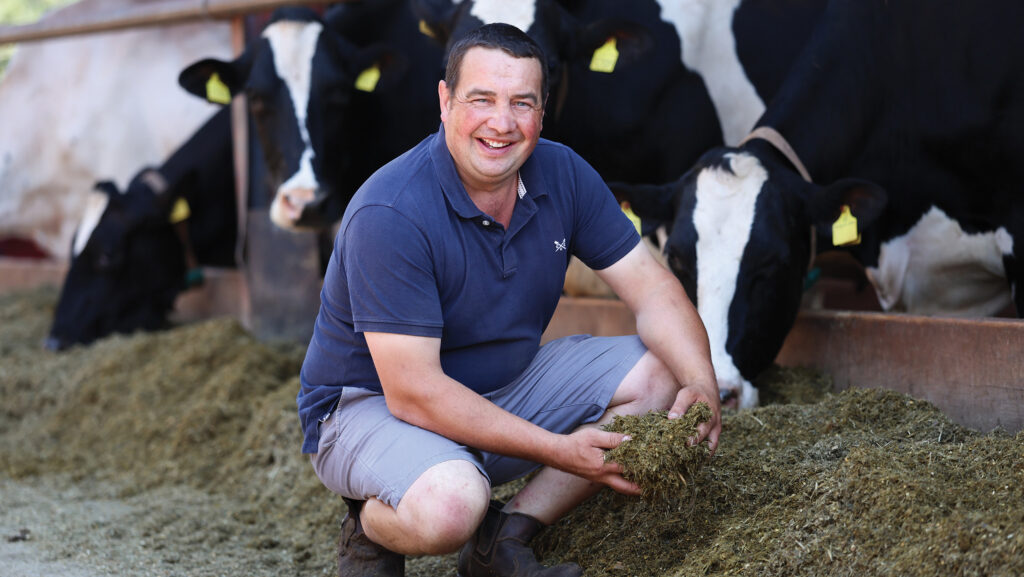 Rob Goodwin © Nathan Stirk
 The day my previous article was published, the weather finally turned and we had some very welcome showers. The grass turned green within hours and it hasn’t stopped growing since.
I had ordered some glyphosate for fields in their fifth year, but by the time it arrived the grass was almost ready for mowing again. We will take a third cut next week and then spray it off before drilling winter wheat.
See also: How undersowing can help soils and bring grazing income
About the author

We have started our maize harvest – a little later than the neighbours, but it hasn’t been quite ready until now. We have brought in everything at home and are now hauling back from some rented ground eight miles away.
For once, ground conditions have been good, the “mud on road” signs are still at the back of the workshop and the bucket brush is parked up. After a challenging year, we are happy with the yields and there appears to be plenty of grain.
Now that the maize is off, we have a busy few weeks ahead with grass seeds to go in, and we will be lightly cultivating maize stubbles before establishing a cover crop of mustard, fodder radish and phacelia.
In spring, this will be flail-mown and incorporated back into the soil.
The kids are finally back at school. This coincided with Shanette having an operation and our herdsman taking a 10-day fishing trip to Italy, so it’s been a challenging couple of weeks keeping up with yard jobs.
Fortunately, the cows have been settled, mastitis cases seem to have turned a corner and the bulk cell count is at a more acceptable level.
Our new nutritionist has taken over and as existing stocks run out, we are starting to implement her changes. So far, we have altered the blend to remove maize distillers’ grain entirely, replacing it with Canadian soya.
This makes the blend more expensive but, on the other hand, should have a positive effect on butterfat, which is an important part of our contract.
We have started feeding ground wheat alongside a lower amount of caustic wheat and are seeing fewer grains in the muck as a result.
We are trying to add all our bagged minerals and supplements into a single mix, which will make pre-mixes more straightforward. This will also reduce the amount of packaging, pallets and deliveries to the farm.