

Farmer Focus: Our lamb growth rate range revealed
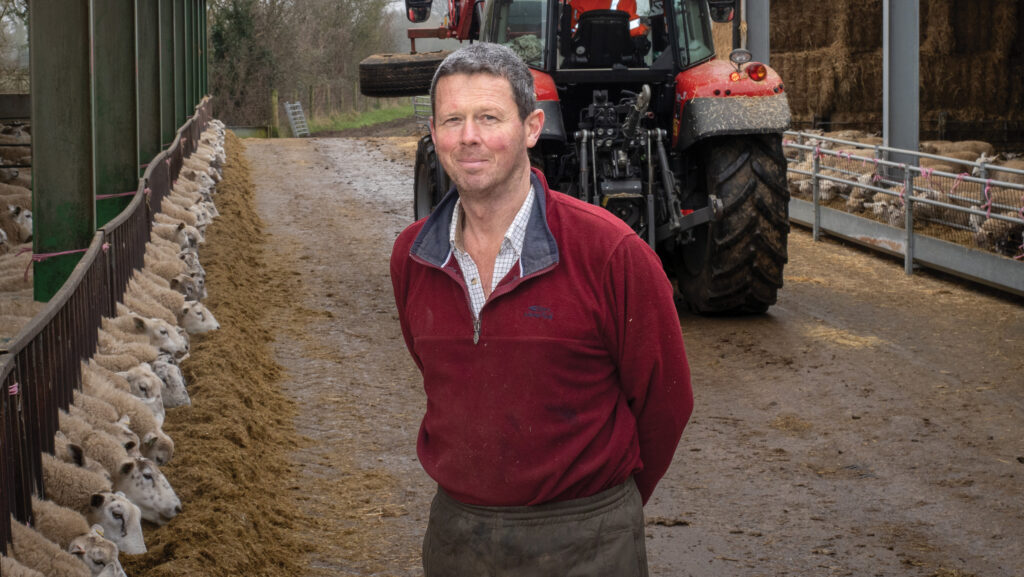 James Kimber © Kathy Horniblow
 We have just weighed the last of the March/April lambs and are very pleased that 200 out of 700 are ready to be marketed.
In the first week of July, 78 singles went at 41.82kg – and £132.13 after deductions. Doubles are to go next.
Average growth rates came in at 310g/day, but ranged from 70g-440g. The lowest was a single out of a third-crop ewe that didn’t rear last year. (Obviously she isn’t going to have another chance.)
See also: Auto lamb weighers to give in-field trial insights
About the author

Hopefully, as we build more information on the performance of the commercial flock, we will be able to improve by getting these unproductive ewes away.
Our plan is to wean everything, sort the cull ewes out, and vaccinate all breeding stock for bluetongue.
This will be about 900 head – so not an insignificant bill. While talking to our vet it seems they are now recommending a “one sheep, one needle policy”.
As bluetongue is spread by a midge biting an animal, then biting another, it makes sense not to replicate midge activity. But 900 needles are going to take a long time to change.
The autumn-born calves have been weighed and need weaning, as the young bulls are spending far too much energy being show-offs.
Females have come in at 1.32kg/day interim and males 1.52kg/day. Weaning will be about 45% mature cow weight, helped by the small young cows that calved at two years and haven’t matured to big cows.
Looks good on paper, but I wouldn’t buy a stock bull from them to look at. (Do we buy on looks, or paper?)
So how do the pedigree societies fit in with a modern business approach? To me, we just need evidence-based data and if the animal is right for your system that’s great.
Do we have the best maize in the country? We needed a stepladder to accurately measure the 2.7m high crop with tassels and cobs out.
I really don’t know where the moisture has come from, because the grass has given up with significant cracking of the clay ground.
It’s going to take a lot of moisture to rehydrate again. With the maize outperforming the grass for conservation, do we look at 100% maize for winter and graze the herbal leys?